
Pool Filter Types Guide: Sand vs Cartridge vs DE Filters 2026
Quick Answer
Pool filters come in three main types: sand filters (low maintenance, 5-7 year lifespan), cartridge filters (easy cleaning, 2-5 year element replacement), and DE filters (finest filtration at 1-5 microns, requires backwashing and periodic DE powder addition).
Quick Overview: Pool Filter Types
When cloudy water won't clear up, the problem is most often chemistry — usually free chlorine too low for your CYACyanuric Acid (stabilizer) — Sunscreen for your chlorine — it keeps sunlight from burning it off. The catch: the more you have, the more chlorine you need to keep. learn more → — not the filter itself. That said, an undersized or wrong-type filter makes a pool harder to keep clear, so it's worth getting right. The three main filter types each offer distinct advantages:
- Sand Filters: Most popular and low-maintenance option, lasting 5-7 years with simple backwashing
- Cartridge Filters: Easy to clean and replace, filtering down to 10-20 microns, with elements lasting 2-5 years
- DE (Diatomaceous Earth) Filters: Finest filtration (1-5 microns), requiring more maintenance but superior water clarity
Your choice depends on budget, maintenance preferences, and desired water quality. Understanding how pool filters work helps you make the right decision for your specific needs.
Sand Filters: The Reliable Workhorse
How Sand Filters Work
Sand filters use specially graded silica sand as the filtering medium. Water flows down through the sand bed, which traps debris and particles. The sand grains create a physical barrier that captures contaminants as small as 20-40 microns.
The filtration process relies on the sand bed becoming slightly "dirty" to work optimally. A thin layer of captured debris actually improves filtration efficiency by creating smaller pathways for water to flow through.
Sand Filter Advantages
- Low Maintenance: Simple backwashing every 2-4 weeks
- Long Lifespan: Sand lasts 5-7 years before replacement
- Cost-Effective: Lower ongoing operational costs
- Durability: Robust construction handles harsh pool chemicals
- Automated Options: Can be equipped with automatic backwash systems
Sand Filter Disadvantages
- Larger Particle Filtration: Only filters particles 20-40 microns and larger
- Water Waste: Backwashing uses 200-400 gallons per cycle
- Initial Setup: Requires washing new sand before installation
- Space Requirements: Larger equipment footprint
Sand Filter Maintenance Schedule
Weekly:
- Monitor pressure gauge - backwash when pressure rises 8-10 PSI above clean pressure
- Check for proper water flow and circulation
Bi-Weekly to Monthly:
- Backwash when pressure gauge indicates (typically every 2-4 weeks)
- Rinse after backwashing to settle sand bed
Quarterly:
- Deep clean sand with filter cleaner or muriatic acid
- Inspect multiport valve operation
Every 5-7 Years:
- Replace filter sand completely
- Inspect and replace worn laterals or internal components
Cartridge Filters: User-Friendly Precision
How Cartridge Filters Work
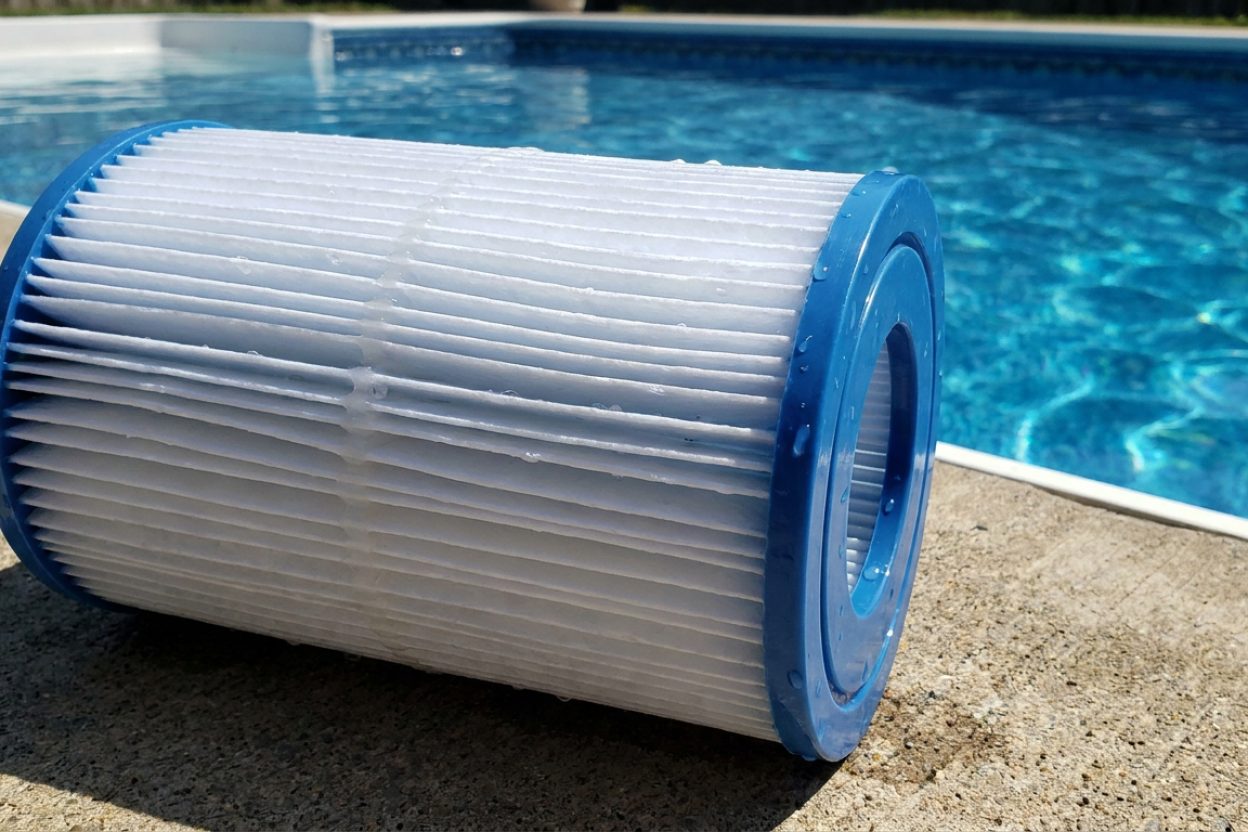
Cartridge filters use pleated polyester or paper-like material to strain particles from pool water. The large surface area created by the pleated design allows for fine filtration while maintaining good water flow rates.
Multiple cartridges typically work together in a housing, and water flows through the filter media from outside to inside, trapping debris in the pleated material.
Cartridge Filter Advantages
- Fine Filtration: Captures particles as small as 10-20 microns
- No Water Waste: Cleaning doesn't require backwashing
- Easy Maintenance: Simple removal and cleaning process
- Compact Design: Smaller equipment footprint
- Chemical Efficiency: Better filtration means less chemical usage
Cartridge Filter Disadvantages
- Frequent Cleaning: Requires cleaning every 2-4 weeks
- Shorter Lifespan: Cartridge elements need replacement every 2-5 years
- Higher Ongoing Costs: Regular cartridge replacements add up
- Labor Intensive: Manual removal and cleaning required
Cartridge Filter Maintenance Schedule
Weekly:
- Monitor water flow and pressure (if equipped with gauge)
- Check for visible debris accumulation
Bi-Weekly to Monthly:
- Remove cartridges for cleaning
- Rinse with garden hose, spray between pleats
- Soak in filter cleaner if heavily soiled
- Rotate spare cartridges if available
Quarterly:
- Deep clean with TSP (trisodium phosphate) or commercial filter cleaner
- Inspect cartridge condition for tears or degradation
Every 2-5 Years (or when torn or flow-restricted):
- Replace cartridges
- Inspect housing and O-rings
DE Filters: Premium Filtration Performance
How DE Filters Work
DE filters use diatomaceous earth, a fine powder made from fossilized diatoms, as the filtering medium. The DE powder coats fabric-covered grids inside the filter housing, creating an extremely fine filtering surface.
This mineral filter media can trap particles as small as 1-5 microns, providing the clearest water of all filter types. The microscopic porous structure of DE creates an incredibly effective physical barrier.
DE Filter Advantages
- Superior Filtration: Filters particles down to 1-5 microns
- Crystal Clear Water: Provides the highest water clarity
- Efficient Operation: Excellent flow rates with fine filtration
- Grid Longevity: Filter grids last 5-10 years with proper care
DE Filter Disadvantages
- Complex Maintenance: Requires careful DE powder handling and measurement
- Environmental Concerns: DE disposal requires special consideration
- Higher Costs: More expensive initial investment and ongoing DE powder costs
- Health Precautions: DE powder requires respiratory protection during handling
DE Filter Maintenance Schedule
Weekly:
- Monitor pressure gauge for backwash indicators
- Check DE powder levels if equipped with sight glass
Monthly (or as needed):
- Backwash when pressure rises 8-10 PSI above clean pressure
- Add fresh DE powder after backwashing
- Calculate proper DE amount (typically 1 lb per 10 sq ft of filter area)
Seasonally:
- Disassemble filter and clean grids manually
- Inspect grids for tears or damage
- Soak grids in filter cleaner to remove oils and organic buildup
Every 5-10 Years (or when torn):
- Inspect and replace filter grids as needed
- Inspect internal manifold and hardware
Choosing the Right Filter Type
Consider Your Pool Usage
Light Use Pools: Cartridge filters work well for pools with minimal bather loads and moderate debris.
Heavy Use Pools: Sand filters handle high bather loads and debris better with less frequent maintenance.
Premium Water Quality: DE filters provide the clearest water for those prioritizing appearance.
Budget Considerations
Initial Cost:
- Sand filters: around $300-$1,400
- Cartridge filters: around $400-$1,400
- DE filters: around $700-$1,400 installed
Annual Operating Costs:
- Sand: $20-50 (sand replacement every 5-7 years)
- Cartridge: $100-300 (regular cartridge replacement)
- DE: $50-150 (DE powder and grid replacement)
Maintenance Time Commitment
Sand Filters: 15-30 minutes monthly for backwashing
Cartridge Filters: 30-60 minutes bi-weekly for cleaning
DE Filters: 45-90 minutes monthly, plus seasonal deep cleaning
Filter Integration with Pool Systems
Pump Compatibility
Your filter choice affects pump selection and operation. Understanding when you need a new pump helps ensure proper system matching.
Variable speed pumps work excellently with all filter types, providing energy savings and extended filtration cycles that benefit water quality.
Chemical Balance Impact
Filter efficiency directly affects chemical usage and water balance:
- Better filtration = less chlorine demand for oxidation
- Cleaner water = more stable pH and alkalinity
- Reduced organics = lower combined chlorine formation
Proper filtration supports your overall chemical program, whether you're maintaining traditional chlorine levels or managing a saltwater system with cyanuric acid.
Troubleshooting Common Filter Issues
Poor Water Quality
Symptoms: Cloudy water, visible debris, algae growth
Solutions:
- Check proper filter sizing for pool volume
- Verify adequate pump runtime
- Test and balance water chemistry
- Clean or backwash filter as appropriate
- Vacuum pool after proper chemical treatment
High Pressure Readings
Sand/DE Filters: Backwash when pressure exceeds clean pressure by 8-10 PSI
Cartridge Filters: Clean cartridges when flow noticeably decreases
Short Filter Cycles
If filters require cleaning/backwashing more frequently:
- Check for algae blooms requiring more frequent shocking
- Verify proper chemical balance
- Consider algaecide usage if chlorine alone isn't sufficient
- Inspect for excessive debris sources
Filter Media Problems
Sand Channeling: Replace old sand, check for broken laterals
Torn Cartridges: Replace immediately to prevent bypass
DE Bypass: Inspect grids for tears, verify proper DE application
Seasonal Filter Maintenance
Opening Season
- Inspect all filter components for winter damage
- Replace cartridges or add fresh DE powder
- Check multiport valve operation
- Verify proper equipment connections
Operating Season
- Maintain regular cleaning schedules
- Monitor chemical balance to reduce filter load
- Address water quality issues promptly
Closing Season
For pools requiring winterization, follow proper winterization procedures:
- Clean filters thoroughly before storage
- Remove and store cartridges in dry location
- Drain sand and DE filters if subject to freezing
- Apply appropriate freeze protection
When to Call a Professional
Complex Repairs
- Multiport valve replacement or internal repairs
- Filter housing cracks or structural damage
- Plumbing modifications for filter upgrades
- Electrical connections for automated systems
System Sizing and Selection
Professional consultation helps with:
- Proper filter sizing for pool volume and usage
- Pump and filter compatibility
- Plumbing configuration optimization
- Energy efficiency improvements
Persistent Water Quality Issues
If standard maintenance doesn't resolve problems:
- Algae blooms that don't respond to treatment
- Chronic cloudiness despite proper filtration
- Chemical balance issues affecting filter performance
- Unusual debris or contamination sources
Advanced Filter Considerations
Alternative Filter Media
Glass Media: Replacement for sand with finer filtration and longer life
Zeolite: Natural mineral media with ammonia removal properties
Filter Balls: Lightweight, reusable polyethylene-fiber alternative to sand; easiest to handle, though performance and lifespan vary by brand
Hybrid Systems
Some installations combine filter types:
- Pre-filters with main filtration systems
- Inline cartridge filters for specific water quality issues
- Secondary polishing filters for premium clarity
Automation Integration
Modern filter systems can integrate with:
- Automatic backwash controllers
- Pressure monitoring systems
- Chemical automation for optimized performance
- Remote monitoring and control systems
Frequently Asked Questions
How often should I clean my pool filter?
Cleaning frequency depends on filter type: sand filters need backwashing every 2-4 weeks, cartridge filters require cleaning every 2-4 weeks, and DE filters need backwashing monthly or when pressure rises 8-10 PSI.
Can I upgrade my filter type without changing other equipment?
Usually yes, but verify compatibility with your pump and plumbing. Some upgrades may require different plumbing connections or pump sizing adjustments.
What's the best filter type for a saltwater pool?
All filter types work with saltwater systems. Saltwater pools still need proper chemical balance, and filter choice depends more on maintenance preferences and water quality goals.
How do I know when to replace filter media?
Filter replacement timing varies by type: sand every 5-7 years, cartridge elements every 2-5 years, and DE grids every 5-10 years depending on condition.
Can I run my pool without a filter temporarily?
Never run your pool system without proper filtration. Even brief periods without filtration can lead to rapid water quality deterioration and potential equipment damage.
Why is my pool still cloudy after cleaning the filter?
Cloudy water often requires both proper filtration and chemical treatment. Test water chemistry and shock if necessary, as filtration alone may not resolve chemical imbalances.
Related Pool Maintenance Guides
Effective pool filtration works best as part of a comprehensive maintenance program:
- Complete backwashing procedures for all filter types
- Essential pH management for optimal filter performance
- Proper chemical timing to support filtration
- Vacuum systems that work with your filter type
- Proper closure procedures to protect filter systems
Remember that understanding how your specific filter works helps you maintain it properly and troubleshoot issues effectively. Regular maintenance prevents most problems and ensures years of reliable filtration performance.
Still need help? Ask a Pool & Spa Expert AD
Get a personalized answer from PoolGuy810 — 30 years owning a pool and spa repair company. Describe your issue and get step-by-step help.
Related Pool Guides
Need More Help?
Try our free pool calculators and tools to help diagnose and fix your pool problems.
Browse Pool ToolsSLAM calculator, pH calculator, salt dosing & more