
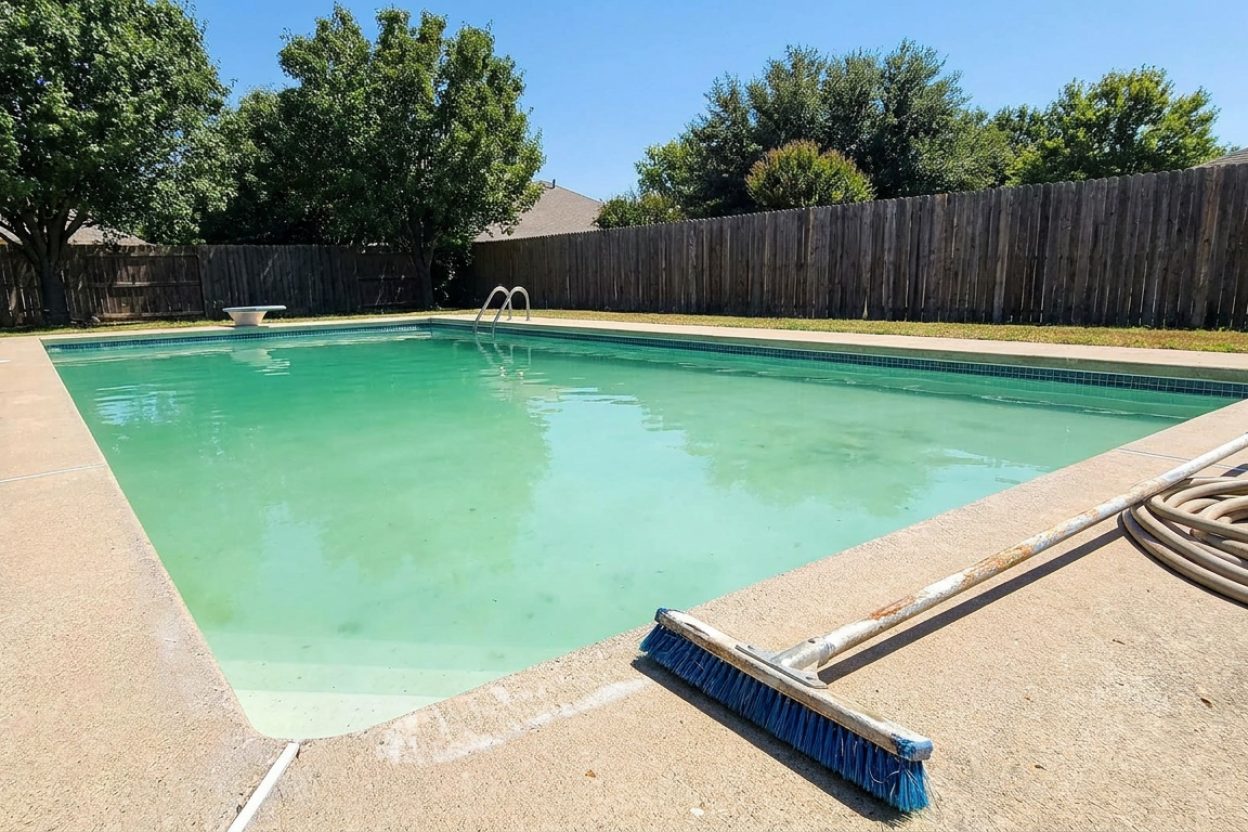
SLAM Method: Complete Guide to Clear Green Pool Water Fast
Quick Answer
The SLAM method (Shock Level And Maintain) clears green pools by maintaining high chlorine levels continuously until water clears. Use liquid chlorine to reach shock level based on CYA, maintain 24/7 until overnight chlorine loss is 1ppm or less.
Quick Overview: SLAM Method for Green Pool Recovery
Nothing ruins a perfect pool day faster than diving into what looks like a swamp filled with thick, green algae water. This process involves raising your pool's free chlorine (FCFree Chlorine — The chlorine actively sanitizing your water right now. This is the number you keep an eye on. how much you need →) to shock level based on your cyanuric acid (CYACyanuric Acid (stabilizer) — Sunscreen for your chlorine — it keeps sunlight from burning it off. The catch: the more you have, the more chlorine you need to keep. learn more →) level and maintaining that level continuously until the water clears and passes the overnight chlorine loss test.
Key Requirements:
- Use only liquid chlorine (sodium hypochlorite) - never dichlor or trichlor
- Maintain FC at shock level 24/7 throughout the process
- Run filter system continuously
- Brush pool surfaces twice daily
- Test and adjust water chemistry multiple times daily
- Continue until overnight FC loss is ≤1ppm and water is crystal clear
Understanding the SLAM Method
SLAM stands for "Shock Level And Maintain" - a systematic approach to eliminate algae by overwhelming it with continuous high chlorine levels. Unlike traditional shocking methods where you add chlorine and wait, SLAM requires maintaining shock-level chlorine around the clock until the algae is completely dead.
Why SLAM Works Better Than Regular Shocking
Many pool owners ask if they need to shock weekly, but regular shocking often fails against established algae blooms. SLAM succeeds because:
- Continuous high chlorine prevents algae from recovering between treatments
- Keeps the chlorine strong enough to hit every bit of algae at once, so it can't bounce back between treatments
- Burns through the dead algae and gunk that would otherwise keep eating up your chlorine
- Cleans up the whole pool, not just the water near the returns
Easy Pool Chemistry
Before starting SLAM, understand these critical relationships:
Free Chlorine to CYA Ratio: Your shock level depends entirely on your CYA level. The more stabilizer (CYA) in your water, the more chlorine (FC) it takes to get the same algae-killing power — that's why the chart below scales up together.
Shock Level Chart (FC based on CYA):
- CYA 30ppm = FC 12ppm shock level
- CYA 40ppm = FC 16ppm shock level
- CYA 50ppm = FC 20ppm shock level
- CYA 60ppm = FC 24ppm shock level
- CYA 70ppm = FC 28ppm shock level
- CYA 80ppm = FC 32ppm shock level
Step-by-Step SLAM Process
Phase 1: Initial Testing and Preparation
Step 1: Test Your Water Chemistry
Use a quality test kit (Taylor K-2006 or TF-100) to measure:
- Free Chlorine (FC)
- Combined Chlorine (CCCombined Chlorine — "Used-up" chlorine left over from doing its job. Above about 0.5 ppm is the classic sign water needs a shock. learn more →)
- pH
- Total Alkalinity (TATotal Alkalinity — The buffer that keeps your pH from bouncing around. Get this in range and pH gets a lot easier to manage. learn more →)
- Cyanuric Acid (CYA)
- Calcium Hardness (CH)
Never rely on test strips for SLAM - they're too inaccurate for the precision required.
Step 2: Balance pH First
Lower pH to 7.2-7.4 before starting. High pH nudges chlorine toward its weaker form, though CYA buffers most of that. More to the point, the pH test reads false-high at shock-level chlorine, so set pH to about 7.2 before you start and don't chase it during the SLAM.
Step 3: Check and Adjust Alkalinity
Ensure alkalinity is in proper range (80-120ppm for most pools) to prevent pH bounce during SLAM.
Phase 2: Initial Shock Treatment
Step 4: Calculate Chlorine Needed
Determine how much liquid chlorine to add based on:
- Current FC level
- Target shock level (from FC/CYAFC/CYA chart — The chart that sets your chlorine target from your stabilizer (CYA) level — the two go together. see the chart → chart)
- Pool volume in gallons
Our all-in-one pool calculator gives a quick estimate of the amount from your pool size and current vs. target levels, and automatically accounts for your specific product's concentration.
Step 5: Add Liquid Chlorine
Add chlorine gradually around the pool perimeter with pump running. Never pour directly into skimmer.
Step 6: Begin Continuous Filtration
Run your filter system 24/7 throughout SLAM. Continuous filtration is safe and beneficial for removing dead algae and maintaining water circulation.
Phase 3: Maintaining Shock Level
Step 7: Test and Maintain Every 2-4 Hours
During active SLAM, test FC every 2-4 hours and add chlorine to maintain shock level. Algae and organic matter will consume chlorine rapidly initially.
Step 8: Brush Pool Surfaces Twice Daily
Brush walls, steps, and all surfaces twice daily to dislodge algae and improve chlorine contact. Focus on areas with visible algae growth.
Step 9: Vacuum and Clean Filter
You can vacuum after adding chemicals, but wait 15-30 minutes for circulation. Clean your filter frequently as it captures dead algae.
Phase 4: Completion Testing
Step 10: Monitor Water Clarity
Water should progressively clear from green to cloudy white to crystal clear. Cloudy water during SLAM is normal as dead algae is filtered out.
Step 11: Perform Overnight Chlorine Loss Test
When water appears clear:
- Test FC at sunset
- Don't add any chlorine overnight
- Test FC at sunrise
- Calculate overnight loss
SLAM is complete when overnight loss is 1ppm or less for two consecutive nights, combined chlorine (CC) is 0.5 ppm or less, and the water is crystal clear.
Filter Management During SLAM
Sand Filter Maintenance
Backwash sand filters when pressure gauge reads 8-10 psi above clean starting pressure. During heavy SLAM, this might be daily initially.
Deep clean filter sand if backwashing doesn't restore proper flow. Consider replacing sand if it's over 5 years old.
Cartridge Filter Care
Cartridge filters cannot be backwashed - they must be physically cleaned. Have spare cartridges available for rotation during SLAM.
Clean cartridges daily during active SLAM using a filter cleaner solution and high-pressure rinse.
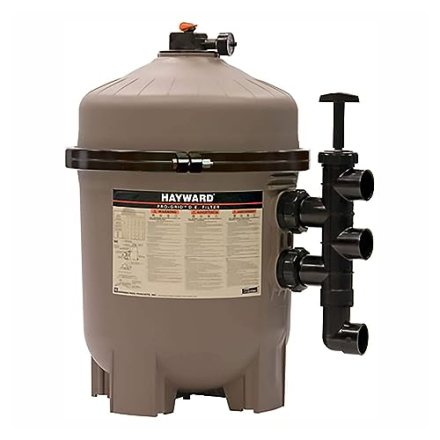
DE Filter Management
DE filters require regular backwashing during SLAM, potentially every 24-48 hours initially. Recharge with fresh DE powder after each backwash.
Troubleshooting Common SLAM Issues
Chlorine Disappears Too Quickly
Cause: Heavy algae load or high chlorine demand
Solution:
- Continue adding chlorine to maintain shock level
- Increase testing frequency
- Verify you're using liquid chlorine, not stabilized chlorine
- Check for dead animals or organic debris
Water Won't Clear After Days
Cause: Filter issues or inadequate circulation
Solution:
- Clean or replace filter media
- Ensure pump is running 24/7
- Check for dead zones in pool circulation
- Consider using a pool vacuum to remove settled debris
pH Keeps Rising
Cause: Liquid chlorine has high pH (around 13)
Solution:
- Add muriatic acid to maintain pH 7.2-7.4
- Test pH twice daily during active SLAM
- Don't let pH rise above 7.6
Overnight Chlorine Loss Won't Drop Below 1ppm
Possible Causes:
- Hidden algae in equipment or plumbing
- Inadequate brushing
- Filter not capturing dead algae effectively
- Organic contamination (leaves, etc.)
Solutions:
- Disassemble and clean all equipment
- Increase brushing frequency and intensity
- Clean or replace filter media
- Remove all organic debris
Equipment Considerations
Pump Runtime Requirements
Most pools need 8-12 hours daily normally, but SLAM requires 24/7 operation. Ensure your pump can handle continuous operation.
Electrical Safety
Never run pool pumps on extension cords - the continuous high-amperage draw during SLAM makes this extremely dangerous.
Additional Equipment Needs
You'll need a pool vacuum to remove settled algae debris during SLAM. Use manual brushing and a manual vacuum during SLAM. Avoid running robotic cleaners during the process, as shock-level chlorine can damage them.
Chemical Safety and Handling
Liquid Chlorine Storage
Store liquid chlorine in a cool, dry place away from direct sunlight. Buy fresh chlorine frequently during SLAM as you'll use large quantities.
Adding Chemicals Safely
Wait 15-30 minutes with the pump running between adding different chemicals to prevent localized reactions.
Personal Protection
Wear safety goggles and gloves when handling chemicals. Work upwind when adding chlorine to avoid inhaling fumes.
Timeline and Expectations
Typical SLAM Duration
- Light green pool: 2-4 days
- Dark green pool: 5-7 days
- Black/swamp water: 1-2 weeks
Visual Progress Indicators
Day 1: Water may get cloudier as algae dies
Days 2-3: Green color fades to cloudy white
Days 4-7: Gradual clearing from bottom up
Final days: Crystal clear water with stable overnight chlorine loss
Cost Considerations
Expect to use 3-10 gallons of liquid chlorine total, depending on pool size and algae severity. This is far more cost-effective than repeated store-bought shock treatments.
Post-SLAM Pool Care
Returning to Normal Operation
Once SLAM is complete:
- Allow FC to drop naturally to normal levels (6-8 ppm for CYA 70-80)
- Resume normal pump runtime schedule
- Return to weekly filter maintenance
- Monitor chemistry weekly instead of daily
Preventing Future Algae Blooms
- Maintain proper FC levels based on CYA
- Keep pH in optimal range (7.4-7.6)
- Run pump adequate hours daily
- Brush pool weekly
- Clean filter regularly
When to Call a Professional
Consider professional help if:
- SLAM fails after 2 weeks of proper execution
- You're uncomfortable handling large quantities of chemicals
- Electrical or plumbing issues arise
- Pool equipment needs repair or replacement
- You lack time for the intensive monitoring required
Equipment Replacement Indicators
You may need a new pump if yours fails during the continuous operation required for SLAM.
Consider filter replacement if cleaning doesn't restore proper flow during SLAM.
Special Situations
Saltwater Pool SLAM
Saltwater pools still need proper chemistry for SLAM. Turn off the salt generator and use liquid chlorine exclusively during the process.
Saltwater pools need CYA just like traditional pools, so follow the same FC/CYA ratios.
Above Ground Pool Considerations
Above ground pools follow the same SLAM process but may clear faster due to smaller volume and easier access for brushing.
Seasonal Considerations
If SLAM is needed before winter closing, complete the entire process before winterization. Never close a green pool.
Shock your pool before winter closing, but only after completing SLAM if algae was present.
Frequently Asked Questions
Can I swim during SLAM?
No, avoid swimming during an active SLAM. Chlorine levels are high (10-30+ ppm), which can irritate skin and eyes and is hard on swimsuits. Per the CDC pool code (Model Aquatic Health Code), free chlorine should not exceed 10 ppm while anyone is in the water, so wait until it is below 10 ppm to swim. The same code also calls for the water to be clear enough to see the bottom and for pH to be held between 7.0 and 7.8. Wait to swim until the water is clear and FC is back under about 10 ppm.
How much will SLAM cost?
Expect $30-100 in liquid chlorine costs depending on pool size and algae severity. This is much cheaper than draining and refilling or hiring a service company.
Will SLAM damage my pool equipment?
Properly executed SLAM won't damage equipment. High chlorine levels are temporary and within equipment tolerance ranges.
Can I use shock granules instead of liquid chlorine?
Liquid chlorine is the cleanest choice - it adds nothing but chlorine. Cal-hypo (shock granules) works too, but it adds calcium hardness and can briefly cloud the water, so it's not ideal for the repeated dosing a long SLAM needs. The ones to truly avoid are dichlor and trichlor, which add CYA and make the SLAM harder.
What if my CYA is too high?
If CYA exceeds 80-100ppm, partially drain and refill before starting SLAM. High CYA makes the process ineffective and expensive.
How do I know if algae is completely dead?
Complete SLAM success requires: According to Trouble Free Pool (TFP), which developed the SLAM method, complete success requires all of: crystal clear water, overnight FC loss ≤1ppm for two consecutive nights, combined chlorine (CC) of 0.5 ppm or less, and no visible algae anywhere in the pool.
Can I speed up the SLAM process?
No shortcuts exist. The process takes as long as needed to kill all algae. Attempting to rush by under-dosing chlorine will fail and waste time and money.
Related Pool Maintenance Guides
For comprehensive pool care knowledge, explore these related guides:
- Complete cloudy water troubleshooting
- Lowering chlorine after SLAM completion
- Health risks from pool algae exposure
- Understanding phosphate removal
- Complete alkalinity management
The SLAM method is the gold standard for clearing green pools because it works reliably when executed properly. While intensive, it saves money compared to alternatives and ensures complete algae elimination. Success requires patience, proper chemistry knowledge, and consistent execution of the process until completion criteria are met.
For the full breakdown of safe chlorine levels by CYA level, see our pool water chemistry guide.
Still need help? Ask a Pool & Spa Expert AD
Get a personalized answer from PoolGuy810 — 30 years owning a pool and spa repair company. Describe your issue and get step-by-step help.
Related Pool Guides
Need More Help?
Try our free pool calculators and tools to help diagnose and fix your pool problems.
Browse Pool ToolsSLAM calculator, pH calculator, salt dosing & more