
How to Clear Cloudy Pool Water: Complete Step-by-Step Guide

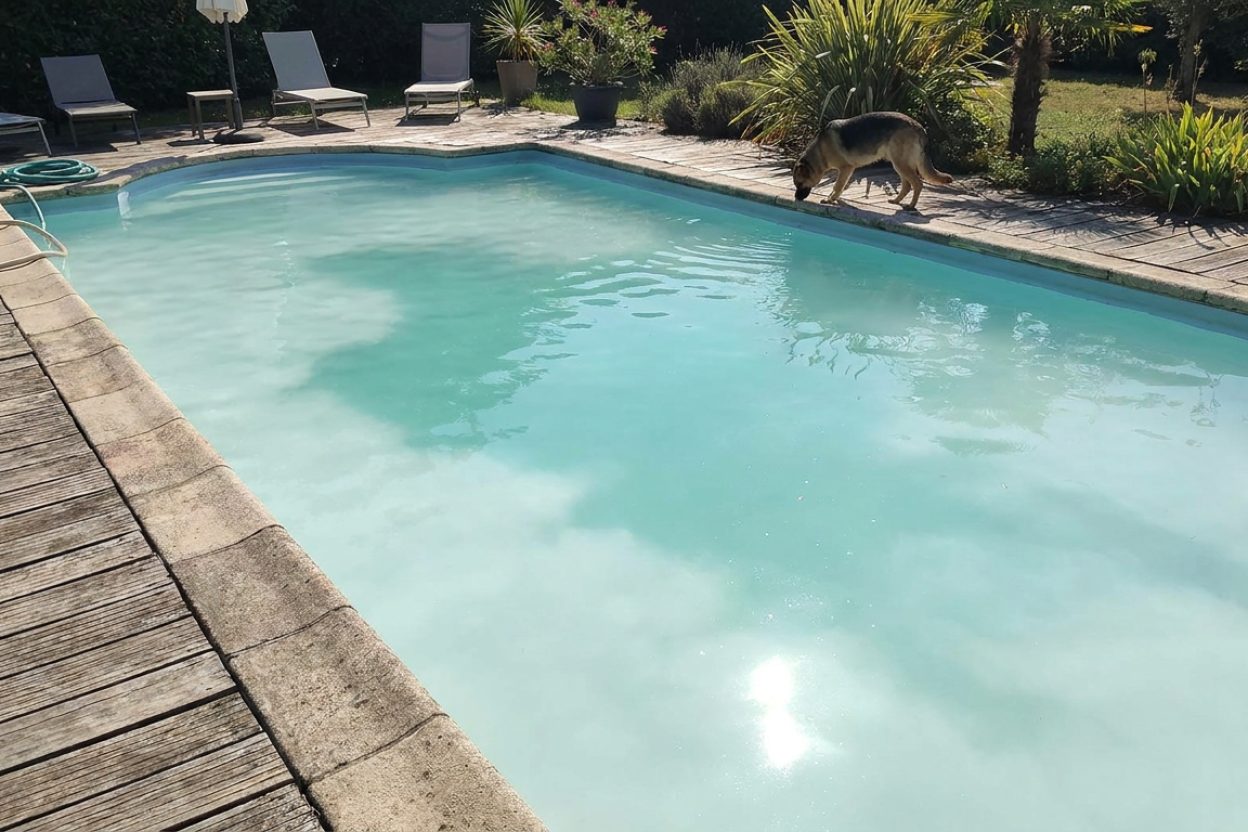
My pool looks like milk - how do I get it crystal clear again?
Read full question
Pulled off a perfect shock treatment on my old above-ground pool for this exact cloudy water mess, but my new inground pool still looks like milk. I can barely see the bottom and it's honestly embarrassing with summer parties coming up.
I'm pretty sure I need to do something with the chemicals and maybe run the filter more, but I have no idea what the right steps are or how long this is going to take. Should I be testing the water first? Adding chlorine? Help me get my pool back to that beautiful clear blue!
Quick Answer
Clear cloudy pool water by first testing and balancing your chemistry (pH 7.4-7.6, proper chlorine levels), then running your filter 24/7 while adding liquid chlorine to shock level until water clears completely.
Understanding Cloudy Pool Water
You're absolutely right to be concerned about that cloudy pool water — it usually means your sanitizer has lost ground, and if it is bad enough that you cannot see the bottom, that is a real safety hazard. Cloudiness occurs when tiny particles suspended in your water scatter light, creating that milky or hazy appearance. These particles can be dead algae, bacteria, oils, lotions, or chemical precipitates from unbalanced water chemistry.
The key to clearing cloudy water is addressing both the root cause and the symptoms simultaneously. This means balancing your water chemistry while physically removing the particles through proper filtration and circulation.
Step 1: Test Your Water Chemistry
Before adding any chemicals, you need to know exactly what you're working with. Use a reliable test kit like the Taylor K-2006C to measure:
- Free Chlorine (FCFree Chlorine — The chlorine actively sanitizing your water right now. This is the number you keep an eye on. how much you need →) - Should be appropriate for your CYACyanuric Acid (stabilizer) — Sunscreen for your chlorine — it keeps sunlight from burning it off. The catch: the more you have, the more chlorine you need to keep. learn more → level (4-6 ppm for CYA 30-50 ppm, 6-8 ppm for CYA 60-80 ppm)
- pH - Target 7.4-7.6 for comfort and balanced water
- Total Alkalinity (TATotal Alkalinity — The buffer that keeps your pH from bouncing around. Get this in range and pH gets a lot easier to manage. learn more →) - 60-80 ppm for salt water pools, 80-120 ppm for traditional pools
- Cyanuric Acid (CYA) - 30-50 ppm for regular pools, 60-80 ppm for salt water generators
- Calcium Hardness (CH) - 250-350 ppm for plaster pools, 175-225 ppm for vinyl/fiberglass
Write down all your readings - you'll need them to calculate proper chemical doses.
Step 2: Balance Your Water Chemistry
Chemistry balance is crucial because chlorine doesn't work effectively in unbalanced water, and imbalanced water can actually cause cloudiness.
Adjust pH First
If your pH is above 7.6, add muriatic acid. For a 20,000-gallon pool, start with 1 quart of muriatic acid to lower pH by about 0.2 points. Pour acid slowly into the deep end with the pump running so it disperses (if you ever pre-dilute, add acid to water, never water to acid).
If pH is below 7.2, add sodium carbonate (soda ash).
Use our all-in-one pool calculator for a good dose estimate.
Adjust Total Alkalinity
If TA is too high (above 120 ppm), use muriatic acid added slowly to the deep end. If too low (below 60 ppm), add sodium bicarbonate.
Use our all-in-one pool calculator for a good dose estimate.
Step 3: Implement SLAM Method
SLAMShock Level And Maintain — raise free chlorine to a target based on your CYA and hold it there until the algae is gone. It's a process, not a one-time dose. the SLAM walkthrough → (Shock Level And Maintain) is the most effective method for clearing cloudy water. This involves raising your free chlorine to shock level based on your CYA reading and maintaining it there until the water clears.
Use the FC/CYAFC/CYA chart — The chart that sets your chlorine target from your stabilizer (CYA) level — the two go together. see the chart → chart to determine your shock level:
- CYA 30 ppm = FC shock level 12 ppm
- CYA 40 ppm = FC shock level 16 ppm
- CYA 50 ppm = FC shock level 20 ppm
- CYA 60 ppm = FC shock level 24 ppm
Use liquid chlorine (sodium hypochlorite) for a SLAM — it's the best choice here because you're dosing heavily and repeatedly, and you don't want to keep adding calcium (cal-hypo) or CYA (dichlor) the whole time. Both are perfectly good shocks otherwise — cal-hypo when your calcium is low, dichlor when your CYA is low — just not for a SLAM. For each 1 ppm FC increase in a 20,000-gallon pool, add about 20 fl oz (0.16 gallon) of 12.5% liquid chlorine (adjust based on your actual chlorine concentration and current FC level).
Use our all-in-one pool calculator for a good dose estimate.
Step 4: Optimize Filtration and Circulation
Your filter is your primary weapon against cloudiness. Run your pump and filter 24/7 until the water clears completely. This isn't the time to worry about electricity costs - stopping filtration will extend the clearing process significantly.
Clean your filter thoroughly before starting. For cartridge filters, remove and hose off debris, then soak in filter cleaner overnight. For sand filters, perform a thorough backwash. For DE filters, backwash and add fresh DE powder.
Brush your pool walls and floor daily to prevent particles from settling and to keep them suspended so your filter can remove them.
Step 5: Monitor and Maintain
Test your FC level every 2-4 hours initially, then twice daily. The chlorine will drop as it kills bacteria and oxidizes contaminants. Add more liquid chlorine as needed to maintain shock level.
Critical point: Don't reduce chlorine levels until your water is completely clear and you pass the overnight chlorine loss test (no chlorine added and SWGSalt Water Generator — The "salt cell" that makes chlorine from the salt in a saltwater pool. Same chlorine — it just makes its own. pool terms → off, FC drops less than 1 ppm from dusk to dawn), combined chlorine is 0.5 ppm or less, and the water is clear.
Additional Strategies for Stubborn Cloudiness
Clarifier vs. Flocculant
If SLAM and proper filtration aren't clearing your water after 3-4 days, consider a clarifier. Clarifiers bind tiny particles together so your filter can catch them more easily. Use 1 ounce per 5,000 gallons of water and run your filter continuously.
For severe cloudiness, flocculant might be necessary. Floc causes particles to clump and settle to the bottom where you can vacuum them out. However, this requires vacuuming to waste, which means adding fresh water afterward. (This needs a sand or DE filter with a multiport "waste" valve — cartridge filters have no waste setting, so with a cartridge you vacuum through the filter and then clean or replace it, or run a separate utility/manual pump that sends the water out of the pool.)
Check for Algae
If your cloudy water has any green, yellow, or pink tint, you're dealing with algae, not just cloudiness. Continue the SLAM process but expect it to take longer - possibly 5-10 days depending on the severity.
Prevention Tips
Once your water is clear, prevent future cloudiness by:
- Maintaining proper FC levels daily (4-6 ppm for CYA 30-50 ppm, 6-8 ppm for CYA 60-80 ppm)
- Testing and adjusting pH weekly
- Running your filter adequate hours daily (typically 8-12 hours)
- Regular brushing and skimming
- Showering before swimming to reduce body oils and lotions
Safety Warning: Always handle pool chemicals with care. Wear protective equipment, never mix different chemicals, and store them in a cool, dry place away from children and pets. Keep chlorine away from acids and fuels in particular — those combinations can produce toxic gas or fire.
Most pools clear within 2-5 days using this method. If your water isn't showing improvement after a week of consistent treatment, consider having your water professionally tested to check for unusual chemical imbalances or equipment problems.
For the full breakdown of safe chlorine levels by CYA level, see our pool water chemistry guide.
When to Call a Professional
Mechanical Issues Beyond DIY Scope
Some cloudy water problems require professional diagnosis and repair that's beyond typical homeowner capabilities.
Equipment Failures:
- Pump motor problems affecting flow rates
- Filter housing cracks or major leaks
- Plumbing blockages or circulation problems
- Automation system malfunctions
Structural Issues:
- Pool surface problems contributing to contamination
- Drainage or groundwater infiltration
- Major plumbing modifications needed
Persistent Water Quality Problems
If you've properly executed SLAM for a week without success, professional help can identify issues you might miss.
Advanced Diagnostics:
- Professional water analysis beyond standard testing
- System flow and pressure testing
- Equipment efficiency evaluation
- Comprehensive contamination source identification
Special Considerations
Salt Water Pool Cloudiness
Salt water pools still require proper chemistry management and can develop cloudiness just like traditional chlorine pools.
SWG-Specific Issues:
- Cell scaling reducing chlorine production
- pH drift from chlorine generation
- Calcium buildup affecting system performance
Spa and Hot Tub Cloudiness
Spa chemistry requires different approaches due to higher temperatures and lower water volumes.
Spa-Specific Factors:
- Higher bather load per gallon of water
- Increased chemical demand from heat
- More frequent water changes needed
 Taylor K-2006C Complete FAS-DPD Pool & Spa Test Kit
The FAS-DPD kit pool pros trust — reads chlorine accurately even at shock/SLAM levels, plus pH, alkalinity, calcium hardness and CYA. View on Amazon →
Taylor K-2006C Complete FAS-DPD Pool & Spa Test Kit
The FAS-DPD kit pool pros trust — reads chlorine accurately even at shock/SLAM levels, plus pH, alkalinity, calcium hardness and CYA. View on Amazon →
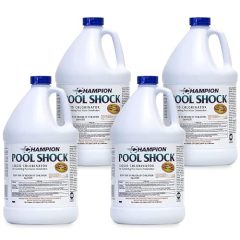 Liquid Chlorine / Sodium Hypochlorite (12.5%)
Everyday sanitizer — the B in BBB View on Amazon →
Liquid Chlorine / Sodium Hypochlorite (12.5%)
Everyday sanitizer — the B in BBB View on Amazon →
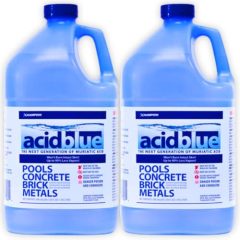 Acid Blue - Low Fume Muriatic Acid for Swimming Pools & Spas - Lower's pH, Reduces Alkalinity - 2 Gallon
View on Amazon →
Acid Blue - Low Fume Muriatic Acid for Swimming Pools & Spas - Lower's pH, Reduces Alkalinity - 2 Gallon
View on Amazon →
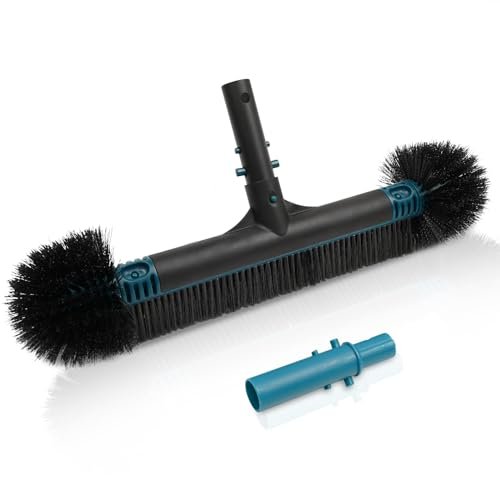 Poolvio 20" 2-in-1 Pool Brush Head (Walls & Floor)
Sturdy 20-inch brush head that clips onto any standard telescopic pole. View on Amazon →
Poolvio 20" 2-in-1 Pool Brush Head (Walls & Floor)
Sturdy 20-inch brush head that clips onto any standard telescopic pole. View on Amazon →
Still need help? Ask a Pool & Spa Expert AD
Get a personalized answer from PoolGuy810 — 30 years owning a pool and spa repair company. Describe your issue and get step-by-step help.
Need More Help?
Try our free pool calculators and tools to help diagnose and fix your pool problems.
Browse Pool ToolsSLAM calculator, pH calculator, salt dosing & more