
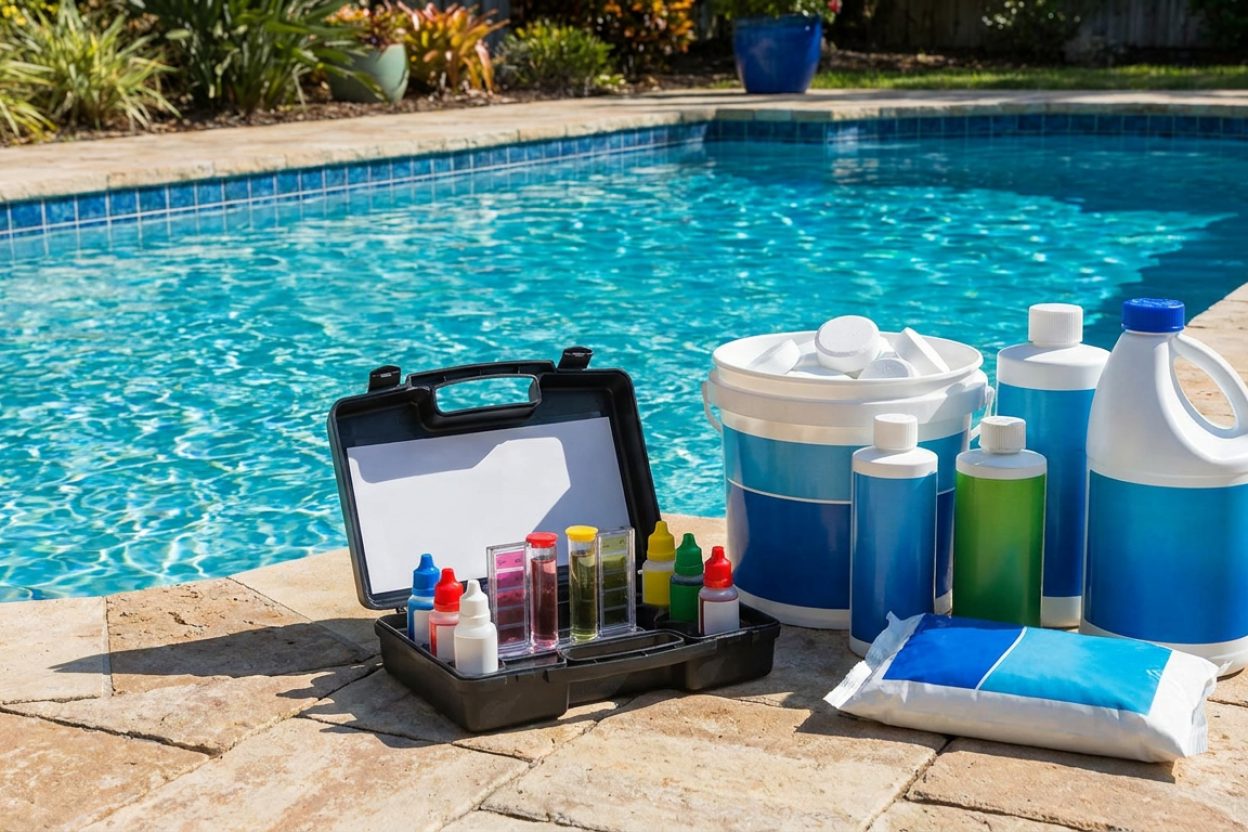
Do I Need pH Up and Down for Pool? Essential pH Guide

Do I really need both pH Up AND pH Down chemicals for my pool?
Read full question
My husband casually mentioned that we're the only neighbors who stock both pH Up AND pH Down, and now I'm suspicious the pool store is playing us. That's like $40-50 just for pH adjustment chemicals alone!
Is this just upselling, or do I actually need to keep both products on hand? My pool seems to drift one way or the other pH-wise, but rarely both directions. Looking for some honest advice from people who aren't trying to empty my wallet every time I walk in for supplies.
Quick Answer
Most pool owners primarily need just one — pH Up OR pH Down — because pools tend to drift in one direction; keep a small amount of the other on hand for occasional corrections. Aim for a pH of 7.4-7.6.
Free pH Calculator
Estimate how much pH Up or Down you need:
Step-by-Step Guide to Determining Your pH Chemical Needs
- Test your pool's natural pH tendency
Use a reliable test kit like the Taylor K-2006 to test your pH daily for one week without adding any chemicals. Record whether your pH consistently rises, falls, or stays stable. This baseline tells you which chemical you'll use most often. - Identify factors affecting your pH
Several factors influence whether your pH rises or falls: liquid chlorine gives a brief pH bump when added but is close to pH-neutral over time, trichlor tablets are acidic and lower pH, high total alkalinity causes pH to rise, low total alkalinity makes pH unstable, aeration from waterfalls or jets raises pH, and heavy bather loads lower pH. - Choose your pH adjustment chemicals
For pH Up: Use sodium carbonate (soda ash) - add 6 ounces per 10,000 gallons to raise pH by approximately 0.2-0.3 units. For pH Down: Choose between sodium bisulfate (dry acid) - gentler, easier to handle, or muriatic acid - more economical for large adjustments but requires careful handling. - Stock the right chemical for your situation
Most chlorine pools tend to drift upward over time (mainly from aeration and higher alkalinity), so if you use liquid chlorine or have high total alkalinity (over 120 ppm), stock pH Down as your primary chemical. If you use trichlor tablets or have low total alkalinity (under 80 ppm), stock pH Up as your primary chemical. Generally it's a good idea to keep a small amount of both on hand for unexpected situations. - Learn proper dosing techniques
For sodium carbonate (pH Up): Dissolve in a bucket of pool water first, then pour around the deep end with the pump running. Wait 2 hours before retesting. For sodium bisulfate: Broadcast evenly across the deep end with pump running to avoid localized pH drops, or dissolve first for faster mixing. For muriatic acid: Always add acid to water, never water to acid. Pour slowly into the deep end return jet area. - Establish a testing and adjustment routine
Test pH 2-3 times per week using a reliable test kit. Make small adjustments (0.2-0.3 pH units at a time) rather than large corrections. Always adjust total alkalinity first if it's out of range (80-120 ppm for regular pools, 60-80 for salt water pools).
Understanding When You Might Need Only One Product
Some pool situations require primarily one type of pH adjuster. Salt water pool owners typically only need pH Down because salt pools tend to drift up in pH over time. The cell itself is roughly pH-neutral (the acidic chlorine it makes offsets the alkaline hydroxide); the rise comes mainly from the cell's hydrogen bubbles aerating the water and driving off CO2.
Trichlor tablet users often need only pH Up because trichlor is acidic (pH around 2.8 when dissolved) and continuously lowers pool pH. If you're using a chlorinator or floater with trichlor tablets as your primary sanitizer, you'll likely need to raise pH regularly.
Liquid chlorine users usually need pH Down because liquid chlorine (sodium hypochlorite) has a pH around 13 and raises pool pH with each addition. Commercial liquid chlorine bumps pH up slightly when added, but the effect is small and largely reverses as the chlorine is used up (it's close to pH-neutral over time), though actual increase depends on current pH and total alkalinity levels.
Natural Alternatives and Cost-Saving Options
You can use some household products as pH adjusters, though commercial pool chemicals are usually more convenient. Baking soda (sodium bicarbonate) mainly raises total alkalinity with only a small effect on pH, so use it when alkalinity is low (to raise pH specifically, use soda ash). Use 1.5 pounds per 10,000 gallons to raise total alkalinity by 10 ppm.
Washing soda (sodium carbonate) is chemically identical to pool pH Up and often costs less at grocery stores. Ensure it's pure sodium carbonate without additives. Muriatic acid from hardware stores is typically less expensive than pool-specific pH Down products and works identically.
Safety Considerations and Storage
Always wear safety equipment when handling pH chemicals: safety glasses, gloves, and closed-toe shoes. Store chemicals in a cool, dry place away from other pool chemicals - never store pH Up and pH Down together as they can react if mixed.
Muriatic acid requires extra precautions: store in original containers, ensure adequate ventilation when using, and have a source of clean water nearby for emergency rinsing. Never mix muriatic acid with chlorine products as this creates dangerous chlorine gas.
Monitoring and Long-Term Strategy
Track your pH patterns over several months to optimize your chemical purchasing. Most pools develop predictable pH trends based on their sanitization method, bather load, and environmental factors. This data helps you stock the right quantities and avoid emergency trips to the pool store.
Remember that proper total alkalinity management reduces pH swings, potentially decreasing your need for frequent pH adjustments. Maintain total alkalinity between 80-120 ppm for most pools, or 60-80 ppm for salt water systems, and your pH will be much more stable.
For the full breakdown of safe chlorine levels by CYACyanuric Acid (stabilizer) — Sunscreen for your chlorine — it keeps sunlight from burning it off. The catch: the more you have, the more chlorine you need to keep. learn more → level, see our pool water chemistry guide.
all-in-one pool calculator is a handy reference to calculate an estimate of chemicals you need for your pool. However, if you prefer to do it by hand, here are the general guidelines:
For pH Up: Use sodium carbonate (soda ash) - add 6 ounces per 10,000 gallons to raise pH by approximately 0.2-0.3 units. For pH Down: Choose between sodium bisulfate (dry acid) - gentler, easier to handle, or muriatic acid - more economical for large adjustments but requires careful handling.

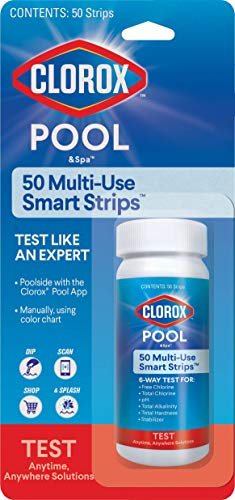
Still need help? Ask a Pool & Spa Expert AD
Get a personalized answer from PoolGuy810 — 30 years owning a pool and spa repair company. Describe your issue and get step-by-step help.
Related Pool Guides
Need More Help?
Try our free pool calculators and tools to help diagnose and fix your pool problems.
Browse Pool ToolsSLAM calculator, pH calculator, salt dosing & more