

Do I Need Algaecide in My Pool? Pool Care Guide

Is algaecide necessary for safe swimming water for kids?
Read full question
I opened three different algaecide advice sources and got three different answers: pool guy says skip it, store says weekly doses, forums are completely split. I see algaecide products at the pool store and some neighbors swear by them, but I'm not sure if it's actually necessary or just extra insurance. Should I be using algaecide regularly, or only in certain situations? I just want to make sure the water quality is safe and clean for my kids to swim in without overdoing it on chemicals.
Quick Answer
Most pools don't need algaecide if you maintain proper chlorine levels (4-6 ppm FC for CYA 30-50 ppm) and adequate CYA (30-50 ppm for regular pools, 60-80 ppm for salt water generators). Algaecide is mainly useful for prevention during high-risk periods or as backup insurance, not for treating active algae blooms.
The Short Answer
The first thing to check with algaecide is whether you're masking poor water chemistry with an expensive product you probably don't need. If you're consistently keeping free chlorine between 4-6 ppm with adequate stabilizer levels (30-50 ppm CYACyanuric Acid (stabilizer) — Sunscreen for your chlorine — it keeps sunlight from burning it off. The catch: the more you have, the more chlorine you need to keep. learn more →), your pool should remain algae-free without algaecide. However, algaecide can provide valuable backup protection during high-risk periods like heavy rains, equipment failures, or when you're away from home.
When You DON'T Need Algaecide
The foundation of algae prevention is proper sanitizer levels, not algaecide. If you're maintaining these conditions, algaecide becomes redundant:
- Free chlorine consistently 4-6 ppm (based on your CYA level using the FC/CYA chart)
- CYA (stabilizer) between 30-50 ppm for regular chlorine pools, 60-80 ppm for salt water generators (check your CYA levels)
- pH maintained between 7.4-7.6 for comfort and to protect surfaces
- Proper circulation and filtration running 8-12 hours daily
- Regular brushing and skimming to remove organic debris
When these fundamentals are in place, chlorine alone will prevent algae growth. Many pool professionals following TFP (Trouble Free Pool) methods never use algaecide because they rely on consistent chlorine maintenance instead.
When Algaecide Makes Sense
Consider adding algaecide to your routine during these high-risk scenarios:
Equipment Failures and Vacations
If your pump fails or you'll be away for more than a few days, algaecide provides insurance against chlorine depletion. Add a preventative dose before leaving town or when equipment problems might interrupt your normal maintenance schedule.
Heavy Rain and Storm Seasons
Torrential rains can quickly dilute chlorine levels and introduce organic debris that feeds algae. During active storm seasons, weekly algaecide doses can bridge gaps when you can't immediately restore proper chemistry.
High Bather Loads
Pool parties and heavy usage consume chlorine rapidly through organic contamination (sunscreen, sweat, cosmetics). Algaecide applied before big events helps maintain protection when chlorine demand spikes unexpectedly.
Consistent Chemistry Struggles
If you frequently battle low chlorine due to high CYA, equipment limitations, or maintenance challenges, algaecide can provide a safety net while you address underlying issues.
What Algaecide Cannot Do
Critical point: Algaecide alone cannot clear an active algae bloom. If your pool is already green, skip the algaecide and go straight to the SLAMShock Level And Maintain — raise free chlorine to a target based on your CYA and hold it there until the algae is gone. It's a process, not a one-time dose. the SLAM walkthrough → method (Shock Level And Maintain). This involves raising free chlorine to shock level based on your CYA reading and maintaining that level until the pool clears completely. Use our chlorine calculator to estimate how much chlorine you need for your pool size and CYA level. Always ensure adequate ventilation, wear protective equipment when handling chemicals, and test chlorine levels every few hours during the process.
For example, if your CYA is 40 ppm, you'll need to maintain FCFree Chlorine — The chlorine actively sanitizing your water right now. This is the number you keep an eye on. how much you need → around 16 ppm throughout the SLAM process. Use liquid chlorine (sodium hypochlorite) rather than cal-hypo shock, as repeated shocking with calcium hypochlorite can drive calcium hardness too high.
Choosing the Right Algaecide
If you decide algaecide fits your situation, select based on your pool type and goals:
Polyquat (Poly 60) Algaecides
Best for routine prevention in most pools. Non-foaming, won't affect water balance, and compatible with all sanitizers. Brands like BioGuard Algae All 60 or Poolife Super AlgaeBomb 60 provide 2-4 weeks of protection per dose.
Copper-Based Algaecides
More powerful but require careful dosing to avoid staining. Reserve these for persistent algae problems or pools with chronic issues. Always test copper levels with a Taylor test kit and keep total copper below 0.3 ppm (below 0.2 ppm for sensitive surface types to avoid staining).
Quaternary Ammonium (Quat Pool Algaecides)
Avoid these entirely. They're inexpensive but can cause foaming problems and don't provide reliable protection compared to polyquat alternatives.
Application Guidelines
When using algaecide preventatively:
- Test and balance water first - Ensure FC is 4-6 ppm, pH 7.4-7.6
- Add algaecide in evening after sun goes down to maximize effectiveness
- Pour around perimeter with pump running for even distribution
- Follow label rates exactly - polyquat maintenance is typically ~2-4 oz per 10,000 gallons every 5-7 days (6+ oz is an initial/treatment dose)
- Retest FC after 24 hours - some algaecides can temporarily reduce chlorine readings
The Bottom Line
Algaecide is insurance, not medicine. Focus your efforts on maintaining proper FC/CYAFC/CYA chart — The chart that sets your chlorine target from your stabilizer (CYA) level — the two go together. see the chart → ratios, balanced pH, and good circulation. These fundamentals prevent 99% of algae problems without any algaecide. Add algaecide only when you need extra protection during high-risk periods or as backup when perfect maintenance isn't possible. Never rely on algaecide to fix problems that proper chlorination would prevent.
For the full breakdown of safe chlorine levels by CYA level, see our pool water chemistry guide.
 Taylor K-2006C Complete FAS-DPD Pool & Spa Test Kit
The FAS-DPD kit pool pros trust — reads chlorine accurately even at shock/SLAM levels, plus pH, alkalinity, calcium hardness and CYA. View on Amazon →
Taylor K-2006C Complete FAS-DPD Pool & Spa Test Kit
The FAS-DPD kit pool pros trust — reads chlorine accurately even at shock/SLAM levels, plus pH, alkalinity, calcium hardness and CYA. View on Amazon →
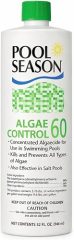 PolyQuat 60 Algaecide (Non-Foaming)
Non-foaming, copper-free backup View on Amazon →
PolyQuat 60 Algaecide (Non-Foaming)
Non-foaming, copper-free backup View on Amazon →
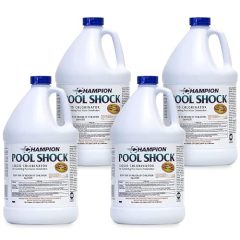 Liquid Chlorine / Sodium Hypochlorite (12.5%)
Everyday sanitizer — the B in BBB View on Amazon →
Liquid Chlorine / Sodium Hypochlorite (12.5%)
Everyday sanitizer — the B in BBB View on Amazon →
Still need help? Ask a Pool & Spa Expert AD
Get a personalized answer from PoolGuy810 — 30 years owning a pool and spa repair company. Describe your issue and get step-by-step help.
Related Pool Guides
Need More Help?
Try our free pool calculators and tools to help diagnose and fix your pool problems.
Browse Pool ToolsSLAM calculator, pH calculator, salt dosing & more