
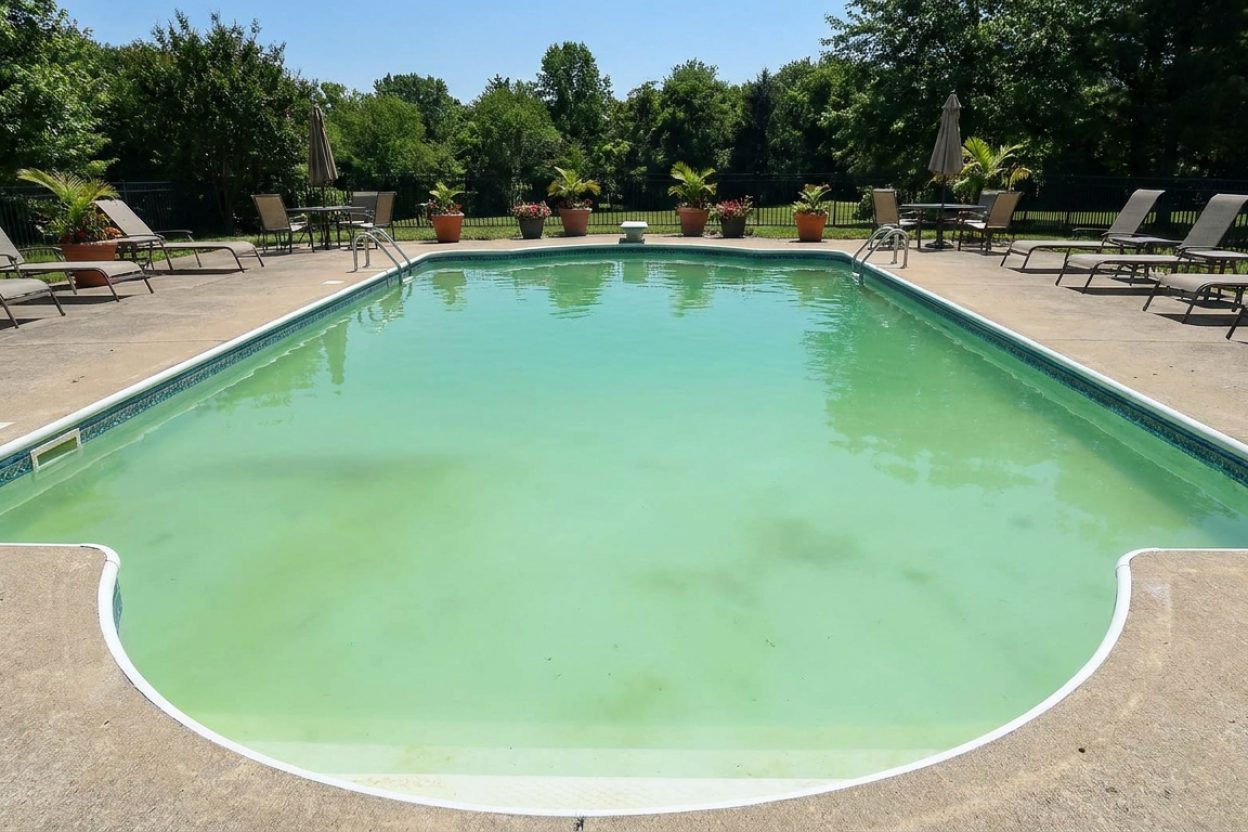
Can Green Pool Water Make You Sick? Health Risks Explained

Is it dangerous to swim in green pool water?
Read full question
Nobody believed me when I said our pool looked dangerous until my husband walked outside and said it resembles a literal swamp. I know it looks gross but is green water actually dangerous or just unsightly?
What kind of health problems can you get from swimming in algae water? Should I keep everyone out until it's crystal clear again?
Quick Answer
Yes — green pool water can make you sick, so don't swim in it. The algae has crashed your chlorine, so the water is unsanitized and harbors bacteria that cause stomach bugs, rashes, and ear/eye irritation (worst for sensitive people). You also can't see the bottom. Clear and rebalance before swimming.
Quick Answer: Yes — and Don't Swim In It
The short answer: yes, green pool water can make you sick, and nobody should swim in it until it's cleared. Green means algae has overwhelmed your chlorine, so the water is no longer sanitized — and unsanitized water genuinely does harbor bacteria and other germs that cause stomach bugs, skin rashes, ear infections, and eye irritation. Sensitive people — young kids, and anyone with sensitive skin, allergies, or a weakened immune system — react the worst. On top of that you can't see the bottom, which is a real drowning hazard. The algae itself isn't the poison; the danger is that proper sanitation has failed, and that's exactly why keeping your water balanced matters.
Immediate Health Risks from Green Pool Water
Bacterial Infections
With no working sanitizer, bacteria that swimmers introduce — E. coli, Pseudomonas and others — build up instead of being killed off. The realistic illnesses from swallowing or sitting in unsanitized water are:
- Stomach upset: nausea, vomiting, and diarrhea
- Hot-tub rash (folliculitis) and other skin irritation — noticeably worse for people with sensitive skin
- Swimmer's ear, ear infections, and eye irritation or conjunctivitis
A healthy swimmer is most likely to come away with a stomach bug or a rash rather than anything severe — but the more sensitive you are, the more those odds matter, which is the whole reason not to risk it.
Parasitic Infections
Chlorine-resistant parasites like Cryptosporidium and Giardia can survive in pool water — they don't multiply in the water itself (they need a host), but normal chlorine doesn't kill them quickly either. In an unsanitized green pool there's nothing holding them back if someone introduces them. They can cause:
- Diarrheal illness that can last a week or more
- Dehydration, which is harder on young children
This is uncommon, but it's why "shock it and jump in" isn't enough — Crypto in particular needs prolonged high chlorine to clear.
Chemical Imbalance Effects
Green pools indicate failed sanitization, meaning pH and chlorine levels are dangerously off. This creates additional risks:
- Effectively zero chlorine means no active sanitization
- High pH (above 8.0) shifts chlorine toward its less-active form and slows it down; keep pH in range, though the bigger high-pH problem is scaling and cloudiness
- Combined chlorine (chloramines) builds up and irritates eyes and the throat
Why Green Water Is Especially Dangerous
The algae causing green water doesn't directly harm you, but it creates perfect conditions for dangerous pathogens. Here's what happens:
Algae Consumes Available Chlorine
Algae rapidly consumes free chlorine, dropping sanitizer levels to zero. Without active chlorine, bacteria and viruses multiply unchecked. Even pools that look slightly green have lost sanitization effectiveness.
Organic Matter Feeds Bacteria
Dead algae and organic debris provide nutrients for pathogenic bacteria. As algae dies and decomposes, it creates an oxygen-depleted environment where anaerobic bacteria thrive.
pH Rises Dangerously High
Algae photosynthesis raises pH above 8.0, where chlorine becomes nearly ineffective. High pH also leaves chlorine too weak to keep germs in check.
Vulnerable Populations at Higher Risk
Certain groups face elevated dangers from green pool water exposure:
- Children under 5: Immature immune systems and tendency to swallow pool water
- Pregnant women: generally advised to avoid any waterborne infection risk
- Immunocompromised individuals: Cancer patients, organ transplant recipients, HIV patients
- Elderly adults: Weakened immune response and slower recovery
- People with chronic conditions: Diabetes, lung disease, kidney problems
Signs You've Been Exposed to Contaminated Water
If you've accidentally been exposed to green pool water, watch for these symptoms:
- Gastrointestinal symptoms within 24-72 hours (nausea, vomiting, diarrhea)
- Skin irritation, rash, or infections around hair follicles
- Eye redness, discharge, or persistent irritation
- Respiratory symptoms like coughing or difficulty breathing
- Ear pain or discharge indicating swimmer's ear
Seek medical attention immediately if symptoms are severe or persist beyond 24 hours. Mention potential pool water exposure to help doctors diagnose properly.
When Is It Safe to Swim Again?
Only swim when all these conditions are met:
- You can clearly see the bottom and main drain (so a swimmer in trouble is visible)
- Free chlorine is at a proper level for your CYACyanuric Acid (stabilizer) — Sunscreen for your chlorine — it keeps sunlight from burning it off. The catch: the more you have, the more chlorine you need to keep. learn more → and below 10 ppm (the CDC swim limit)
- pH is between 7.2-7.8
- Pool has been properly shocked with appropriate chlorine levels maintained until algae is eliminated
- Filter has been cleaned or replaced
- All surfaces have been brushed and vacuumed
Emergency Steps If Someone Swims in Green Water
If someone accidentally enters green pool water:
- Exit immediately and shower thoroughly with soap
- Rinse eyes with clean water for several minutes
- Remove and wash swimwear in hot water
- Monitor for symptoms over the next 72 hours
- Contact a healthcare provider if any symptoms develop
Prevention: Maintaining Safe Pool Chemistry
Prevent dangerous green water with proper maintenance:
- Test water 2-3 times weekly with a reliable test kit
- Maintain free chlorine based on your CYA level (for a regular chlorine pool, minimum ~7.5% of CYA, target ~11–13% of CYA; salt/SWG pools can run a minimum of ~5% of CYA) — our all-in-one pool calculator estimates the free chlorine target for your CYA.
- Keep pH between 7.2-7.8, with 7.4-7.6 being optimal for sanitizer effectiveness
- Maintain your FCFree Chlorine — The chlorine actively sanitizing your water right now. This is the number you keep an eye on. how much you need →-for-CYA target consistently, and shock (SLAMShock Level And Maintain — raise free chlorine to a target based on your CYA and hold it there until the algae is gone. It's a process, not a one-time dose. the SLAM walkthrough →) only when algae appears or after heavy contamination, using liquid chlorine or cal-hypo
- Run filtration system 8-12 hours daily during swim season
- Clean filter monthly and replace when necessary
Remember: green pool water is never safe for swimming. The health risks are real and potentially serious. When in doubt, stay out until water is professionally tested and treated.
 Taylor K-2006C Complete FAS-DPD Pool & Spa Test Kit
The FAS-DPD kit pool pros trust — reads chlorine accurately even at shock/SLAM levels, plus pH, alkalinity, calcium hardness and CYA. View on Amazon →
Taylor K-2006C Complete FAS-DPD Pool & Spa Test Kit
The FAS-DPD kit pool pros trust — reads chlorine accurately even at shock/SLAM levels, plus pH, alkalinity, calcium hardness and CYA. View on Amazon →
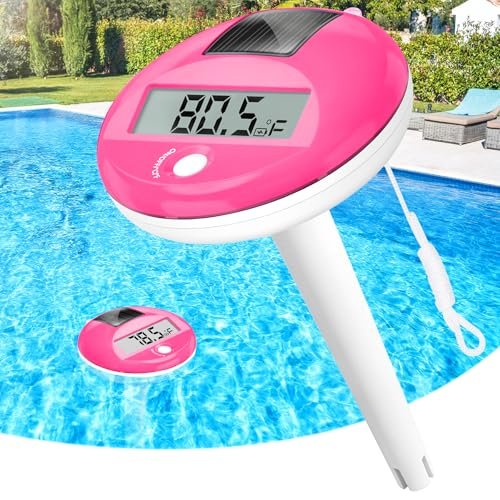 LuxBlue Floating Pool Thermometer, Solar, Large LCD
Easy-read floating thermometer for pool water temperature. View on Amazon →
LuxBlue Floating Pool Thermometer, Solar, Large LCD
Easy-read floating thermometer for pool water temperature. View on Amazon →
Still need help? Ask a Pool & Spa Expert AD
Get a personalized answer from PoolGuy810 — 30 years owning a pool and spa repair company. Describe your issue and get step-by-step help.
Related Pool Guides
Need More Help?
Try our free pool calculators and tools to help diagnose and fix your pool problems.
Browse Pool ToolsSLAM calculator, pH calculator, salt dosing & more