
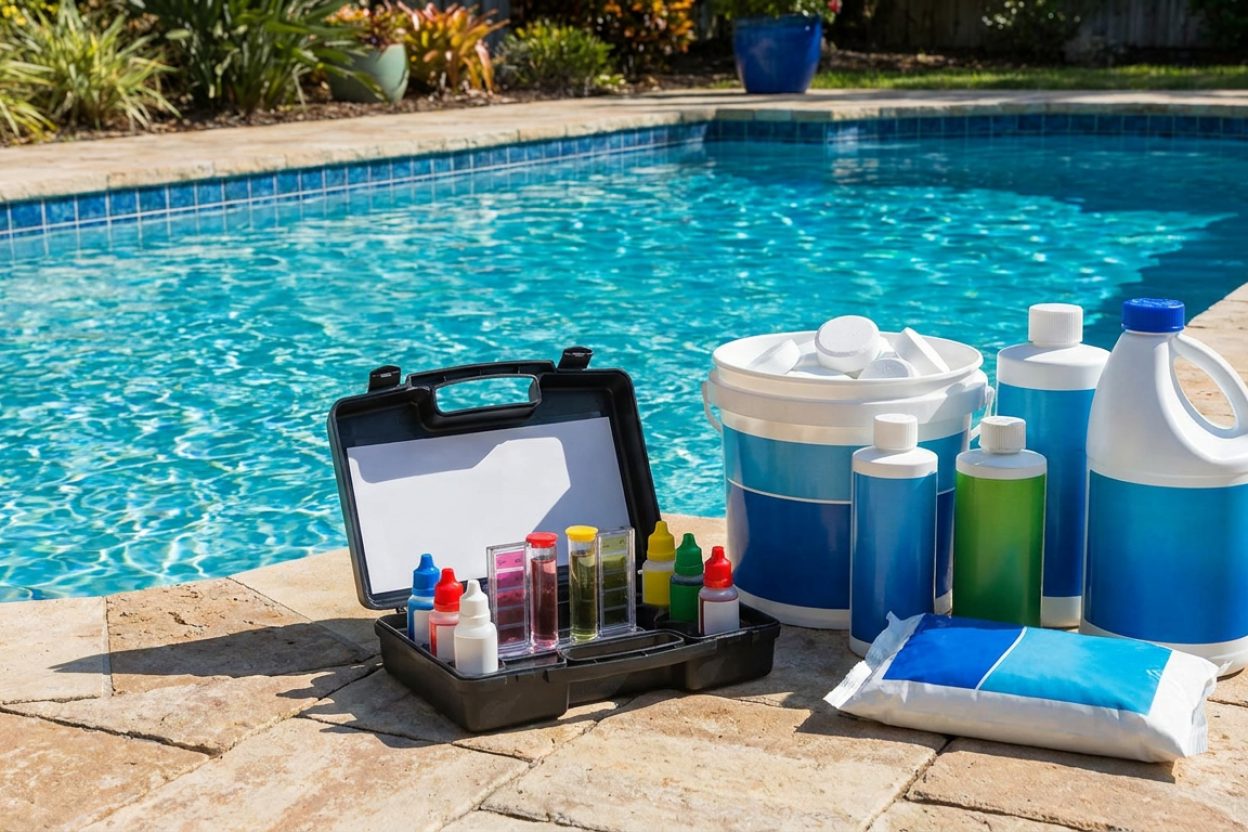
Can You Shock Pool With High pH? Complete Chemistry Guide

Should I shock my pool even though the pH is really high?
Read full question
This might be a stupid question but I'm literally at the pool store about to buy shock for my high pH pool — am I wasting my money? My pool is looking a bit cloudy and I know I need to shock it, but when I tested the water, the pH came back really high - like 7.8 or maybe even higher.
The guy at the pool store mentioned something about pH affecting chlorine, but I didn't really understand what he meant. Can I go ahead and shock the pool anyway, or do I absolutely need to get that pH down first? If I have to lower it first, how long do I need to wait? I'm worried about the water getting worse while I'm trying to fix the pH.
Quick Answer
You can shock a pool with high pH. In a stabilized (CYA) pool the strength hit is modest - TFP lowers pH to about 7.2 before a SLAM mainly because the pH test reads false-high at shock-level chlorine, not because high pH ruins the shock. Target the FC level for your CYA.
Diagnosing Your Pool's Condition
First, test your water with a reliable FAS-DPDFAS-DPD test — A drop-based test that reads chlorine accurately even at high "shock" levels, where test strips give up. see test kits → kit like the Taylor K-2006C to get accurate readings for:
- pH level (target 7.2-7.6)
- Free chlorine (FCFree Chlorine — The chlorine actively sanitizing your water right now. This is the number you keep an eye on. how much you need →) current level
- Total alkalinity (TATotal Alkalinity — The buffer that keeps your pH from bouncing around. Get this in range and pH gets a lot easier to manage. learn more →) - affects pH stability
- Cyanuric acid (CYACyanuric Acid (stabilizer) — Sunscreen for your chlorine — it keeps sunlight from burning it off. The catch: the more you have, the more chlorine you need to keep. learn more →) - determines your shock-level target
One caveat worth knowing up front: once FC climbs above about 10 ppm (shock territory), the standard phenol-red pH test reads artificially high, because the chlorine converts the indicator to a different dye. That's the practical reason to set pH before you raise chlorine, and to stop testing pH during the SLAMShock Level And Maintain — raise free chlorine to a target based on your CYA and hold it there until the algae is gone. It's a process, not a one-time dose. the SLAM walkthrough →.
How Much Does High pH Actually Hurt the Shock?
Less than you'd think—if your pool has stabilizer (cyanuric acid) in it, like most outdoor pools do. High pH does make chlorine a little weaker, but the stabilizer evens that out, so where your pH sits within the normal range barely moves the needle. What really decides how hard your chlorine works is keeping free chlorine at the right level for your CYA (the chart further down).
The exception is a pool with little or no stabilizer. Most indoor pools fall here, since there's no sunlight to burn off chlorine and they're often run without CYA. In that case pH has a much bigger say, and dropping it to 7.2-7.4 before you shock genuinely helps. If that's your pool, treat the lower-pH-first step as worth doing.
Either way, high pH is still worth fixing—for swimmer comfort, scaling, and protecting your equipment—but in a normal stabilized pool it won't wreck a shock the way some guides imply, and you don't need to dump in extra chlorine to make up for it.
Solution 1: Lower pH First (Tidiest Approach)
Lowering pH before you shock keeps your pH reading trustworthy and starts it low so it stays in range as it drifts up during the process. Here's how:
- Estimate the muriatic acid needed with our all-in-one pool calculator, as the dose varies a lot with your total alkalinity and current pH
- Turn on your pool pump and ensure good circulation
- Pour muriatic acid slowly over the water in the deep end while walking around the pool perimeter
- Wait about 30 minutes with the pump running, then retest pH
- Repeat if necessary to reach pH 7.2-7.4
- Once pH is set, proceed with your shock treatment
- Calculate the shock dose from your CYA level using the FC/CYAFC/CYA chart — The chart that sets your chlorine target from your stabilizer (CYA) level — the two go together. see the chart → relationship—our all-in-one pool calculator estimates the free-chlorine target for your CYA.
Safety Warning: When pre-diluting acid, always add acid to water, never water to acid; to dose the pool, broadcast it slowly over moving water in the deep end. Wear safety goggles and gloves when handling muriatic acid, and add it with the pump running to prevent localized high concentrations.
Solution 2: Shock Now, Correct pH After
If you need to shock right away (active algae bloom, contamination event), go ahead—the modest pH effect in a stabilized pool doesn't justify waiting or overdosing:
- Determine your target shock level from your CYA (chart below) or the calculator
- Add liquid chlorine (sodium hypochlorite) to reach that FC level, broadcasting it slowly over moving water with the pump running
- Don't try to chase pH against a falsely high reading—bring pH down toward 7.2 once you can test it reliably (FC back under about 10 ppm), or simply let the SLAM run and correct pH at the end
- Re-test FC and top it back up to the shock level as it gets consumed
- Continue the SLAM until it passes the three TFP exit tests: overnight FC loss of 1 ppm or less, combined chlorine (CCCombined Chlorine — "Used-up" chlorine left over from doing its job. Above about 0.5 ppm is the classic sign water needs a shock. learn more →) of 0.5 ppm or less, and clear water
You do not need to pile on 25-50% extra chlorine to offset high pH. Hit the FC/CYA target and hold it—that's what clears the water.
Understanding Shock Levels and CYA
Your target shock level depends on your cyanuric acid (CYA) level. Use these as a starting point, or let the calculator set it for you:
- CYA 30-40 ppm: shock level 12-16 ppm FC
- CYA 50 ppm: shock level 20 ppm FC
- CYA 60 ppm: shock level 24 ppm FC
- CYA 70-80 ppm: shock level 28-32 ppm FC
Hitting and holding the right level for your CYA is what does the work—far more than where your pH sits within the normal range.
Preventing Future pH Issues
To avoid high pH problems in the future:
- Test pH 2-3 times weekly during swimming season
- Maintain total alkalinity between 80-120 ppm (60-80 for salt water pools)
- Consider liquid chlorine instead of cal-hypo shock, which raises pH
- Address high alkalinity if pH constantly rises
- Use a reliable test kit - test strips are notoriously inaccurate for pH
When to Retest and Adjust
After shocking, test FC every 2-4 hours initially, then daily. You're looking for:
- FC holding at the shock level for your CYA
- CC (combined chlorine) at 0.5 ppm or less
- Water clearing if you're treating algae
- Overnight FC loss of 1 ppm or less before you stop
Don't let swimmers back in until free chlorine drops below 10 ppm (per CDC) and pH is between 7.2-7.8.
Bottom line: you can shock at high pH, and in a stabilized pool it won't cripple the treatment. Correcting pH first is mostly about keeping your pH test honest and your water comfortable—not about rescuing a failed shock.
For the full breakdown of safe chlorine levels by CYA level, see our pool water chemistry guide.
 Taylor K-2006C Complete FAS-DPD Pool & Spa Test Kit
The FAS-DPD kit pool pros trust — reads chlorine accurately even at shock/SLAM levels, plus pH, alkalinity, calcium hardness and CYA. View on Amazon →
Taylor K-2006C Complete FAS-DPD Pool & Spa Test Kit
The FAS-DPD kit pool pros trust — reads chlorine accurately even at shock/SLAM levels, plus pH, alkalinity, calcium hardness and CYA. View on Amazon →
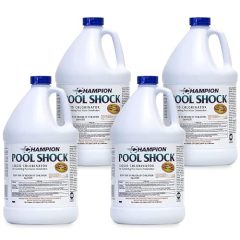 Liquid Chlorine / Sodium Hypochlorite (12.5%)
Everyday sanitizer — the B in BBB View on Amazon →
Liquid Chlorine / Sodium Hypochlorite (12.5%)
Everyday sanitizer — the B in BBB View on Amazon →
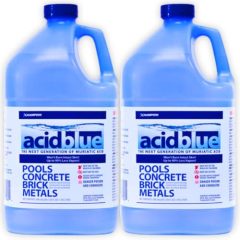 Acid Blue - Low Fume Muriatic Acid for Swimming Pools & Spas - Lower's pH, Reduces Alkalinity - 2 Gallon
View on Amazon →
Acid Blue - Low Fume Muriatic Acid for Swimming Pools & Spas - Lower's pH, Reduces Alkalinity - 2 Gallon
View on Amazon →
Still need help? Ask a Pool & Spa Expert AD
Get a personalized answer from PoolGuy810 — 30 years owning a pool and spa repair company. Describe your issue and get step-by-step help.
Related Pool Guides
Need More Help?
Try our free pool calculators and tools to help diagnose and fix your pool problems.
Browse Pool ToolsSLAM calculator, pH calculator, salt dosing & more