
Do Saltwater Pools Need Calcium? Complete Guide to CH Levels

My saltwater pool equipment keeps breaking - calcium levels?
Read full question
Tried everything I can think of, but why does my saltwater pool keep destroying my salt cell and corroding my heater elements while making the surface look rough? I've been obsessing over chlorine and pH levels, but maybe I'm missing something obvious?
A friend mentioned calcium hardness might be the culprit, but I honestly have no idea what levels saltwater pools need. I know regular pools need calcium, but does the salt system change things? And if my calcium is off, could that really be why my expensive equipment keeps failing? I'm hoping there's a simple fix here because I'm tired of replacing parts every few months.
Quick Answer
Calcium hardness in a saltwater pool depends on the surface: plaster needs it (250-350 ppm) to prevent etching; vinyl/fiberglass don't need it for the surface — keep a modest 175-225 ppm for equipment and balance. Keep CH from running high, since scale forms on the salt cell.
Why Calcium Hardness Matters in Salt Water Pools
Many pool owners mistakenly believe that saltwater pools don't require calcium management, but this couldn't be further from the truth. Calcium hardness serves several critical functions in your saltwater pool system:
Equipment Protection
Low calcium hardness creates aggressive water that will literally eat away at your pool equipment. Your salt water generator cell, heat exchanger, and metal fittings are particularly vulnerable. The electrolytic process in saltwater systems can actually accelerate corrosion when calcium levels are too low, making proper CH levels even more important than in traditional pools.
Surface Protection
Calcium hardness mainly protects plaster, pebble, and other masonry finishes. In vinyl and fiberglass pools the surface itself doesn't need calcium - there, the low-CH risk is corrosion of metal equipment (heaters, fittings), not the liner or gelcoat. Low CH causes the water to become "hungry" for minerals, leading it to extract calcium from plaster walls or attack other surfaces. This results in etching, pitting, and premature deterioration of your pool finish.
Salt Cell Longevity
Your salt water generator's cell plates are expensive to replace, typically costing $300-800. Improper calcium levels can dramatically shorten cell life mainly through scale buildup from high CH (made worse by the high pH salt pools naturally trend toward); low CH does not corrode the cell - low pH, excess salt, over-aggressive acid cleaning, and age are the other cell-killers.
Target Calcium Hardness Levels by Pool Type
Plaster and Pebble Pools
Maintain calcium hardness between 250-350 ppm. These surfaces can actually benefit from slightly higher calcium levels as they help maintain the integrity of the cementitious finish. Start with 300 ppm as your target and adjust based on your water's behavior.
Vinyl and Fiberglass Pools
Keep calcium hardness between 175-225 ppm. These non-porous surfaces don't require as much calcium for protection, and higher levels can lead to cloudy water and scale formation on equipment.
Special Considerations for Salt Water Systems
Salt water generators operate most efficiently when calcium hardness is maintained in the lower portion of the recommended range. This helps prevent scale buildup on the cell plates while still protecting your pool surfaces and equipment.
Testing and Monitoring Calcium Hardness
Testing Frequency
Test calcium hardness monthly during swimming season and every other month during winter. Unlike pH or chlorine, calcium hardness changes slowly, so frequent testing isn't necessary unless you're actively adjusting levels.
Reliable Testing Methods
Use a quality test kit like the Taylor K-2006 or K-2005 for accurate calcium hardness readings. Test strips are notoriously unreliable for calcium hardness measurements. Always test using pool water that's been properly balanced for pH (7.4-7.6) as pH affects the accuracy of calcium hardness readings.
Adjusting Calcium Hardness Levels
Raising Calcium Hardness
When calcium hardness is below your target range, add calcium chloride (calcium increaser). The general dosing guideline is approximately 1.3 pounds of calcium chloride per 10,000 gallons to raise CH by 10 ppm. Always dissolve the calcium chloride in a bucket of pool water before adding to avoid localized high concentrations that could stain surfaces.
Safety Warning: Calcium chloride generates significant heat when dissolved. Always add the chemical to water, never water to chemical, and use caution to avoid burns.
Lowering Calcium Hardness
Unfortunately, there's no chemical way to reduce calcium hardness. Your options include:
- Partial drain and refill with fresh water
- Using a reverse osmosis mobile service
- Installing specialized media filters or ion exchange systems for calcium removal
Calculate the percentage of water you need to replace using this formula: (Current CH - Target CH) ÷ Current CH = Percentage to drain. For example, if your CH is 500 ppm and you want 300 ppm: (500-300) ÷ 500 = 40% water replacement needed.
Common Calcium-Related Problems in Saltwater Pools
Scale Formation on Salt Cells
White, chalky buildup on your generator cell indicates excessive calcium hardness or improper pH management. Clean cells according to manufacturer instructions using a diluted muriatic acid solution of about 1 part acid to 4 parts water (always add acid to water), and only when scale is visible, then rebalance your water chemistry.
Cloudy Water Despite Balanced Chemistry
Calcium hardness above 400 ppm often causes persistent cloudiness that doesn't respond to typical clarification methods. The main solution is reducing calcium through dilution (or reverse osmosis).
Aggressive Water Symptoms
If you notice etching on plaster or pitting of metal fixtures, your calcium hardness is likely too low. (Premature salt-cell failure, by contrast, usually points to high-CH scale, low pH, or simple age - not low calcium.) These are expensive problems that proper CH management prevents.
Seasonal Calcium Management
During summer months, evaporation concentrates minerals including calcium, potentially raising CH levels. Monitor more closely during hot weather and be prepared to dilute if levels climb too high. In winter, reduced evaporation means more stable calcium levels, but don't neglect monthly testing.
Remember that proper calcium hardness works hand-in-hand with balanced pH, total alkalinity, and appropriate stabilizer levels. Maintain your complete water chemistry package for optimal salt water generator performance and equipment longevity.
For the full breakdown of safe chlorine levels by CYACyanuric Acid (stabilizer) — Sunscreen for your chlorine — it keeps sunlight from burning it off. The catch: the more you have, the more chlorine you need to keep. learn more → level, see our pool water chemistry guide or use the FC/CYAFC/CYA chart — The chart that sets your chlorine target from your stabilizer (CYA) level — the two go together. see the chart → relationship — our all-in-one pool calculator estimates a free chlorine target for your CYA level.
 Taylor K-2006C Complete FAS-DPD Pool & Spa Test Kit
The FAS-DPD kit pool pros trust — reads chlorine accurately even at shock/SLAM levels, plus pH, alkalinity, calcium hardness and CYA. View on Amazon →
Taylor K-2006C Complete FAS-DPD Pool & Spa Test Kit
The FAS-DPD kit pool pros trust — reads chlorine accurately even at shock/SLAM levels, plus pH, alkalinity, calcium hardness and CYA. View on Amazon →
 Calcium Chloride — Calcium Hardness Up
Raises calcium hardness (plaster pools) View on Amazon →
Calcium Chloride — Calcium Hardness Up
Raises calcium hardness (plaster pools) View on Amazon →
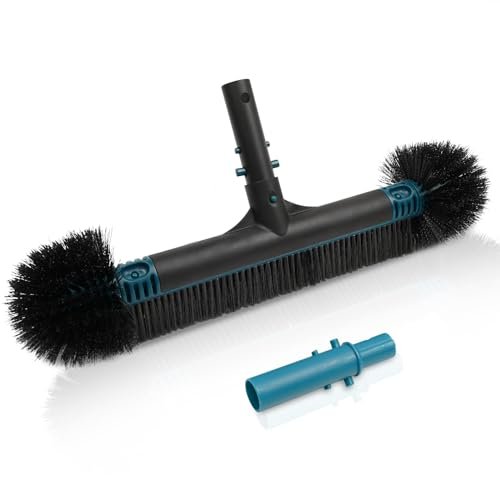 Poolvio 20" 2-in-1 Pool Brush Head (Walls & Floor)
Sturdy 20-inch brush head that clips onto any standard telescopic pole. View on Amazon →
Poolvio 20" 2-in-1 Pool Brush Head (Walls & Floor)
Sturdy 20-inch brush head that clips onto any standard telescopic pole. View on Amazon →
Still need help? Ask a Pool & Spa Expert AD
Get a personalized answer from PoolGuy810 — 30 years owning a pool and spa repair company. Describe your issue and get step-by-step help.
Related Pool Guides
Need More Help?
Try our free pool calculators and tools to help diagnose and fix your pool problems.
Browse Pool ToolsSLAM calculator, pH calculator, salt dosing & more