
Do Pool Chlorine Tablets Expire? Complete Shelf Life Guide

How long do chlorine tablets last before going bad?
Read full question
Walked into the garage yesterday and my wife called out my "chlorine tablet graveyard" from 2022, making me wonder if those old tablets are even safe to use.
The pool store guy keeps telling me I need fresh chemicals every year, but that seems like a money grab. How long do these tablets actually last, and how can I tell if mine have gone bad? I'm trying to save money by buying in bulk and storing extras, but I don't want to use something that could be dangerous or just won't work properly.
Quick Answer
Trichlor chlorine tablets don't really expire — kept sealed and dry they last years and just lose a little potency, so you simply use more. The real catch is CYA: weak tablets used in larger amounts pile on stabilizer without sanitizing power, eventually forcing a partial drain.
The one catch worth understanding: every trichlor tablet adds cyanuric acid (CYACyanuric Acid (stabilizer) — Sunscreen for your chlorine — it keeps sunlight from burning it off. The catch: the more you have, the more chlorine you need to keep. learn more →, the stabilizer) along with chlorine. If your tablets have weakened and you make up for it by feeding more of them, you keep piling on CYA while getting less chlorine for it. Over a season that drives CYA too high, which "locks up" your chlorine and eventually forces a partial drain to reset. So the real issue isn't danger — it's CYA creep. (Calcium hypochlorite tablets are different: no stabilizer, but they degrade faster, so figure 1–2 years.)
Why trichlor tablets last so long
Trichlor is a dry, stabilized compound. As long as moisture stays out, the chemistry barely changes — a sealed bucket that's a few years old will usually still test close to full strength. What actually ruins tablets is water getting in: a cracked lid, a humid shed, condensation. That lets them swell, crumble, and off-gas. That's a storage failure, not an expiration date.
How to tell if your tablets are still good
- Look and feel: Good tablets are hard and solid. If they've crumbled, gone powdery, or fused into a soft mush, moisture got in and they've lost strength.
- Smell: A faint chlorine smell is normal. A sharp, eye-watering odor means moisture has started breaking them down.
- How they dissolve: A healthy 3-inch tablet lasts several days in a floater or feeder. If a tablet vanishes fast or barely moves your free chlorine, treat it as weak.
You don't need a lab test for this. If the tablets are dry and firm, use them. If they're crumbly, just plan on them being lower-potency.
Using weaker tablets (and the CYA trap)
If your tablets have softened with age, you can still use them — just add an extra tablet, or check your free chlorine more often and top up with liquid chlorine (sodium hypochlorite) when it runs low. Liquid chlorine adds no CYA, so it's the right way to cover the gap.
Keep an eye on CYA — this is the part that actually matters. Trichlor adds roughly 0.6 ppm of CYA for every 1 ppm of free chlorine it delivers. Lean on tablets all season — especially weak ones you're using more of — and CYA quietly climbs. Once it's high (past roughly 50–80 ppm for a traditional chlorine pool), your chlorine stops working well and you'll fight algae no matter how much you add. The only reliable way to bring CYA down is to drain and refill part of the water. Test CYA a few times a season so it doesn't sneak up on you — our CYA / stabilizer calculator shows where you stand and how much of a drain it would take to correct.
Storing tablets so they keep
Keep them in the original sealed bucket, somewhere cool, dry, and out of direct sun. Don't store them next to acids or other pool chemicals, and keep the lid snapped tight — moisture, not age, is what kills them. Stored that way, a half-used bucket will be fine next season and the one after.
A note on handling
Trichlor is an oxidizer, so the usual sensible habits apply whether the tablets are new or old: handle them in a ventilated spot, never let different pool chemicals share a bucket or scoop, and don't mix tablets with anything else. That's standard chlorine handling — not a special "expired tablet" hazard.
 Taylor K-2006C Complete FAS-DPD Pool & Spa Test Kit
The FAS-DPD kit pool pros trust — reads chlorine accurately even at shock/SLAM levels, plus pH, alkalinity, calcium hardness and CYA. View on Amazon →
Taylor K-2006C Complete FAS-DPD Pool & Spa Test Kit
The FAS-DPD kit pool pros trust — reads chlorine accurately even at shock/SLAM levels, plus pH, alkalinity, calcium hardness and CYA. View on Amazon →
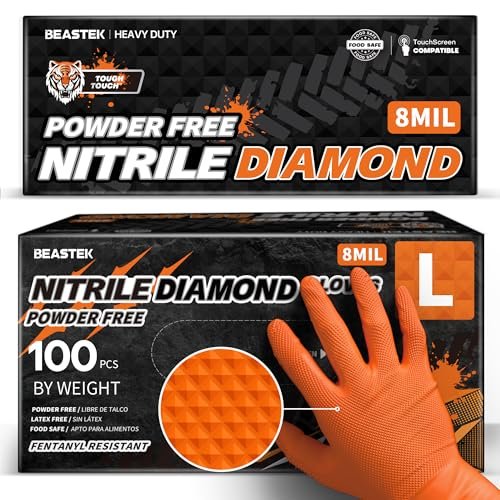 Beastek 8-mil Chemical-Resistant Nitrile Gloves
Disposable nitrile gloves for safe handling of pool chemicals. View on Amazon →
Beastek 8-mil Chemical-Resistant Nitrile Gloves
Disposable nitrile gloves for safe handling of pool chemicals. View on Amazon →
Still need help? Ask a Pool & Spa Expert AD
Get a personalized answer from PoolGuy810 — 30 years owning a pool and spa repair company. Describe your issue and get step-by-step help.
Related Pool Guides
Need More Help?
Try our free pool calculators and tools to help diagnose and fix your pool problems.
Browse Pool ToolsSLAM calculator, pH calculator, salt dosing & more