
How to Dissolve Pool Stabilizer (CYA) - Complete Guide

What's the best way to dissolve cyanuric acid in my pool?
Read full question
I added granular cyanuric acid to my pool and it's just sitting on the bottom instead of dissolving. I have a 20,000 gallon inground pool and my current CYA reading is around 20 ppm - I need to get it up to about 50 ppm. I tried just broadcasting the granules directly into the pool like I do with other chemicals, but they seem to just sink to the bottom and sit there without dissolving much.
I've heard that cyanuric acid is notoriously slow to dissolve compared to other pool chemicals. What's the most effective method to get this stuff into solution? Should I be pre-dissolving it somehow, or is there a specific technique that works better? I want to make sure I'm doing this right and not wasting product or creating hot spots in my pool.
Quick Answer
Granular cyanuric acid dissolves slowly, so there's no practical fast way to add it — the one quick option is liquid stabilizer (already dissolved). For granular, most pool owners use the sock method: put it in a sock, hang it in front of a return jet or in the skimmer with the pump running, and squeeze it daily until gone, usually 2-4 days. Pre-dissolving in hot water registers sooner, but CYA dissolves slowly or incompletely depending on volume, so split a larger dose across several buckets.
Understanding Pool Stabilizer Dissolution
One of the more vexing things pool owners run into is stabilizer that just won't seem to dissolve, no matter how much you stir. Unlike chlorine or pH adjusters that dissolve quickly, cyanuric acid is slow — figure about a day if you pre-dissolve it, but 2-4 days (sometimes the better part of a week) using the sock method, and it can lag even longer before it fully registers on a test. This slow dissolution rate is due to its chemical structure and requires specific techniques to ensure complete mixing. If you need stabilizer in the water fast, the one real shortcut is liquid stabilizer (cyanuric acid sold pre-dissolved) — it costs more per ppm and is diluted, so dose it by the label rather than the granular amounts below.
The Sock Method (Trouble Free Pool's preferred method)
For most pools, this is the method to reach for. You let the stabilizer dissolve slowly inside a clean sock or piece of pantyhose suspended in the water, so nothing piles up on your pool floor and there's no bucket of slurry to manage. It takes longer to fully register (2-4 days), but it's the cleanest, lowest-risk way to add CYACyanuric Acid (stabilizer) — Sunscreen for your chlorine — it keeps sunlight from burning it off. The catch: the more you have, the more chlorine you need to keep. learn more → — and you can keep swimming while it works.
Steps for the Sock Method
- Prepare the sock: Use a clean, white tube sock or cut the leg off pantyhose. Avoid colored socks that might bleed dye into your pool.
- Fill with stabilizer: Pour the measured amount of cyanuric acid into the sock, leaving room at the top to tie it closed.
- Secure tightly: Tie the open end with a strong knot or use a rubber band to prevent spillage.
- Place it in the skimmer (pump running only) or in front of a return jet: Set the sock in the skimmer basket, where water is constantly pulled through it - but only with the pump running continuously. CYA dissolves into an acidic solution, so if the pump stops (a timer, power loss, or a GFCI trip) you'd leave an acidic slug sitting in the skimmer and equipment. Many people instead hang the sock in front of a return jet, which keeps that concentrated acid away from the skimmer and pump for no real downside.
- Agitate regularly: Squeeze and massage the sock several times daily to help break up clumps and accelerate dissolution.
- Monitor progress: Check the sock daily. Complete dissolution typically takes 2-4 days depending on water temperature and circulation.
Pre-Dissolving Method (Faster, but Fussier)
Pre-dissolving in hot water before adding it to the pool can get your CYA registering a little sooner. The catch is that cyanuric acid barely dissolves in a bucket (see the steps below), so for anything more than a small dose you'll be splitting it across several buckets and still pouring in some slurry. If that sounds like more work than it's worth, use the sock method above instead.
- Calculate the required amount: For a quick estimate, our all-in-one pool calculator works out how much to add from your pool size and current vs. target CYA levels. To do it by hand, you need about 13 ounces (a little under a pound) of granular stabilizer per 10,000 gallons to raise CYA by 10 ppm. Granular stabilizer is nearly pure cyanuric acid (about 98%+), so that dose is consistent from brand to brand — just note that liquid stabilizer is diluted, so follow its label instead. For a 20,000-gallon pool going from 0 to 30 ppm, you'd need about 5 pounds of stabilizer.
- Use hot water: Fill a clean, sturdy 5-gallon bucket with the hottest water available from your tap (often around 120°F at a typical water heater). Hot water dissolves cyanuric acid much faster than cold. Use a heavy-duty bucket since very hot water can soften thin plastic, do it in a well-ventilated spot and avoid breathing the dust while pouring the dry granules (powdered cyanuric acid is a respiratory, eye, and skin irritant), and take care to avoid burns.
- Add stabilizer gradually: Add the measured stabilizer to the hot water slowly (always add the chemical to the water, not the other way around) while stirring continuously with a wooden stir stick or large plastic spoon.
- Stir vigorously: Continue stirring for at least 10-15 minutes. The solution will appear cloudy and may have some undissolved particles initially.
- Let it sit: Allow the mixture to sit for 30-60 minutes, stirring occasionally. Don't expect it all to dissolve - cyanuric acid is only sparingly soluble, so a 5-gallon bucket of hot tap water can hold just a few ounces in solution before it saturates. A multi-pound dose stays a slurry no matter how long you stir; the hot water mainly warms the granules so they finish dissolving once they're in the pool. For a large dose, split it across several buckets or just use the sock method below.
- Pour into pool: Slowly pour the entire bucket — including any granules still sitting at the bottom — around the perimeter of your pool while the circulation system is running. Even in 120°F water CYA often won't fully dissolve in an hour, so don't leave that residue behind; brush up anything that settles on the floor so it finishes dissolving.
Direct Addition Method
While not recommended due to the risk of etching surfaces and uneven distribution, you can add stabilizer directly to your pool if necessary.
- Ensure proper circulation: Run your pool pump and filter system continuously during and after addition.
- Broadcast evenly: Sprinkle the stabilizer evenly across the pool surface, avoiding concentrated areas where granules can settle and etch the surface.
- Brush immediately: Use a pool brush to disperse any granules that settle on the bottom. Undissolved stabilizer is acidic and can permanently etch pool surfaces (especially plaster) where granules settle, so brush them up promptly.
- Maintain circulation: Keep your pump running 24/7 for at least 48 hours to ensure complete mixing.
Factors Affecting Dissolution Speed
Several factors influence how quickly pool stabilizer dissolves in your water:
- Water temperature: Warmer water (80°F+) dissolves CYA significantly faster than cold water
- Agitation: Moving water and physical stirring dramatically speed up dissolution
- Particle size: Finer granules dissolve faster than large chunks
- Water circulation: Strong circulation prevents settling and ensures even distribution
Testing and Timing
Wait until the stabilizer has fully dissolved before testing your CYA levels — roughly a day if you pre-dissolved it, but 2-4 days (sometimes close to a week) with the sock method. Testing too early reads low and tempts you to over-add. Use a reliable kit like the Taylor K-2006C. The CYA test requires a separate reagent (R-0013) and uses a turbidity measurement method. Don't rely on test strips for CYA readings as they're notoriously inaccurate.
Important: Once dissolved, cyanuric acid leaves the water only slowly — mostly through dilution (splash-out, backwash, rain overflow) plus slow biological breakdown in warm water. It isn't lost to sunlight directly the way unstabilized chlorine is — CYA is what shields chlorine from UV — though chlorine breaking down in strong sun does slowly degrade CYA as well. The practical way to lower it is replacing some of the water. The ideal CYA range is 30-50 ppm for traditional chlorine pools; for salt water generators, many SWGSalt Water Generator — The "salt cell" that makes chlorine from the salt in a saltwater pool. Same chlorine — it just makes its own. pool terms → manufacturers recommend a higher level (often around 70-80 ppm), though some salt-pool owners run lower — follow your generator manufacturer's guidance.
When Is It Safe to Swim?
Dissolved cyanuric acid is mild and safe for swimmers at normal levels (30–80 ppm), so the wait isn’t about the chemical itself — it’s about undissolved granules. If you use liquid or pre-dissolved a small amount of the stabilizer and poured it in, swim after about 15–30 minutes of circulation. If you used the sock-in-the-skimmer method, you can keep swimming the whole time it dissolves. The one thing to avoid is swimming directly over loose granules sitting on the pool floor — concentrated, they can irritate skin and even etch a plaster surface, so brush them up and let them dissolve before swimming over that spot. See Can I Swim After Adding Pool Stabilizer? for the full timeline.
Common Mistakes to Avoid
- Expecting stabilizer to dissolve quickly in cold water - it just takes longer when it is cold, so allow extra time
- Not running circulation system during dissolution
- Testing CYA levels too soon after addition
- Adding too much at once
- Ignoring undissolved granules, which can permanently etch the surface where they settle
For the full breakdown of safe chlorine levels by CYA level, see our pool water chemistry guide.
 Taylor K-2006C Complete FAS-DPD Pool & Spa Test Kit
The FAS-DPD kit pool pros trust — reads chlorine accurately even at shock/SLAM levels, plus pH, alkalinity, calcium hardness and CYA. View on Amazon →
Taylor K-2006C Complete FAS-DPD Pool & Spa Test Kit
The FAS-DPD kit pool pros trust — reads chlorine accurately even at shock/SLAM levels, plus pH, alkalinity, calcium hardness and CYA. View on Amazon →
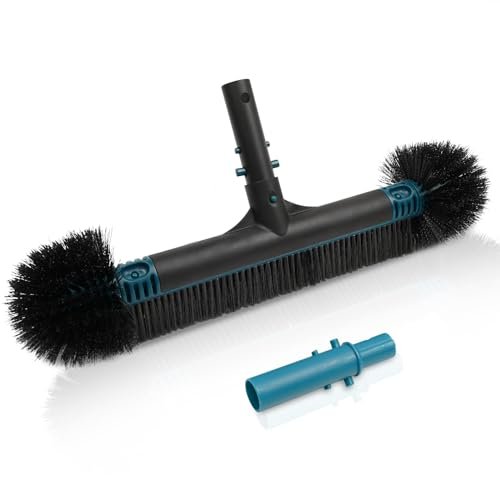 Poolvio 20" 2-in-1 Pool Brush Head (Walls & Floor)
Sturdy 20-inch brush head that clips onto any standard telescopic pole. View on Amazon →
Poolvio 20" 2-in-1 Pool Brush Head (Walls & Floor)
Sturdy 20-inch brush head that clips onto any standard telescopic pole. View on Amazon →
Still need help? Ask a Pool & Spa Expert AD
Get a personalized answer from PoolGuy810 — 30 years owning a pool and spa repair company. Describe your issue and get step-by-step help.
Related Pool Guides
Need More Help?
Try our free pool calculators and tools to help diagnose and fix your pool problems.
Browse Pool ToolsSLAM calculator, pH calculator, salt dosing & more