
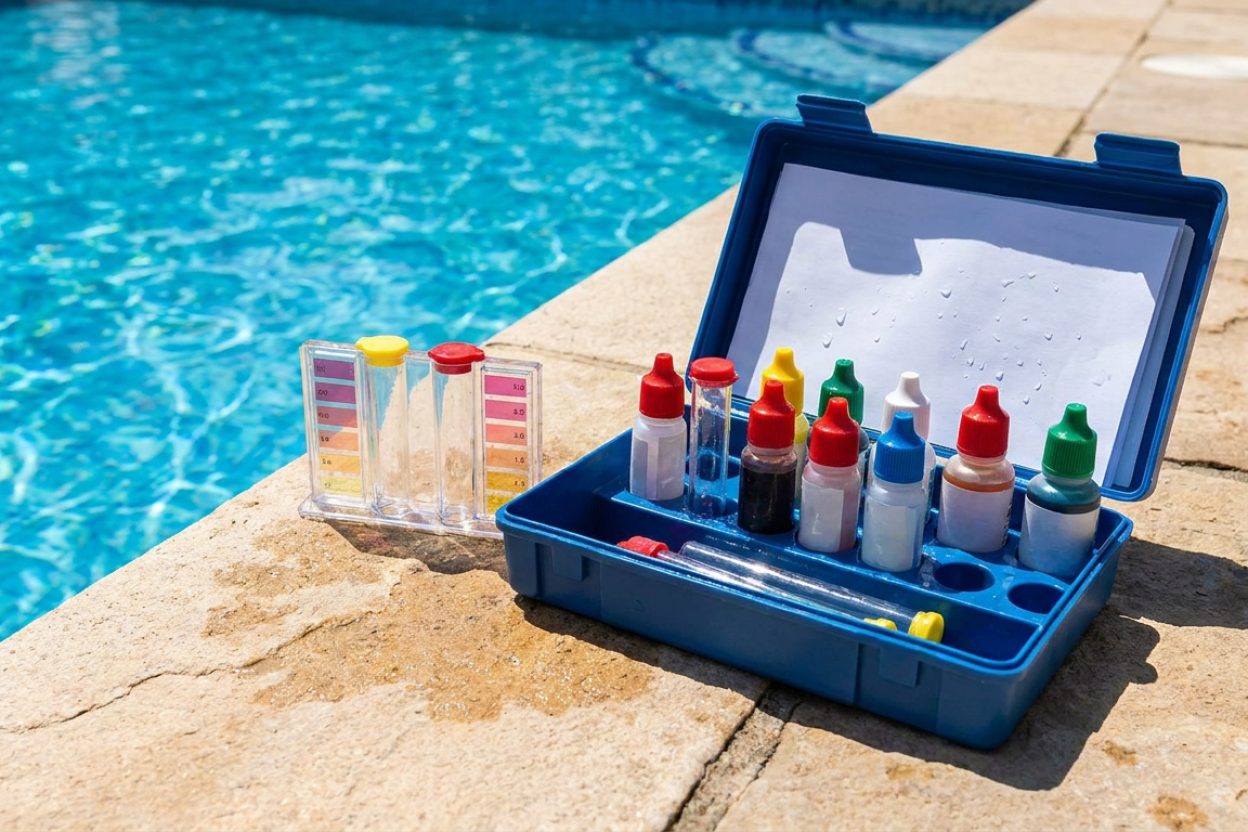
How to Lower Pool Alkalinity: Complete Step-by-Step Guide

What's the fastest way to bring down high pool alkalinity?
Read full question
Pulled three different recommendations for my 180 ppm alkalinity—pool guy wants muriatic acid, store pushes sodium bisulfate, and online forums are completely split. Need to get it down to proper range. What chemicals work best and how much should I use? Pool is about 10,000 gallons.
Quick Answer
To lower pool alkalinity, add muriatic acid or sodium bisulfate (dry acid) to your pool water. Use 1 quart of muriatic acid per 10,000 gallons to lower alkalinity by approximately 10 ppm.
Step-by-Step Process to Lower Pool Alkalinity
- Test Your Current Alkalinity Level
Use a reliable test kit like the Taylor K-2006C to measure your total alkalinity (TATotal Alkalinity — The buffer that keeps your pH from bouncing around. Get this in range and pH gets a lot easier to manage. learn more →). Target alkalinity levels are 80-120 ppm for regular chlorine pools and 60-80 ppm for salt water generator pools. Record your starting TA and pH levels. - Calculate Chemical Dosage
For muriatic acid: Use approximately 1 quart (32 oz) per 10,000 gallons to lower TA by 10 ppm. For sodium bisulfate: Use approximately 2 pounds per 10,000 gallons to lower TA by 10 ppm. Always start with smaller amounts and add more if needed. Our all-in-one pool calculator can help you estimate the amount to add, but always re-test your water after dosing and follow the product label or manufacturer's instructions. - Prepare Safety Equipment
Safety Warning: Always wear safety goggles, rubber gloves, and closed-toe shoes. Work in a well-ventilated area and never mix chemicals together. - Turn Off Pool Equipment
Shut off the heater and any automatic chemical feeders, but keep the pool pump running so the acid disperses evenly. Letting acid sit in concentrated, localized pockets can etch plaster and damage surfaces. - Add Acid to Deep End
Pour the muriatic acid slowly into the deepest part of your pool, never into the skimmer or near pool equipment. If using liquid acid, first pre-dilute it by slowly adding the acid to a bucket of pool water (never add water to acid), then pour the diluted solution into the deep end while walking around the perimeter. - Add Acid With the Pump Running, Then Aerate
Add the diluted acid slowly over the return flow with the pump running so it disperses evenly. Acid lowers pH and total alkalinity together — you cannot make it act on alkalinity alone by letting it sit, and a stagnant acid pocket can etch plaster. To lower TA with less net pH drop, lower pH with acid then aerate to bring pH back up while TA stays down. - Turn Pump Back On
Keep the pump running and let the pool circulate for at least 4-6 hours to fully mix the acid; there is no 'waiting period' with the pump off. - Retest Water Chemistry
Wait 6-8 hours after adding chemicals before retesting. Test both alkalinity and pH levels. The pH will likely drop significantly and need adjustment. - Adjust pH if Necessary
If pH drops below 7.2, raise it by aerating the water (point returns up to break the surface, run waterfalls or spa jets). Do not use soda ash here — it raises alkalinity right back up and defeats the purpose. - Repeat if Needed
If alkalinity is still too high, repeat the process. Never add more than the equivalent of 1 quart of muriatic acid per 10,000 gallons in a single treatment.
Choosing Between Muriatic Acid and Sodium Bisulfate
Muriatic Acid (Liquid)
Muriatic acid is more cost-effective and works faster than dry acid. It's the preferred choice for most pool professionals. However, it produces fumes and requires more careful handling. The liquid form mixes immediately and begins working right away.
Sodium Bisulfate (Dry Acid)
Sodium bisulfate is safer to handle and store, making it ideal for pool owners who prefer a granular product. It's more expensive than muriatic acid but eliminates concerns about fumes and spills. Dissolve it in a bucket of pool water before adding to prevent undissolved granules from settling on pool surfaces.
Understanding the Alkalinity-pH Relationship
When lowering alkalinity, your pH will also decrease significantly. This is normal and expected. The key principle is that alkalinity acts as a buffer for pH - high alkalinity makes pH changes difficult, while proper alkalinity allows for stable pH control.
After achieving target alkalinity levels, you'll find pH much easier to maintain within the ideal 7.4-7.6 range using smaller amounts of pH adjusters.
Common Mistakes to Avoid
- Adding too much acid at once: This can cause pH to crash below 7.0 and potentially damage pool surfaces
- Using the skimmer method: Adding acid through skimmers can damage equipment and create dangerous fume concentration
- Ignoring safety protocols: Acid burns are serious - always use proper protective equipment
- Not retesting: Water chemistry changes take time to stabilize - test before making additional adjustments
Maintenance Tips
Once you achieve proper alkalinity levels, maintain them by testing weekly and making small adjustments as needed. High alkalinity typically results from using calcium hypochlorite shock treatments or alkaline pH increasers. Consider switching to liquid chlorine for routine sanitizing to minimize alkalinity increases.
Keep detailed records of your chemical additions and test results to better understand your pool's specific needs and seasonal patterns.
For the full breakdown of safe chlorine levels by CYACyanuric Acid (stabilizer) — Sunscreen for your chlorine — it keeps sunlight from burning it off. The catch: the more you have, the more chlorine you need to keep. learn more → level, see our pool water chemistry guide.
 Taylor K-2006C Complete FAS-DPD Pool & Spa Test Kit
The FAS-DPD kit pool pros trust — reads chlorine accurately even at shock/SLAM levels, plus pH, alkalinity, calcium hardness and CYA. View on Amazon →
Taylor K-2006C Complete FAS-DPD Pool & Spa Test Kit
The FAS-DPD kit pool pros trust — reads chlorine accurately even at shock/SLAM levels, plus pH, alkalinity, calcium hardness and CYA. View on Amazon →
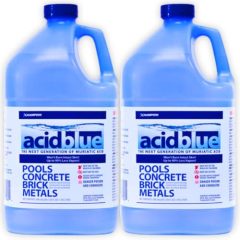 Acid Blue - Low Fume Muriatic Acid for Swimming Pools & Spas - Lower's pH, Reduces Alkalinity - 2 Gallon
View on Amazon →
Acid Blue - Low Fume Muriatic Acid for Swimming Pools & Spas - Lower's pH, Reduces Alkalinity - 2 Gallon
View on Amazon →
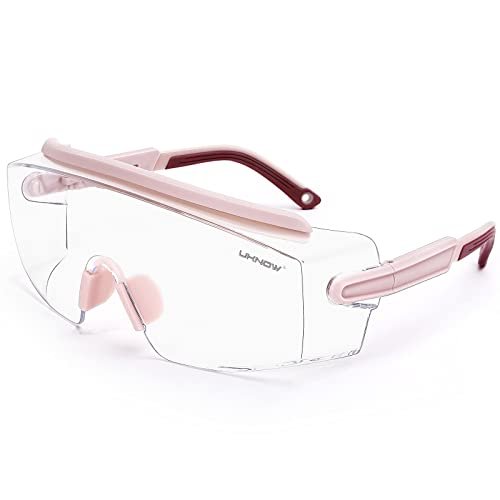 UKNOW Anti-Fog Chemical Splash Safety Goggles
Sealed splash goggles for handling muriatic acid and chlorine. View on Amazon →
UKNOW Anti-Fog Chemical Splash Safety Goggles
Sealed splash goggles for handling muriatic acid and chlorine. View on Amazon →
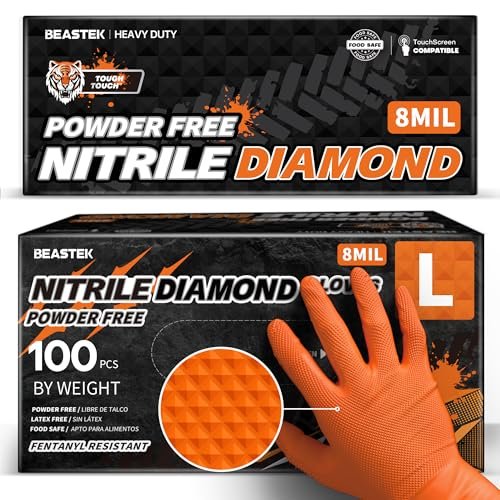 Beastek 8-mil Chemical-Resistant Nitrile Gloves
Disposable nitrile gloves for safe handling of pool chemicals. View on Amazon →
Beastek 8-mil Chemical-Resistant Nitrile Gloves
Disposable nitrile gloves for safe handling of pool chemicals. View on Amazon →
Still need help? Ask a Pool & Spa Expert AD
Get a personalized answer from PoolGuy810 — 30 years owning a pool and spa repair company. Describe your issue and get step-by-step help.
Related Pool Guides
Need More Help?
Try our free pool calculators and tools to help diagnose and fix your pool problems.
Browse Pool ToolsSLAM calculator, pH calculator, salt dosing & more