
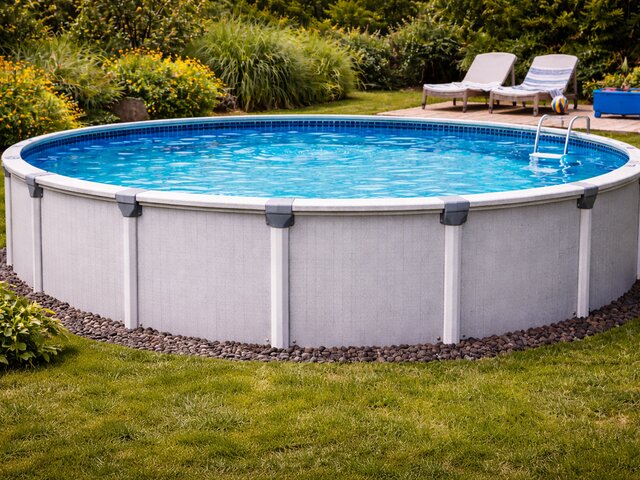
Do I Need a Pool Liner? Above Ground Pool Requirements

Do above ground pools actually need liners or can I skip it?
Read full question
During my above ground pool setup, my installer insists I need a $200 liner but my manual shows zero requirements for one anywhere. Like, can't the pool walls just hold the water on their own?
Also if I do need one, how long do these things typically last before I'm stuck buying another one? Just trying to budget for the real costs here!
Quick Answer
Yes, above ground pools absolutely need a liner to hold water and protect the pool structure. The liner creates a waterproof barrier and typically lasts about 5-12 years depending on usage and maintenance before needing replacement.
Why Above Ground Pools Require Liners
Above ground pools are fundamentally different from in-ground concrete pools. The metal or resin walls of above ground pools are not waterproof on their own. The liner creates the essential water-tight seal that makes your pool functional. Here's why liners are non-negotiable:
- Water containment: The liner holds thousands of gallons of water against the pool walls
- Structural protection: Prevents water from reaching and corroding metal components
- Surface comfort: Provides a smooth, comfortable surface for swimmers
- Chemical resistance: Modern vinyl liners resist pool chemicals and UV damage
- Aesthetic appeal: Available in various patterns and colors to enhance your pool's appearance
Types of Pool Liners Available
Vinyl Thickness Options
Pool liners come in different thicknesses, measured in mils (1 mil = 0.001 inch):
- 20-25 mil liners: The standard, most common above ground thickness; good all-around durability (6-10 years)
- 25-30 mil liners: Heavier-duty upgrade with better puncture and UV resistance, reaching the upper end of the lifespan range
- A note on units: "mil" is true thickness (the industry-standard unit), while "gauge" is a non-standardized marketing term — so don't be misled by very high "gauge" numbers. Above ground liners don't actually come in 35-40 mil; that would be thicker than premium inground vinyl.
Installation Types
Overlap liners: Drape over the pool wall and are held by clips or coping strips. These are the most affordable and easiest to install.
Beaded liners: Feature a thick bead that snaps into a track system around the pool's top rail. They provide a cleaner appearance but cost more.
Uni-bead liners: Convertible design that works as either overlap or beaded, offering installation flexibility.
Signs You Need a New Liner
Even if you currently have a liner, you'll need to replace it periodically. Watch for these warning signs:
- Visible tears or holes: Any puncture compromises the liner's integrity
- Fading or brittleness: UV damage makes liners prone to cracking
- Wrinkles that won't smooth: Indicates the liner has stretched beyond recovery
- Staining that won't clean: Permanent discoloration from metals or algae
- Water loss: Consistent water level drops despite proper chemistry
- Age over 10-12 years: Even well-maintained liners degrade over time
Installation Process Overview
Preparation Steps
- Drain the pool completely and remove the old liner if replacing
- Inspect the pool base for sharp objects, roots, or uneven areas
- Add fresh sand or liner padding to create a smooth, protective surface
- Check pool walls for damage, rust, or loose bolts that need attention
Liner Installation
- Choose a warm, sunny day (70°F or higher) to make the vinyl more pliable
- Unfold the liner carefully in the pool, avoiding dragging across rough surfaces
- Position the liner so seams align with pool corners and the deep end is properly oriented
- Secure the liner using appropriate clips, coping, or bead track system
- Remove air wrinkles by smoothing from center outward before adding water
- Begin filling slowly while continuing to smooth out any remaining wrinkles
Maintaining Your Pool Liner
Proper maintenance extends liner life significantly. Follow these TFP (Trouble Free Pool) principles:
Chemical Balance
Maintain proper pH (7.4-7.6): High pH causes scaling, while low pH makes vinyl brittle. Test 2-3 times weekly and adjust with muriatic acid or sodium carbonate as needed.
Keep chlorine levels appropriate: Match your free chlorine to your CYACyanuric Acid (stabilizer) — Sunscreen for your chlorine — it keeps sunlight from burning it off. The catch: the more you have, the more chlorine you need to keep. learn more → level (there is no single universal number) using the all-in-one pool calculator. Avoid shocking directly against the liner - always brush shock into solution first.
Control total alkalinity: Keep TATotal Alkalinity — The buffer that keeps your pH from bouncing around. Get this in range and pH gets a lot easier to manage. learn more → between 80-120 ppm to prevent pH swings that stress vinyl.
Physical Protection
- Remove sharp objects immediately: Pool toys, jewelry, or debris can puncture vinyl
- Use pool ladders properly: Ensure ladder pads protect the liner from metal contact
- Maintain water level: Keep water at proper level to prevent liner stress and UV exposure
- Clean gently: Use soft brushes and avoid abrasive cleaners that can damage vinyl
Cost Considerations
Liner replacement costs vary significantly based on pool size and liner quality:
- 18-foot round pool: $150-400 for liner material
- 24-foot round pool: $200-500 for liner material
- Oval pools: $300-800 depending on dimensions
- Professional installation: Add $300-800 to material costs
Common Mistakes to Avoid
Installing in cold weather: Cold vinyl is stiff and prone to tearing during installation. Wait for temperatures above 70°F.
Ignoring base preparation: Skipping proper sand base or padding leads to premature liner failure from punctures.
Over-chlorinating: Adding undissolved shock directly to the pool can bleach and weaken vinyl.
Delaying replacement: Waiting too long to replace a failing liner can damage pool walls and cost significantly more.
Remember, a quality liner properly installed and maintained is essential for years of trouble-free pool enjoyment. Don't view it as an optional upgrade - it's the foundation of your entire pool system.
For the full breakdown of safe chlorine levels by CYA level, see our pool water chemistry guide.
Still need help? Ask a Pool & Spa Expert AD
Get a personalized answer from PoolGuy810 — 30 years owning a pool and spa repair company. Describe your issue and get step-by-step help.
Related Pool Guides
Need More Help?
Try our free pool calculators and tools to help diagnose and fix your pool problems.
Browse Pool ToolsSLAM calculator, pH calculator, salt dosing & more