
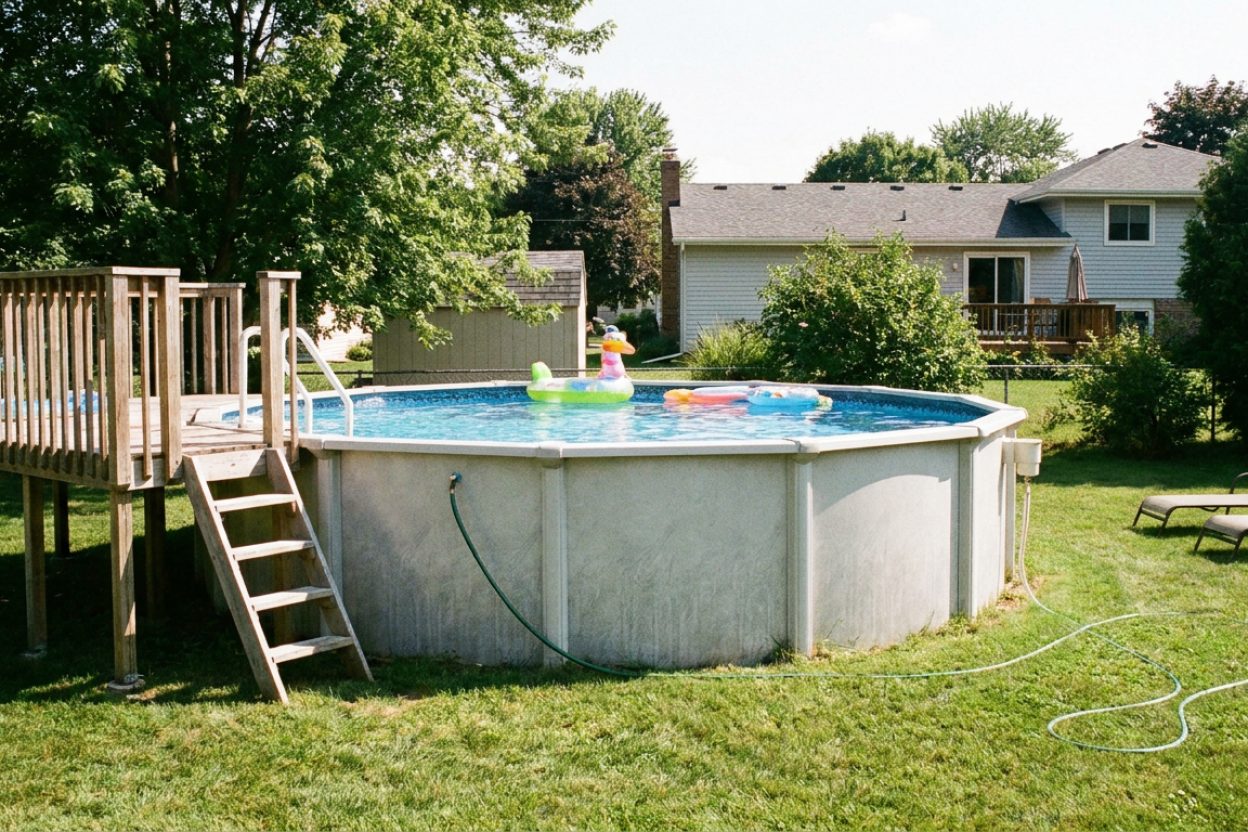
How Deep Are Above Ground Pools? Complete Depth Guide 2026

What are the standard depth specifications for above ground pools?
Read full question
Apparently above ground pools only confuse me when it's above 85 degrees outside — why do the depths vary so wildly when I'm actually trying to use one?
My analysis requires accurate data on the typical depth ranges available in the market, as well as identification of the most commonly selected depth configuration.
Additionally, I need to understand the technical factors that influence depth selection decisions. What are the primary considerations that determine optimal depth requirements for different installation scenarios? I'm looking for methodical guidance that addresses both standard measurements and the engineering rationale behind depth selection criteria.
Quick Answer
Above ground pools typically range from 48 to 54 inches deep, with 52 inches being the most popular choice. The depth you choose depends on your family's swimming needs and safety requirements.
Step-by-Step Guide to Choosing Pool Depth
- Measure your available space and check local codes
Before selecting depth, verify your local building codes for setback requirements and safety regulations. Most municipalities require specific distances from property lines and may have depth-related safety requirements. - Consider your family's swimming abilities
Evaluate who will be using the pool most frequently. If you have small children or non-swimmers, a 48-inch pool (approximately 3'4" water depth) may be safer. For taller swimmers or water games and sports, 52-54 inch depths (the tallest standard above-ground size) give the most room. Note: that is for swimming and play only — never dive into an above-ground pool, even the deepest, as the water is far too shallow (see Safety Factors below). - Understand actual water depth vs. wall height
Calculate that your water line will be 6-8 inches below the top rail. A 52-inch wall pool will have approximately 44-46 inches of actual water depth, while a 48-inch pool will have about 40-42 inches of water depth. - Factor in your pool activities
Determine what activities are most important. For lap swimming and water aerobics, deeper water (52+ inches) gives more room to kick and move freely without hitting the bottom. For lounging, playing with young children, or pool volleyball, 48-50 inches may be more comfortable. - Consider maintenance implications
Deeper pools hold more water, requiring more chemicals and longer circulation times. Calculate the volume difference: a 24-foot round 52-inch pool holds about 13,500 gallons, while the same size in 48 inches holds about 12,000 gallons. - Evaluate entry and exit safety
Plan for safe pool entry with appropriate ladders or steps. Deeper pools require more robust safety equipment and may need additional safety measures for children and elderly users.
Standard Above Ground Pool Depths Available
48-Inch Pools (4 Feet)
These pools provide approximately 40-42 inches of actual water depth and are ideal for families with young children, non-swimmers, or those who prefer shallower water. The reduced depth makes supervision easier and provides a safer environment for beginners learning to swim.
52-Inch Pools (4 Feet 4 Inches)
The most popular choice, offering about 44-46 inches of water depth. This depth accommodates most swimming activities while remaining manageable for average-height adults to stand comfortably. It's deep enough for recreational swimming and shallow enough for safety.
54-Inch and Deeper Pools
Some manufacturers offer 54-inch or even deeper above ground pools, providing 46-48+ inches of water depth. These are better for serious swimmers but require additional safety considerations and may need special permits in some areas.
Important Depth Considerations
Safety Factors
Never dive into above ground pools regardless of depth. Even the deepest above ground pools are not safe for diving due to their relatively shallow depth compared to in-ground pools. Install appropriate safety signage and ensure all users understand this critical safety rule.
Chemical Management by Depth
Deeper pools require proportionally more chemicals. For a 52-inch pool versus a 48-inch pool of the same diameter, you'll need approximately 8-10% more chlorine, pH adjusters, and other chemicals. Plan your chemical budget accordingly and ensure your filtration system is sized appropriately for the increased water volume.
Structural Considerations
Deeper pools exert more pressure on the walls and require more robust support systems. Ensure your pool kit includes appropriate supports (and buttress straps on oval models), and the ground preparation must be even more precise for deeper installations to prevent wall failure.
Installation Impact of Pool Depth
The depth you choose affects several installation factors. Deeper pools require more precise leveling during ground preparation, as any unevenness becomes more critical with increased water pressure. The leveling of the ground beneath the bottom track must be more accurate, and you may need additional sand or a foam pool base.
Your pump and filter system should be sized according to your pool's total volume. A deeper pool of the same diameter requires a more powerful circulation system to maintain proper water quality. Calculate approximately 6-8 hours of circulation time regardless of depth, but deeper pools may need slightly longer run times during heavy use periods.
Long-term Depth Considerations
Consider how your needs might change over time. While a 48-inch pool might seem perfect for young children now, they'll quickly outgrow the shallow depth. Conversely, as family members age, a 52+ inch pool might become more challenging to enjoy safely.
Resale value typically favors 52-inch pools as they appeal to the broadest range of potential buyers. However, the most important factor is choosing the depth that best serves your family's current and anticipated needs while maintaining safety as the top priority.
Still need help? Ask a Pool & Spa Expert AD
Get a personalized answer from PoolGuy810 — 30 years owning a pool and spa repair company. Describe your issue and get step-by-step help.
Related Pool Guides
Need More Help?
Try our free pool calculators and tools to help diagnose and fix your pool problems.
Browse Pool ToolsSLAM calculator, pH calculator, salt dosing & more