
Do All Pools Need Liners? Pool Types and Liner Requirements

Which pool types actually require liners and which don't?
Read full question
During my pool consultation, three different contractors gave me completely opposite answers about needing a liner, and now I'm wondering if someone's trying to upsell me.
I'm considering several options including above-ground pools, concrete inground pools, fiberglass shells, and even looked into natural swimming pools. Some contractors are telling me that every pool needs a liner, while others say certain types don't require them at all. I want to make sure I understand the liner requirements before making my final decision, especially since this affects both the initial cost and long-term maintenance.
Can someone break down which specific pool types actually need liners versus which ones can function without traditional vinyl liners? I'd appreciate any insight into how the construction material affects liner requirements.
Quick Answer
Not all pools need liners. Above-ground pools and vinyl inground pools require liners, while concrete, fiberglass, and natural pools typically don't need traditional vinyl liners. Proper water chemistry, including maintaining the right free chlorine level for your CYA, is crucial for liner longevity. For the full breakdown of safe chlorine levels by CYA level, see our pool water chemistry guide or use the all-in-one pool calculator for an estimate of the free chlorine for your CYA.
First, Let's Diagnose Your Pool Type
To determine if your pool needs a liner, we need to identify what type of pool you're dealing with. This diagnosis will guide us to the right solution for your specific situation.
Step 1: Identify Your Pool Construction
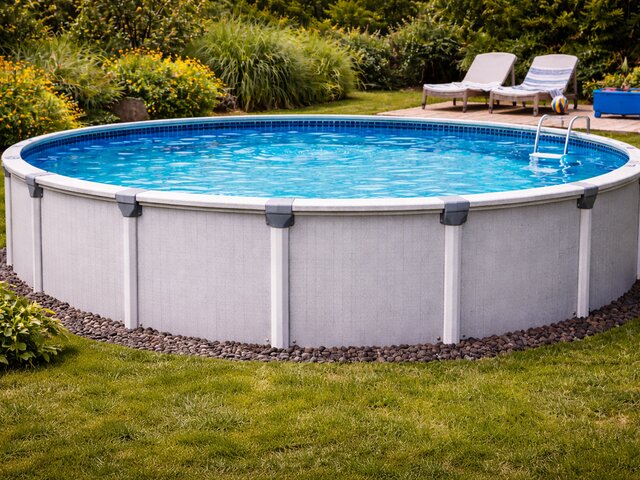
Above-Ground Pools: If you have a round, oval, or rectangular pool with metal, resin, or hybrid walls sitting above ground level, you have an above-ground pool. These pools always require a vinyl liner to hold water, as the wall structure alone cannot contain water.
Inground Pool Types: Look at your pool's interior surface. If you see a smooth, flexible material that can be pressed or moved slightly when touched underwater, you have a vinyl-lined inground pool. If the surface is hard, textured, and immovable, you likely have concrete (gunite/shotcrete) or fiberglass.
Step 2: Assess Current Liner Condition (If Applicable)
For pools that do have liners, check for these warning signs that indicate liner replacement is needed:
- Visible tears, holes, or punctures
- Fading, brittleness, or cracking
- Wrinkles that won't smooth out
- Frequent water loss not attributed to evaporation
- Liner pulling away from pool walls or coping
Pool Types That Require Liners
Above-Ground Pools
Every above-ground pool requires a vinyl liner. The pool walls (whether steel, aluminum, resin, or hybrid) are designed to provide structure but are not waterproof on their own. The liner creates the water barrier and protects the pool walls from corrosion.
Liner Replacement Timeline: Above-ground pool liners typically last 5-10 years depending on water chemistry maintenance, UV exposure, and usage. Signs you need replacement include persistent leaks, visible deterioration, or inability to maintain proper water chemistry due to liner degradation.
Vinyl-Lined Inground Pools
These pools use a vinyl liner stretched over a frame structure (usually steel, polymer, or aluminum). The liner serves as both the waterproof barrier and the finished interior surface. Without a liner, these pools cannot hold water.
Professional Installation Required: Inground liner replacement typically requires professional installation due to the complexity of measuring, fabrication, and proper installation techniques needed for a watertight seal.
Pool Types That Don't Need Traditional Liners
Concrete Pools (Gunite/Shotcrete)
Concrete pools are built with a steel rebar framework sprayed with concrete. The interior is typically finished with plaster, aggregate, or tile. These pools don't use vinyl liners because the concrete and plaster create the waterproof barrier.
Alternative Solutions: Instead of liners, concrete pools may eventually need plaster resurfacing, which typically occurs every 10-15 years depending on water chemistry and maintenance.
Fiberglass Pools
Fiberglass pools are manufactured as one-piece shells and installed as complete units. The fiberglass material itself provides the waterproof barrier and finished surface, eliminating the need for liners.
Maintenance Advantage: Fiberglass pools generally require less chemical maintenance and don't have liner replacement costs, though they may need gelcoat restoration after 15-20 years.
Natural and Specialty Pools
Some specialty pools like natural swimming pools, concrete infinity pools, or pools with specialized coatings don't use traditional vinyl liners. These rely on alternative waterproofing methods specific to their design.
Troubleshooting Common Liner Issues
Problem: Frequent Liner Replacement
Solution: Poor water chemistry is the #1 cause of premature liner failure. Maintain proper chemical balance:
- pH: 7.4-7.6 (high pH causes liner scaling and premature aging)
- Total Alkalinity: 80-120 ppm for vinyl pools
- Free Chlorine: the right level for your CYACyanuric Acid (stabilizer) — Sunscreen for your chlorine — it keeps sunlight from burning it off. The catch: the more you have, the more chlorine you need to keep. learn more → (typically 4-8 ppm for a stabilized outdoor pool) (avoid over-chlorination)
- Calcium Hardness: vinyl liners don't require added calcium — just avoid high levels (roughly 400+ ppm) that can scale equipment
- Stabilizer (CYA): 30-50 ppm
Testing Schedule: Test pH and chlorine 2-3 times weekly, and complete chemistry panel weekly using a quality test kit like the Taylor K-2006.
Problem: Liner Wrinkles or Shifting
Diagnosis: This often indicates groundwater issues, improper installation, or structural problems with the pool base.
Solution: For minor wrinkles, gentle manipulation while the pool is full may help. Major shifting requires professional assessment of the pool base and structure; note that fully draining a pool (especially a vinyl-liner or fiberglass pool) carries its own risks and should be done only on a pro's advice.
Making the Right Decision for Your Pool
If you're considering converting from one pool type to another, understand the costs and benefits:
Converting to Liner-Free: Converting a vinyl pool to concrete or fiberglass is essentially building a new pool and rarely cost-effective.
Upgrading Liner Quality: For pools that need liners, investing in thicker mil liners (20-30 mil thickness for inground, 25+ mil for above-ground) provides better durability and longer lifespan.
Safety Warning: Never operate a pool designed for a liner without one installed. This can cause structural damage, equipment failure, and safety hazards.
Remember, pools designed to use liners must have them to function properly and safely. Attempting to operate a liner-dependent pool without one will result in water loss, equipment damage, and potential structural failure.
For the full breakdown of safe chlorine levels by CYA level, see our pool water chemistry guide or use the all-in-one pool calculator for an estimate of the free chlorine for your CYA.

Still need help? Ask a Pool & Spa Expert AD
Get a personalized answer from PoolGuy810 — 30 years owning a pool and spa repair company. Describe your issue and get step-by-step help.
Related Pool Guides
Need More Help?
Try our free pool calculators and tools to help diagnose and fix your pool problems.
Browse Pool ToolsSLAM calculator, pH calculator, salt dosing & more