
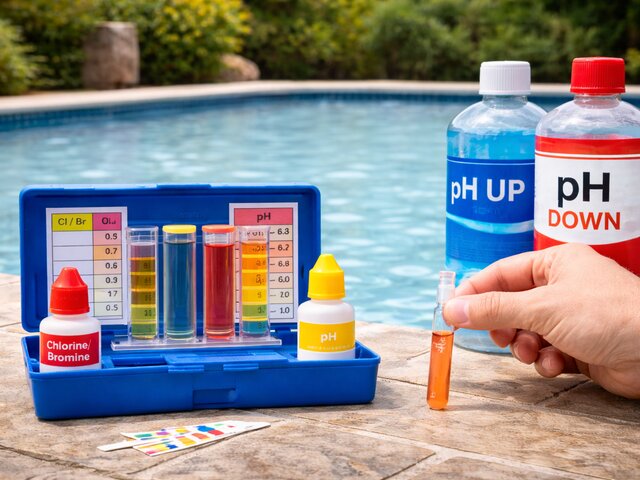
Hot Tub & Spa Water Care Guide: Complete Chemistry Manual 2026
Quick Answer
Hot tub water care requires maintaining proper pH (7.4-7.6), alkalinity (80-120 ppm), and sanitizer levels while following regular testing and chemical adjustment schedules. Higher temperatures and smaller water volumes make spas more sensitive to chemical imbalances than pools.
Quick Overview: Hot Tub Water Care Essentials
Most hot tub owners make one critical mistake when dealing with water chemistry—they treat their spa exactly like a swimming pool, leading to cloudy water, equipment damage, and frustrated bathers. The key to crystal clear, safe spa water lies in maintaining proper chemical balance, regular testing, and consistent maintenance routines.
Essential Parameters:
- pH: 7.4-7.6
- Total Alkalinity: 80-120 ppm
- Free Chlorine: 4-6 ppm (or bromine 3-5 ppm)
- Calcium Hardness: 250-350 ppm for plaster (175-225 ppm for vinyl/fiberglass)
Test water 2-3 times per week and adjust as needed. Most pool chemicals can be used in spas, but require different concentrations.
Understanding Hot Tub Water Chemistry
Why Spa Water Care Differs from Pool Care
Hot tub water chemistry is fundamentally more challenging than pool maintenance for several critical reasons. The elevated temperatures (100-104°F) accelerate chemical reactions, cause faster chlorine dissipation, and create an ideal environment for bacteria growth. The smaller water volume means that any chemical imbalance or contamination has an immediate and amplified effect on water quality.
Bather load per gallon is significantly higher in spas than pools. A typical 400-gallon spa with 4 people has the equivalent bather density of a 16,000-gallon pool with 160 people. This intense usage introduces body oils, cosmetics, and organic matter that quickly overwhelm sanitizer levels and affect water balance.
The Six Pillars of Spa Water Chemistry
1. pH (Potential Hydrogen)
pH measures water acidity or alkalinity on a scale of 0-14. The ideal range for spas is 7.4-7.6, slightly more narrow than pools due to higher temperatures. High pH reduces sanitizer effectiveness and can cause scale formation, while low pH corrodes equipment and irritates skin. pH adjustment chemicals are essential for spa maintenance due to frequent fluctuations.
2. Total Alkalinity (TATotal Alkalinity — The buffer that keeps your pH from bouncing around. Get this in range and pH gets a lot easier to manage. learn more →)
Alkalinity acts as a pH buffer, preventing rapid pH swings. Maintain TA between 80-120 ppm for spas. Proper alkalinity is crucial for water stability, and spa water requires more frequent adjustments due to temperature effects and chemical additions.
3. Free Chlorine/Bromine
Sanitizer kills bacteria and oxidizes organic matter. Maintain 4-6 ppm free chlorine or 3-5 ppm bromine. Higher temperatures require higher sanitizer levels than pools to maintain effectiveness against increased bacterial growth rates.
4. Calcium Hardness (CH)
Calcium hardness should be maintained around 175-225 ppm for acrylic/fiberglass spas, with higher (250-350 ppm) only for plaster surfaces. Low hardness causes water to become aggressive and corrode metal components, while high hardness leads to scale formation on heaters and surfaces.
5. Total Dissolved Solids (TDS)
TDS accumulates faster in spas due to smaller water volumes and frequent chemical additions. When TDS exceeds 1,500-2,000 ppm, water becomes difficult to balance and requires partial or complete replacement.
6. Cyanuric Acid (CYA/Stabilizer)
If using stabilized chlorine, maintain CYACyanuric Acid (stabilizer) — Sunscreen for your chlorine — it keeps sunlight from burning it off. The catch: the more you have, the more chlorine you need to keep. learn more → at 30-50 ppm. However, many spa professionals recommend avoiding stabilized chlorine due to rapid CYA buildup in small water volumes. Saltwater spas may use a small amount of cyanuric acid (stabilizer) to buffer chlorine, but many spa salt systems are designed to run with little or no CYA — and the CDC advises against CYA in hot tubs, so follow your manufacturer.
Step-by-Step Spa Water Care Procedures
Daily Maintenance Routine
- Visual Inspection: Check water clarity, foam levels, and equipment operation. Look for unusual odors (indicate sanitizer problems)
- Temperature Check: Verify heater operation and settings. Higher temps accelerate chemical consumption
- Skimmer/Filter Check: Remove visible debris from skimmer baskets, check filter pressure gauge
Weekly Testing and Chemical Adjustment
Step 1: Test Water Chemistry
Use a quality test kit (Taylor K-2006 (FAS-DPDFAS-DPD test — A drop-based test that reads chlorine accurately even at high "shock" levels, where test strips give up. see test kits →) or equivalent) to test pH, total alkalinity, and sanitizer levels. Test strips are insufficient for spa water due to the precision required for small water volumes.
Step 2: Adjust Total Alkalinity First
If TA is below 80 ppm, add sodium bicarbonate (baking soda). See our baking soda dosing guide for amounts. If TA is above 120 ppm, use muriatic acid or sodium bisulfate to lower it.
Step 3: Adjust pH
To raise pH, add sodium carbonate (soda ash). To lower pH, add muriatic acid or sodium bisulfate according to manufacturer directions.
Step 4: Shock Treatment
Add non-chlorine shock (potassium monopersulfate) weekly or chlorine shock bi-weekly. Use 2-3 times the normal dosage compared to pools due to higher organic loads. Ensure pH is properly balanced before shocking for maximum effectiveness.
Step 5: Sanitizer Adjustment
Add chlorine or bromine to achieve target levels. Liquid chlorine is preferred over granular for dosing estimates in small volumes.
Monthly Deep Maintenance
- Filter Cleaning: Clean filters every 2-4 weeks. Spa filters need more frequent cleaning than pool filters
- Calcium Hardness Testing: Test and adjust monthly (add calcium chloride to raise, dilute with fresh water to lower)
- TDS Testing: Monitor monthly; plan water replacement when approaching 1,500 ppm
Seasonal Water Replacement
Replace spa water every 3-4 months under normal usage, or sooner with heavy use. To estimate an interval for your spa, use our spa water-change calculator.
Common Hot Tub Water Problems and Solutions
Cloudy Water
Causes:
- Poor filtration
- High TDS
- Inadequate sanitizer
- pH imbalance
Solutions: Clean/replace filters, shock treat, balance pH and alkalinity, increase circulation. Avoid use until clarity is restored.
Foamy Water
Causes: Body oils, cosmetics, soap residue, low calcium hardness
Solutions:
- Add defoamer (temporary fix)
- Shock treat water
- Clean filters
- Increase calcium hardness if below 150 ppm
- Encourage pre-spa showers
Strong Chemical Odors
Causes: Combined chlorine (chloramines) from inadequate sanitizer levels or organic contamination.
Solutions: shock the water (raise sanitizer to shock level), clean filters, and maintain higher daily sanitizer levels. Chloramine odors indicate unhealthy water conditions.
Scale Formation
Causes: High pH, high calcium hardness, or high TA combined with elevated temps
Solutions:
- Lower pH to 7.2-7.4
- Reduce alkalinity if above 120 ppm
- Use scale prevention products
- Clean existing scale during water changes
Corrosion Issues
Causes: Low pH, low alkalinity, or low calcium hardness creating aggressive water conditions.
Solutions: Raise pH to 7.4-7.6, increase alkalinity to 80-120 ppm, and boost calcium hardness to 250-350 ppm for plaster (175-225 ppm for vinyl/fiberglass). Corrosive water can also cause skin irritation.
Advanced Spa Water Care Techniques
Enzyme Treatments
Enzyme products break down organic contaminants like body oils and cosmetics that traditional sanitizers cannot eliminate. Add enzymes weekly to reduce sanitizer demand and prevent biofilm formation.
Mineral Sanitizer Systems
Silver and copper ionizers provide supplemental sanitization and can reduce chlorine or bromine requirements by 50-75%. These systems work particularly well in spas due to slower water turnover rates.
Ozone Integration
Ozone generators provide powerful oxidation and sanitization, reducing chemical usage and improving water quality. Ozone is especially effective in spas due to the contained environment and higher temperatures that enhance reaction rates.
Salt Water Systems for Spas
Salt chlorine generators work in spas by converting salt to chlorine through electrolysis. Maintain salt at your manufacturer's target (commonly ~1,750-3,000 ppm for spa systems — much lower than pools) and remember that saltwater spas still need chemical balancing.
Equipment Maintenance for Water Quality
Filter System Optimization
Spa filters work harder than pool filters due to higher contaminant loads per gallon. Understanding filter operation helps optimize performance. Rotate between two sets of filters, allowing thorough cleaning and drying between uses.
Circulation System Management
Run spa circulation systems 2-4 hours daily minimum, or continuously during heavy use periods. Higher temperatures and organic loads require more circulation than pools to maintain water quality.
Heater Maintenance
Maintain proper calcium hardness and pH to prevent scale formation on heating elements. Scale buildup reduces efficiency and can cause premature heater failure. Descale heaters annually or as needed based on water chemistry history.
Troubleshooting Chemical Imbalances
Persistent pH Problems
If pH constantly rises, check for excessive aeration, high alkalinity, or scale formation releasing calcium. If pH drops continuously, investigate acid rain effects, organic acid buildup, or equipment corrosion.
Sanitizer Demand Issues
High sanitizer consumption indicates organic contamination, biofilm formation, or combined chlorine buildup. Shock the water, clean filters thoroughly, and consider enzyme treatment to reduce organic load.
If sanitizer levels become too high, dilute with fresh water or use sodium thiosulfate (chlorine neutralizer) for immediate reduction.
Alkalinity Drift
Total alkalinity tends to rise in spas due to outgassing of carbon dioxide at higher temperatures. Monitor weekly and adjust as needed to prevent pH lock and scaling issues.
Seasonal Spa Care Considerations
Winter Operation
Cold weather affects chemical balance due to reduced evaporation and different usage patterns. Maintain higher sanitizer levels if spa cover traps contaminants, and check pH more frequently as temperature fluctuations affect chemical stability.
Summer Challenges
Hot weather increases evaporation and chemical consumption. Top off with fresh water regularly and increase testing frequency. UV exposure when covers are removed can rapidly deplete chlorine levels.
Heavy Usage Periods
During parties or frequent use, increase sanitizer levels prophylactically and test water before and after heavy usage. Consider shocking after intense use periods to prevent water quality issues.
Health and Safety Considerations
Safe Chemical Storage
Store spa chemicals in cool, dry areas away from children and pets. Never mix different chemicals, and always use clean measuring tools. Monitor chemical expiration dates as potency decreases over time.
Bather Safety
Test water before each use during problem periods. Poor water quality can cause skin irritation and health issues. Maintain proper sanitizer levels to prevent recreational water illnesses.
Chemical Handling Safety
Wear appropriate protective equipment when handling chemicals. Never add chemicals to hot water as this can cause violent reactions and dangerous fume release. Always follow manufacturer instructions for dosing and application.
When to Call a Professional
Consider professional help when experiencing persistent water quality issues despite proper chemical management, equipment malfunctions affecting water chemistry, or unusual staining or scaling that doesn't respond to standard treatments.
Professional service is recommended for complex problems like biofilm contamination, severe scale buildup requiring acid washing, or equipment modifications affecting water chemistry systems.
Annual professional inspections can identify potential problems before they affect water quality and help optimize chemical efficiency and equipment performance.
Cost-Effective Water Care Strategies
Chemical Efficiency Tips
Buy chemicals in appropriate quantities to prevent waste from expiration. Use liquid chlorine when possible as it's more cost-effective than granular products for regular sanitization.
While baking soda can raise alkalinity, it cannot replace specialized spa chemicals for pH adjustment and sanitization.
Preventive Maintenance Savings
Regular filter cleaning and replacement prevents costly equipment repairs and reduces chemical consumption. Proper water balance prevents scale and corrosion damage that requires expensive repairs.
Covering the spa when not in use reduces evaporation, heat loss, and contamination, lowering both chemical and energy costs.
Frequently Asked Questions
How often should I test my spa water?
Test spa water 2-3 times per week during regular use, daily during heavy use periods, and before each use if water quality issues have occurred recently.
Can I use the same chemicals in my spa as my pool?
Yes, you can use pool pH increaser in your spa and most other pool chemicals, but dosages differ significantly due to smaller water volumes and higher temperatures.
Why does my spa water get cloudy so quickly?
Spas have higher bather loads per gallon, elevated temperatures that reduce sanitizer effectiveness, and smaller volumes that amplify any contamination or chemical imbalance.
How long should I wait to enter the spa after adding chemicals?
Most chemicals need 15-30 minutes to circulate and settle, but always test water to confirm proper levels before entry.
Do I need special chemicals for saltwater spas?
Saltwater spas generate their own chlorine but still require pH adjusters, alkalinity increasers, and stabilizer. Because most spas are covered or indoor, UV protection from cyanuric acid is usually unnecessary; follow your salt-system manufacturer's CYA guidance (often near zero).
What causes spa foam and how do I prevent it?
Foam results from body oils, cosmetics, and soap residue. Prevent by encouraging pre-spa showers, maintaining proper calcium hardness, and using enzyme treatments to break down organic contaminants.
Related Guides
For comprehensive pool and spa care information, explore these related guides:
- Essential pH Management Guide - Understanding pH control for pools and spas
- Complete pH Adjustment Procedures - Step-by-step pH correction methods
- Shocking with Chemical Imbalances - Safe shocking procedures for problem water
- Alkalinity Management Guide - Balancing total alkalinity effectively
- Chemical Storage and Lifespan - Maximizing chemical effectiveness and safety
- Water Chemistry Health Effects - Preventing chemical-related skin problems
For the full breakdown of safe chlorine levels by CYA level, see our pool water chemistry guide.
Still need help? Ask a Pool & Spa Expert AD
Get a personalized answer from PoolGuy810 — 30 years owning a pool and spa repair company. Describe your issue and get step-by-step help.
Related Pool Guides
Need More Help?
Try our free pool calculators and tools to help diagnose and fix your pool problems.
Browse Pool ToolsSLAM calculator, pH calculator, salt dosing & more