
Do Pools Have Chlorine? Pool Sanitization Methods Explained

Is chlorine actually in swimming pool water?
Read full question
Three weeks ago my wife mentioned that she could smell chlorine around our pool area and it got me thinking - do all pools actually contain chlorine? I always assumed they did but now I'm second-guessing myself. We have a basic above-ground pool and I've been adding chemicals but honestly I'm not 100% sure what's in them or if chlorine is definitely one of the ingredients. My wife is concerned about the kids swimming in chlorinated water and wants to know if there are pools that don't use chlorine at all. I feel pretty clueless about what's actually keeping our water clean.
Quick Answer
Most traditional pools do contain chlorine as the primary sanitizer, though levels vary by pool type and maintenance approach. Alternative sanitization systems like salt water, UV, and ozone exist but many still rely on chlorine to some degree.
Understanding Pool Sanitization Systems
Yes, the vast majority of swimming pools do contain chlorine in some form, as it remains the most effective and widely-used sanitizer for eliminating bacteria, viruses, and algae. However, the amount and delivery method varies significantly depending on your pool's sanitization system.
Traditional Chlorine Systems
Most conventional pools use either liquid chlorine (sodium hypochlorite), chlorine tablets (trichlor), or granular chlorine (calcium hypochlorite) added directly to the water. These systems maintain free chlorine at the right level for your CYACyanuric Acid (stabilizer) — Sunscreen for your chlorine — it keeps sunlight from burning it off. The catch: the more you have, the more chlorine you need to keep. learn more → (typically 4-8 ppm, or parts per million, for a stabilized outdoor pool; consult local health codes for specific requirements) to ensure effective sanitization. The proper water chemistry balance is crucial for chlorine to work effectively.
When you smell that characteristic "pool smell," you're actually detecting chloramines - compounds formed when chlorine combines with contaminants like sweat, oils, and organic matter. A properly maintained pool with adequate free chlorine shouldn't have a strong odor.
Salt Water Pool Systems
Salt water pools still use chlorine, but generate it through an electrolytic process rather than adding it manually. The salt water generator (also called a chlorine generator) converts dissolved salt into chlorine gas, which then dissolves into the water as hypochlorous acid - the same sanitizing compound found in traditional chlorine pools.
The advantage is more consistent chlorine production and softer-feeling water, but these systems still maintain chlorine residuals of the right level for your CYA (typically 4-8 ppm for a stabilized outdoor pool) (verify with manufacturer specifications). You can learn more about how these systems work in our comprehensive salt water pool guide.
Alternative Sanitization Methods
UV Systems: Ultraviolet light systems kill microorganisms as water passes through a UV chamber. However, UV provides no residual sanitizer in the pool, so most installations typically still require a small amount of chlorine (often 0.5-1 ppm - verify with manufacturer specifications) for ongoing protection.
Ozone Systems: Ozone generators create ozone gas that's injected into the water to destroy contaminants. Like UV, ozone dissipates quickly and leaves no residual protection, necessitating a chlorine backup system.
Mineral Systems: These use silver and copper ions as sanitizers, often combined with reduced chlorine levels. While effective, they typically still require some chlorine supplementation during heavy use periods.
Chlorine-Free Alternatives
Truly chlorine-free options are limited but do exist:
- Bromine: A halogen similar to chlorine that's effective at higher pH levels and doesn't produce the same odor. More common in spas than pools because it isn't UV-stable — cyanuric acid can't protect it, so it burns off quickly in sunlight (cost is a secondary factor).
- Biguanide Systems: Polymer-based sanitizers like polyhexamethylene biguanide (PHMB) that don't use halogens. These systems require specific compatible chemicals and can be more expensive to maintain.
- Natural Pools: Biological filtration systems using plants and beneficial bacteria, though these are complex installations requiring specialized design.
Determining Your Pool's Sanitization Method
To identify what's in your pool water, check your chemical storage area for product labels. Chlorine-containing products will clearly list ingredients like sodium hypochlorite, calcium hypochlorite, or trichloro-s-triazinetrione. If you have a control panel with digital displays near your equipment, you likely have a salt water system.
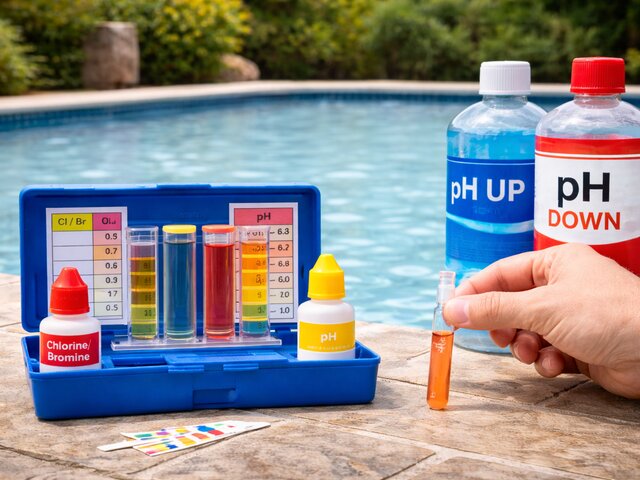
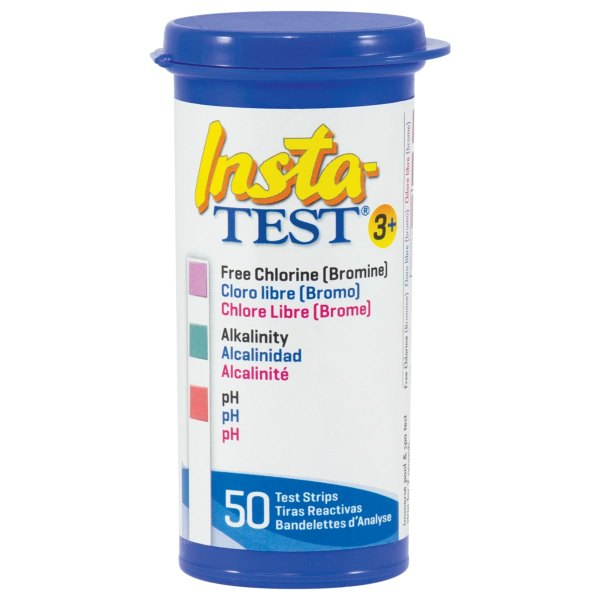
Use a quality test kit or test strips to measure free chlorine levels in your water. Most pools will show detectable chlorine even if you're not directly adding it, indicating it's being generated by a salt system or other automated method.
Safety Considerations for Families
Properly maintained chlorine levels in pools are considered safe by health authorities and are actually necessary to prevent dangerous waterborne illnesses. The CDC recommends chlorine or bromine as pool sanitizers. However, maintaining proper water balance is crucial - high chlorine levels can cause skin and eye irritation, while low levels allow harmful bacteria to flourish.
Regular testing and adjustment ensure your sanitization system - whether chlorine-based or alternative - keeps your water clean and comfortable for swimming. For an estimate of the free chlorine level based on your CYA, use the FC/CYAFC/CYA chart — The chart that sets your chlorine target from your stabilizer (CYA) level — the two go together. see the chart → relationship — our all-in-one pool calculator estimates the free chlorine target for your CYA.
Still need help? Ask a Pool & Spa Expert AD
Get a personalized answer from PoolGuy810 — 30 years owning a pool and spa repair company. Describe your issue and get step-by-step help.
Related Pool Guides
Need More Help?
Try our free pool calculators and tools to help diagnose and fix your pool problems.
Browse Pool ToolsSLAM calculator, pH calculator, salt dosing & more