
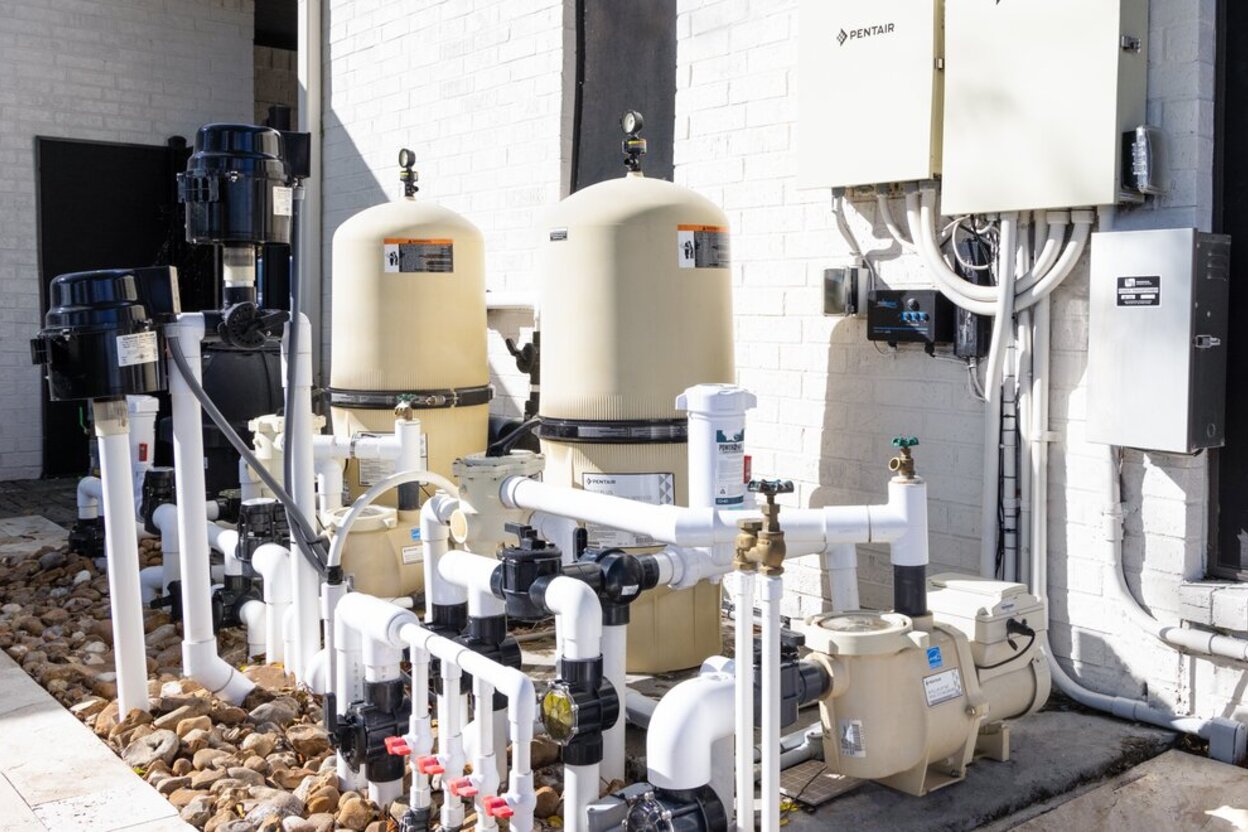
Variable Speed Pump RPM Settings for Energy Savings Guide

Is running my variable speed pump at wrong RPM dangerous for my kids?
Read full question
Three weeks ago I had a variable speed pump installed to replace my old single-speed unit, and I'm worried I might be creating a safety hazard by running it incorrectly. The installer didn't give me clear guidance on what RPM settings to use, and now I'm concerned that running it too slow might not be circulating chemicals properly around my pool where my young children swim daily. Is it dangerous if the water isn't moving fast enough to distribute chlorine evenly? I've been experimenting with different speeds but have no idea if I'm putting my family at risk with poor water circulation or wasting energy by running it too fast.
Quick Answer
Variable speed pumps typically run at 800–1,800 RPM for daily filtration and up to 3,200–3,450 RPM for high-flow tasks like vacuuming. Running 10–13 hours daily at lower speeds maximizes energy savings while maintaining proper circulation.
Variable Speed Pump RPM Optimization Checklist
Running your variable speed pump at the correct RPM settings ensures both effective water circulation and maximum energy savings. And to answer the worry directly: running the pump on the slow side is not dangerous to swimmers — as long as you keep chlorine at the right level for your CYACyanuric Acid (stabilizer) — Sunscreen for your chlorine — it keeps sunlight from burning it off. The catch: the more you have, the more chlorine you need to keep. learn more → and turn the water over each day, a lower RPM just mixes the water more slowly, it doesn't make it unsafe. Here's a systematic approach to dial in your pump speeds for different pool operations.
✓ Daily Filtration Speed Settings
Typical RPM Range: 800-1,800 RPM for many pools (verify optimal range for your specific system)
- ☐ Start around 1,500 RPM, then dial down - Begin here, then lower toward 1,000-1,200 RPM as long as your skimmer, returns, and (if equipped) salt-cell flow switch still work — many pools filter well at 800-1,200 RPM
- ☐ Check skimmer suction - You should see steady water flow into the skimmer without excessive turbulence
- ☐ Monitor return jets - Water should flow smoothly from all return jets with noticeable but gentle movement
- ☐ Test water chemistry stability - If chlorine levels vary significantly across your pool after 24 hours, increase RPM by 200
Many pool owners find that 800-1,000 RPM provides excellent filtration while significantly reducing energy costs compared to single-speed pumps, with pool-cleaner operation typically requiring 1,400-1,800 RPM.
✓ Cleaning and Vacuuming Speeds
Typical RPM Range: 1,400-3,450 RPM depending on your cleaning method (consult equipment manuals for specific requirements)
- ☐ Manual vacuuming: 3,200-3,450 RPM for strong suction to pick up debris effectively
- ☐ Automatic pool cleaners: Check manufacturer specifications, but typically 1,400-1,800 RPM
- ☐ Pressure-side cleaners: May require higher speeds of 3,200-3,450 RPM to operate properly
- ☐ Robotic cleaners: Can run at normal filtration speeds since they have independent motors
✓ Daily Runtime Schedule Planning
Recommended Daily Operation: 10-13 hours for most residential pools
- ☐ Calculate turnover time - Your pool volume should circulate completely at least once per day
- ☐ Split runtime periods - Run 4-6 hours in morning and 4-6 hours in evening for better circulation
- ☐ Adjust for weather - Increase runtime during heavy use, storms, or high temperatures
- ☐ Monitor with proper water testing - Consistent chemistry indicates adequate circulation
✓ Fine-Tuning Your Settings
Once you've established baseline speeds, optimize based on your specific pool conditions:
- ☐ Pressure gauge monitoring - Monitor your baseline clean pressure reading; consult manufacturer specifications for normal operating pressure ranges
- ☐ Energy usage tracking - Most variable speed pumps display kilowatt hours; monitor your energy usage and compare to previous consumption to track improvements. Running at low speeds can cut electricity use by 50-80% versus a single-speed pump, translating to roughly $300-$600 in annual savings for a typical residential pool.
- ☐ Seasonal adjustments - Summer may require somewhat higher speeds due to increased bather load and temperature
- ☐ Filter type considerations - Sand filters typically need higher flow rates than cartridge filters for effective cleaning
✓ Safety and Circulation Verification
Proper circulation is essential for swimmer safety and water quality:
- ☐ Dead spot identification - Add food coloring near steps, corners, and behind ladders to check for stagnant areas
- ☐ Chemical distribution test - Test chlorine levels at multiple points around your pool after chemical addition
- ☐ Surface skimming effectiveness - Debris should move steadily toward skimmers with proper circulation
- ☐ Temperature uniformity - Pool temperature should be consistent throughout after several hours of operation
Programming Your Pump Controller
Most variable speed pumps allow you to set multiple daily programs. A common starting schedule looks like this:
- Program 1: 6:00 AM - 12:00 PM at 1,500 RPM (filtration)
- Program 2: 12:00 PM - 2:00 PM at 2,800 RPM (cleaning/high circulation)
- Program 3: 2:00 PM - 6:00 PM at 1,400 RPM (energy-saving filtration)
- Program 4: 6:00 PM - 10:00 PM at 1,600 RPM (evening swimming)
This approach ensures your children swim in properly circulated, safe water while maximizing your energy savings during off-peak hours.
 Taylor K-2006C Complete FAS-DPD Pool & Spa Test Kit
The FAS-DPD kit pool pros trust — reads chlorine accurately even at shock/SLAM levels, plus pH, alkalinity, calcium hardness and CYA. View on Amazon →
Taylor K-2006C Complete FAS-DPD Pool & Spa Test Kit
The FAS-DPD kit pool pros trust — reads chlorine accurately even at shock/SLAM levels, plus pH, alkalinity, calcium hardness and CYA. View on Amazon →
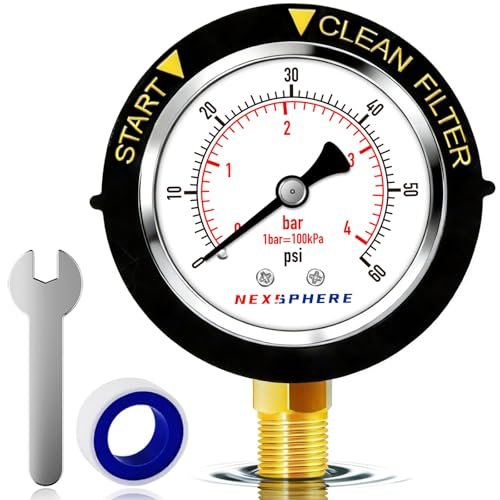 NexSphere Pool Filter Pressure Gauge, 0–60 PSI, 2 in Dial
Replacement back-mount gauge so you can read filter pressure and know when to backwash. View on Amazon →
NexSphere Pool Filter Pressure Gauge, 0–60 PSI, 2 in Dial
Replacement back-mount gauge so you can read filter pressure and know when to backwash. View on Amazon →
Still need help? Ask a Pool & Spa Expert AD
Get a personalized answer from PoolGuy810 — 30 years owning a pool and spa repair company. Describe your issue and get step-by-step help.
Need More Help?
Try our free pool calculators and tools to help diagnose and fix your pool problems.
Browse Pool ToolsSLAM calculator, pH calculator, salt dosing & more