
How Salt Water Pool Systems Work: Complete Guide 2026

What's the actual mechanism behind salt water pool chlorination?
Read full question
Despite my pool guy insisting I need to understand salt water electrolysis to maintain my system, his overly technical explanation makes me think he's overcomplicating things.
Specifically, what happens at the cellular level when salt water passes through the system? How does dissolved sodium chloride get converted into an effective sanitizing agent, and what role does electrolysis play in this conversion process? I want to grasp the complete operational mechanism before investing in this technology.
Quick Answer
Salt water pool systems use electrolysis to convert dissolved salt into chlorine sanitizer. The salt cell generates chlorine from sodium chloride, eliminating the need to manually add chlorine while maintaining proper sanitation. Key components include the salt cell generator, control unit, and flow switch. Water chemistry requirements include maintaining salt levels of 2,700-3,400 ppm, CYA levels of 70-80 ppm, pH of 7.4-7.6, and total alkalinity of 80-120 ppm.
The Science Behind Salt Water Chlorination
Salt water pool systems, technically called Salt Water Chlorine Generators (SWGSalt Water Generator — The "salt cell" that makes chlorine from the salt in a saltwater pool. Same chlorine — it just makes its own. pool terms →), operate on a simple scientific principle called electrolysis. When salt water passes through the generator's electrolytic cell, an electrical current separates the sodium chloride (NaCl) into sodium and chlorine. The chlorine immediately begins sanitizing your pool water, while the sodium forms a little sodium hydroxide, but the acidic chlorine generated at the same time largely neutralizes it, so the cell is roughly pH-neutral (the slow pH rise in salt pools comes mainly from aeration driving off CO2).
The chlorine produced is identical to what you'd add manually - there's no chemical difference. However, the process creates a continuous, steady supply rather than the peaks and valleys of manual chlorine addition.
Key Components of a Salt Water System
Salt Cell Generator
The heart of the system is the salt cell, containing titanium plates coated with precious metals like ruthenium or iridium. These plates create the electrical field necessary for electrolysis. Quality cells like those from Pentair, Hayward, or Jandy typically last 3-7 years depending on usage and water chemistry maintenance.
Control Unit
The control unit regulates power to the salt cell and displays system status. Most modern units show salt levels, cell condition, and chlorine output percentage. Advanced models can integrate with pool automation systems and smartphone apps.
Flow Switch
This safety device ensures the generator only operates when water flows through the system, preventing damage to the salt cell and ensuring proper chlorine distribution.
Water Chemistry Requirements
Salt Level
Most systems require 2,700-3,400 ppm of salt, roughly one-tenth the salinity of ocean water. Use pure sodium chloride - avoid table salt with additives. You'll need approximately 6-7 bags (40 lb) of pool salt per 10,000 gallons for initial startup.
Stabilizer (CYA) Levels
Salt water pools typically require Cyanuric Acid levels of 70-80 ppm. This protects the generated chlorine from UV degradation. all-in-one pool calculator is a handy reference to estimate how much stabilizer to add. Pre-dissolve the CYACyanuric Acid (stabilizer) — Sunscreen for your chlorine — it keeps sunlight from burning it off. The catch: the more you have, the more chlorine you need to keep. learn more → in a bucket of hot water before adding it to the pool, or use the SOCK method (put the CYA in a sock/nylon in the skimmer basket, or hang it in front of a return, squeezing occasionally). Note that CYA dissolves slowly, so retest after a few days to a week and do not add more until you're sure.
pH and Total Alkalinity
Salt pools tend to drift upward in pH (mainly from CO₂ off-gassing as hydrogen bubbles off the cell, not from electrolysis itself, since the cell is roughly pH-neutral overall), so you'll regularly need to lower pH with muriatic acid. Target pH of 7.4-7.6 and Total Alkalinity of 80-120 ppm to provide proper pH buffering while minimizing scaling on the salt cell.
Calcium Hardness
Maintain calcium hardness at 250-350 ppm for plaster pools, or 175-225 ppm for vinyl/fiberglass. Low calcium makes the water corrosive, which etches plaster surfaces and leaches calcium from them over time, while high levels promote scaling.
Daily Operation Process
When your pool pump runs, water flows through the salt cell where the electrolysis occurs. The system typically operates during normal filtration cycles. Most generators have adjustable output settings (usually 0-100%) allowing you to match chlorine production to your pool's demand.
The generated chlorine sanitizes the pool, then through natural chemical processes, converts back to salt, creating a continuous cycle. This is why salt levels remain relatively stable - you're not consuming salt, just using it as a catalyst.
Maintenance Requirements
Weekly Testing
Test and balance water chemistry weekly using a quality test kit like Taylor K-2006C. Monitor Free Chlorine, pH, Total Alkalinity, and monthly testing of CYA and calcium hardness. Adjust generator output to maintain Free Chlorine at the right level for your CYA (typically 6-8 ppm for a salt water pool).
Salt Cell Cleaning
Inspect the salt cell monthly for calcium buildup. Many systems have reverse polarity features that help prevent scaling, but manual cleaning may still be necessary. Clean with a 10:1 water-to-muriatic acid solution when needed, following manufacturer safety guidelines.
Seasonal Considerations
In freezing climates, drain the salt cell during winter to prevent damage. Salt doesn't freeze at normal winter temperatures, but the cell components can crack if water freezes inside them.
Benefits and Limitations
Advantages
- Softer-feeling water that's gentler on skin and eyes
- Automatic chlorine generation reduces manual chemical handling
- Lower long-term chemical costs
- More stable chlorine levels
- No chlorine storage requirements
Limitations
- Higher upfront equipment costs ($800-2,500)
- Requires more precise water chemistry management, particularly pH, which tends to drift upward (largely from aeration/CO₂ loss at the cell)
- Salt cell replacement every 3-7 years ($200-800)
- Limited effectiveness in very cold water (below 50-55°F, with reduced efficiency starting around 60°F)
- Can accelerate corrosion of certain metal components
Troubleshooting Common Issues
Warning: Always turn off power to the system before performing any maintenance or troubleshooting.
If your system shows "low salt" errors, verify with an independent salt test - the cell's own sensor may be drifting or failing. The most accurate home check is a reagent drop test like the Taylor K-1766 salt test; strips and digital meters are convenient but misread or drift more often. "No flow" errors typically indicate pump issues or clogged lines. Consistently low chlorine production might signal a worn salt cell needing replacement.
Understanding how your salt water system works helps you maintain proper water chemistry and maximize equipment life. Regular testing, proper chemical balance, and routine maintenance ensure years of trouble-free operation and enjoyable swimming.
For the full breakdown of safe chlorine levels by CYA level, see our pool water chemistry guide.
 Taylor K-2006C Complete FAS-DPD Pool & Spa Test Kit
The FAS-DPD kit pool pros trust — reads chlorine accurately even at shock/SLAM levels, plus pH, alkalinity, calcium hardness and CYA. View on Amazon →
Taylor K-2006C Complete FAS-DPD Pool & Spa Test Kit
The FAS-DPD kit pool pros trust — reads chlorine accurately even at shock/SLAM levels, plus pH, alkalinity, calcium hardness and CYA. View on Amazon →
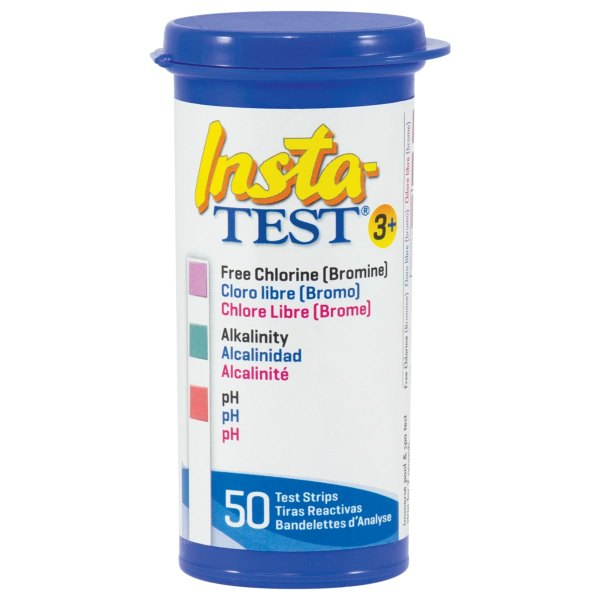 LaMotte Insta-Test 3 Pool Strips (50 ct)
Pro-grade 3-way strips from LaMotte — chlorine, pH & alkalinity, fast and accurate. Top-rated at 4.8★. View on Amazon →
LaMotte Insta-Test 3 Pool Strips (50 ct)
Pro-grade 3-way strips from LaMotte — chlorine, pH & alkalinity, fast and accurate. Top-rated at 4.8★. View on Amazon →
 Acid Blue - Low Fume Muriatic Acid for Swimming Pools & Spas - Lower's pH, Reduces Alkalinity - 2 Gallon
View on Amazon →
Acid Blue - Low Fume Muriatic Acid for Swimming Pools & Spas - Lower's pH, Reduces Alkalinity - 2 Gallon
View on Amazon →
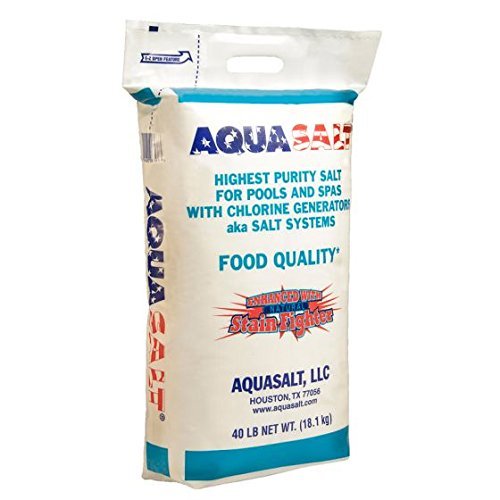 AquaSalt Pool & Spa Salt for Chlorine Generators (2 × 40 lb)
High-purity salt for saltwater chlorine generators. View on Amazon →
AquaSalt Pool & Spa Salt for Chlorine Generators (2 × 40 lb)
High-purity salt for saltwater chlorine generators. View on Amazon →
Still need help? Ask a Pool & Spa Expert AD
Get a personalized answer from PoolGuy810 — 30 years owning a pool and spa repair company. Describe your issue and get step-by-step help.
Related Pool Guides
Need More Help?
Try our free pool calculators and tools to help diagnose and fix your pool problems.
Browse Pool ToolsSLAM calculator, pH calculator, salt dosing & more