
Do Salt Water Pools Stay Clean? Complete Maintenance Guide

Are salt water pools really self-cleaning like everyone says?
Read full question
Already three weeks into this rental with a salt water pool I've never maintained before and getting nasty algae blooms plus cloudy water. My generator is running fine and producing chlorine, but somehow I still have to test chemicals, brush walls, and fight green water.
What am I missing here? Does the salt water system actually keep the pool clean on its own, or is there still a bunch of regular maintenance I need to be doing? I feel like I got sold a bill of goods about how "easy" salt water pools are supposed to be.
Quick Answer
Salt water pools are not self-cleaning and require regular maintenance including proper water chemistry balance, algae prevention, and equipment upkeep. The salt water generator only produces chlorine automatically but doesn't eliminate the need for active pool care. Maintain 6-9 ppm free chlorine for CYA 70-80 ppm, pH 7.2-7.6, total alkalinity 60-80 ppm, and calcium hardness 175-225 ppm for vinyl/fiberglass pools.
How Salt Water Pool Cleaning Actually Works
Salt water generators work through electrolysis, converting dissolved salt (sodium chloride) into chlorine gas that dissolves into hypochlorous acid and hypochlorite ions - the same sanitizing chlorine found in traditional pools. This process happens continuously while the pump runs, providing a steady supply of sanitizer. However, this automated chlorine production is just one component of pool cleanliness.
The generator works to hold your free chlorine at the target for your CYACyanuric Acid (stabilizer) — Sunscreen for your chlorine — it keeps sunlight from burning it off. The catch: the more you have, the more chlorine you need to keep. learn more → level, but may not keep up during heavy bather loads, hot weather, or when contaminants are introduced. Salt water pools still need active management to maintain proper FCFree Chlorine — The chlorine actively sanitizing your water right now. This is the number you keep an eye on. how much you need → (free chlorine) levels based on your CYA (stabilizer) levels.
Essential Maintenance Requirements
Water Chemistry Balance
Salt water pools require more precise chemistry management than many owners realize:
- Free Chlorine: Maintain 6-9 ppm for CYA 70-80 ppm, adjusted based on CYA levels using the all-in-one pool calculator
- pH: Keep between 7.2-7.6 (salt systems tend to drive pH up)
- Total Alkalinity: Target 60-80 ppm for SWGSalt Water Generator — The "salt cell" that makes chlorine from the salt in a saltwater pool. Same chlorine — it just makes its own. pool terms → systems (lower than traditional pools)
- Stabilizer (CYA): Maintain CYA per your salt generator's manufacturer recommendation—many suggest about 70-80 ppm for outdoor salt water pools, though some recommend lower; match your FC target to your actual CYA
- Salt Level: Keep between 2700-3400 ppm depending on generator specifications
- Calcium Hardness: 250-350 ppm for plaster pools, 175-225 ppm for vinyl/fiberglass
Physical Cleaning Tasks
Salt water pools require the same physical maintenance as chlorine pools:
- Brush walls and steps weekly to prevent algae buildup in areas with poor circulation
- Vacuum or use automatic cleaner to remove debris and settled particles
- Clean skimmer baskets 2-3 times per week during swimming season
- Backwash or clean filters weekly to bi-weekly during peak season, every 2-4 weeks during low-use periods
- Remove leaves and debris promptly to prevent staining and chemical demand
Common Cleanliness Challenges
Algae Growth Issues
Salt water pools can develop algae just like traditional pools, especially when:
- Generator output is insufficient for current conditions
- CYA levels are too high (over 100 ppm), reducing chlorine effectiveness
- pH rises too high (above 7.8), which lowers the active HOCl fraction and reduces sanitizing efficiency
- Generator cells become scaled and produce less chlorine
- Phosphate levels build up, providing algae food
Generator Limitations
Understanding when your salt system needs help prevents problems:
- Heavy rain: Dilutes salt levels and may require temporary liquid chlorine addition
- High bather loads: Generator may not keep up with increased chlorine demand
- Hot weather: Increases chlorine consumption and may require boost chlorination
- Cell scaling: Reduces efficiency and chlorine production over time
Maintenance Schedule for Optimal Cleanliness
Weekly Tasks
- Test water chemistry using Taylor K-2006 or equivalent test kit
- Adjust pH using muriatic acid if above 7.6
- Brush all pool surfaces thoroughly
- Empty skimmer baskets and check generator display
- Inspect and clean automatic cleaner if used
Monthly Tasks
- Test salt levels — a reagent kit like the Taylor K-1766 is most accurate, or a salt strip / digital meter for a quick check
- Inspect generator cell for scaling or calcium buildup
- Test CYA levels and adjust if needed
- Check and clean pool filter (cartridge, sand, or DE)
- Verify generator is producing adequate chlorine output
When Additional Treatment is Needed
Even well-maintained salt water pools occasionally need intervention:
SLAMShock Level And Maintain — raise free chlorine to a target based on your CYA and hold it there until the algae is gone. It's a process, not a one-time dose. the SLAM walkthrough → Method: If algae develops, use the SLAM (Shock Level And Maintain) process with liquid chlorine. Don't rely solely on the generator - it cannot produce shock-level chlorine (about 40% of CYA) needed to eliminate algae. Use our all-in-one pool calculator to determine the shock level for your CYA.
Supplemental Chlorination: Add liquid chlorine when hosting pool parties, after heavy rain, or during extended hot spells when chlorine demand exceeds generator capacity.
Phosphate Removal: Consider phosphate remover products if algae problems persist despite proper chlorine and chemistry levels.
Prevention and Best Practices
Maintain cleanliness proactively by:
- Running the generator and pump adequate hours daily (typically 8-12 hours)
- Maintaining proper salt levels for optimal chlorine production
- Testing water 2-3 times per week during swimming season
- Addressing chemistry imbalances immediately
- Cleaning generator cells every 3 months or per manufacturer schedule
- Using liquid chlorine for shock treatments rather than cal-hypo shock
Remember: Salt water systems reduce the daily task of adding chlorine but don't eliminate the need for comprehensive pool maintenance. Consistent care keeps your salt water pool clean, clear, and ready for swimming.
For the full breakdown of safe chlorine levels by CYA level, see our pool water chemistry guide.
 Taylor K-2006C Complete FAS-DPD Pool & Spa Test Kit
The FAS-DPD kit pool pros trust — reads chlorine accurately even at shock/SLAM levels, plus pH, alkalinity, calcium hardness and CYA. View on Amazon →
Taylor K-2006C Complete FAS-DPD Pool & Spa Test Kit
The FAS-DPD kit pool pros trust — reads chlorine accurately even at shock/SLAM levels, plus pH, alkalinity, calcium hardness and CYA. View on Amazon →
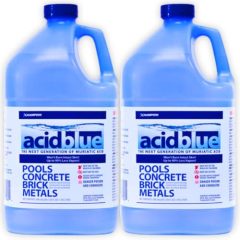 Acid Blue - Low Fume Muriatic Acid for Swimming Pools & Spas - Lower's pH, Reduces Alkalinity - 2 Gallon
View on Amazon →
Acid Blue - Low Fume Muriatic Acid for Swimming Pools & Spas - Lower's pH, Reduces Alkalinity - 2 Gallon
View on Amazon →
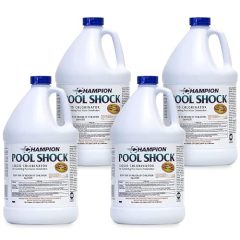 Liquid Chlorine / Sodium Hypochlorite (12.5%)
Everyday sanitizer — the B in BBB View on Amazon →
Liquid Chlorine / Sodium Hypochlorite (12.5%)
Everyday sanitizer — the B in BBB View on Amazon →
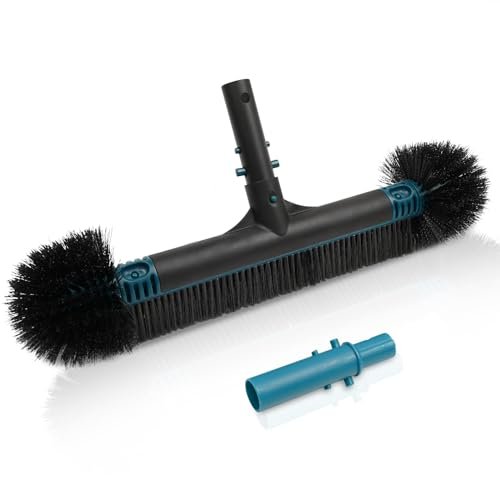 Poolvio 20" 2-in-1 Pool Brush Head (Walls & Floor)
Sturdy 20-inch brush head that clips onto any standard telescopic pole. View on Amazon →
Poolvio 20" 2-in-1 Pool Brush Head (Walls & Floor)
Sturdy 20-inch brush head that clips onto any standard telescopic pole. View on Amazon →
Still need help? Ask a Pool & Spa Expert AD
Get a personalized answer from PoolGuy810 — 30 years owning a pool and spa repair company. Describe your issue and get step-by-step help.
Related Pool Guides
Need More Help?
Try our free pool calculators and tools to help diagnose and fix your pool problems.
Browse Pool ToolsSLAM calculator, pH calculator, salt dosing & more