
How Do Pool Heaters Work? Complete Guide to Pool Heating

What are the different types of pool heaters and how do they work?
Read full question
Found myself staring at a pile of pool heating equipment with my tools spread out, ready to tackle this installation but totally lost on which system actually makes sense. Gas, electric, heat pump - they all claim to do the same thing but work differently somehow.
What's the actual difference between these heater types? How does each one actually heat the water? Want to understand the mechanics before dropping cash on one.
Quick Answer
Pool heaters work by transferring heat to pool water through different methods: gas heaters burn fuel to heat water directly, electric heaters use resistance coils, and heat pumps extract heat from ambient air to warm pool water efficiently.
Gas Pool Heaters: Direct Combustion Heating
Gas pool heaters are the most common and fastest-heating option for residential pools. These units work by burning natural gas or liquid propane in a combustion chamber, creating intense heat that's transferred directly to your pool water.
The Gas Heating Process
When you activate your gas heater, several components work together in sequence. The gas control valve opens, allowing fuel to flow into the combustion chamber. An electronic ignition system or pilot light ignites the gas, creating a controlled flame. This flame heats a series of copper or cupro-nickel heat exchanger coils.
Pool water is pumped through these heated coils by your circulation system. As water flows through the heat exchanger, it absorbs thermal energy from the hot metal surfaces, raising its temperature with each pass (actual temperature rise depends on heater capacity and flow rate). The heated water then returns to your pool through the return lines.
A built-in thermostat monitors water temperature and cycles the heater on and off to maintain your desired temperature setting. Safety components including pressure relief valves and high-limit switches protect against overheating and excessive pressure. Gas heaters can typically raise pool temperature efficiently (actual rate depends on heater BTU output, pool volume, and ambient conditions), making them ideal for quick heating when needed.
Electric Pool Heaters: Resistance Heating
Electric pool heaters use electrical resistance to generate heat, similar to how an electric water heater or space heater operates. These units contain heating elements made of metal alloys that resist electrical current flow, converting electricity directly into thermal energy.
Electric Heating Components
The heart of an electric pool heater consists of multiple heating elements, typically made from stainless steel or Incoloy materials. When electricity flows through these elements, their resistance creates heat. Pool water flows around or through chambers containing these elements, absorbing the generated heat.
Electric heaters include safety features like pressure switches, temperature sensors, and flow switches to prevent operation without proper water flow. They're generally more expensive to operate than gas heaters but produce zero emissions and work reliably in any weather conditions.
Heat Pump Pool Heaters: Ambient Air Heat Transfer
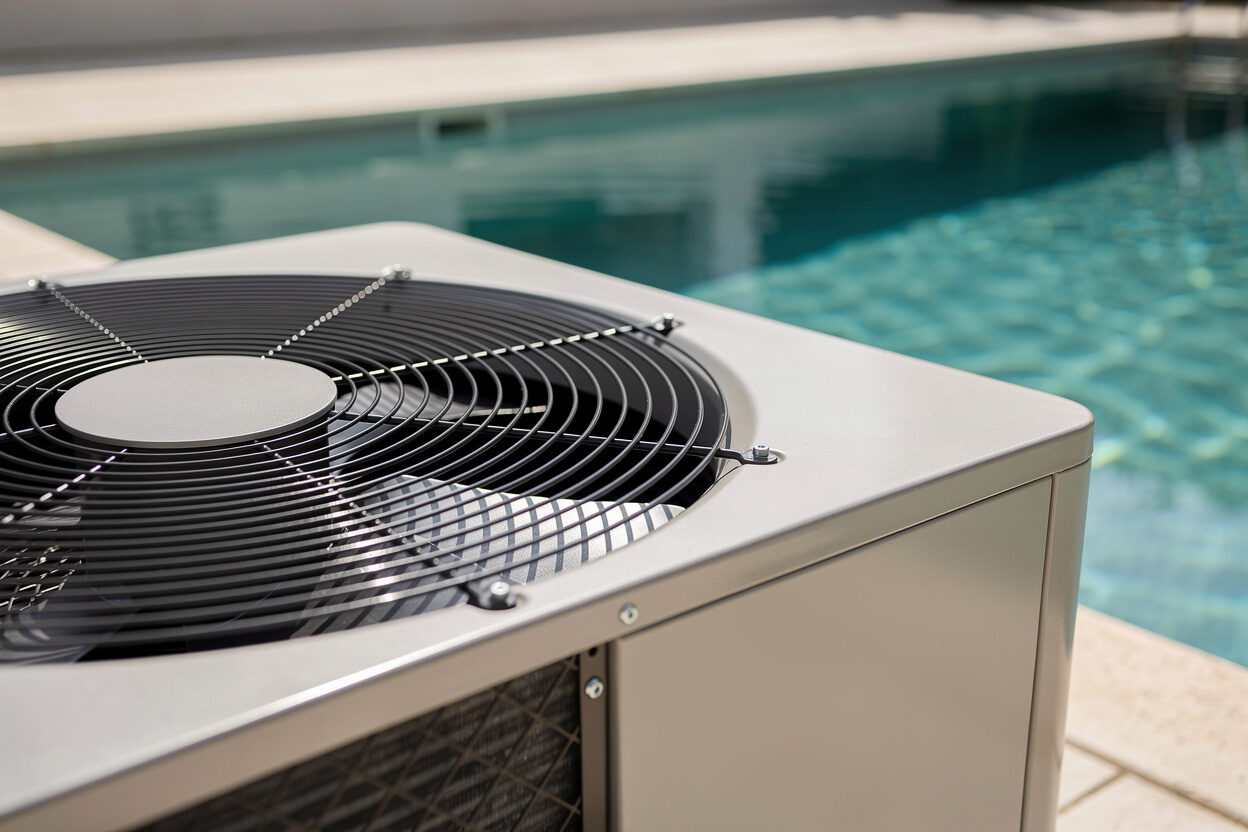
Heat pump pool heaters represent the most energy-efficient heating method, though they work differently than traditional heaters. Instead of generating heat directly, heat pumps extract existing heat from ambient air and transfer it to your pool water.
Heat Pump Operation Cycle
Heat pumps operate on the same refrigeration principles used in air conditioners and refrigerators, but in reverse. The process begins with a fan drawing warm outside air across an evaporator coil containing liquid refrigerant.
The refrigerant absorbs heat from the air and vaporizes into a gas. This heated gas travels to a compressor, which pressurizes it, further increasing its temperature. The hot, pressurized refrigerant then flows through a heat exchanger where pool water circulates.
As pool water passes through the heat exchanger, it absorbs heat from the hot refrigerant. The refrigerant cools and condenses back into liquid form, then passes through an expansion valve to reduce pressure before returning to the evaporator coil to repeat the cycle.
Solar Pool Heating Systems
Solar pool heaters harness free energy from the sun to warm your pool water. These systems typically consist of solar collectors (panels), a filter, pump, and flow control valve.
Pool water is pumped through your filter, then up to solar collectors mounted on your roof or ground-mounted racks. As water flows through the collectors' dark-colored tubing, it absorbs solar heat. The warmed water then returns to your pool.
An automatic controller monitors pool and solar collector temperatures, diverting water through the collectors only when they're warmer than the pool water. This prevents heat loss during cloudy conditions or at night.
Choosing the Right Heating Method
Your choice of pool heater depends on several factors including climate, pool size, usage patterns, and energy costs in your area. Gas heaters excel for occasional use and quick heating, electric heaters work well for smaller pools or spas, heat pumps provide efficient heating in moderate climates, and solar systems offer the lowest operating costs in sunny regions.
Important: All pool heaters require proper water flow and chemistry balance to operate safely and efficiently. Maintain free chlorine relative to your CYACyanuric Acid (stabilizer) — Sunscreen for your chlorine — it keeps sunlight from burning it off. The catch: the more you have, the more chlorine you need to keep. learn more → (roughly 4-6 ppm at CYA 30-50, and higher—around 8-10 ppm—at CYA 70-80) and pH (7.2-7.8) to prevent corrosion of heat exchanger components. Always ensure your circulation pump is running before activating any pool heater.
Regular maintenance including cleaning, inspection of gas connections, and professional service helps ensure safe, efficient operation regardless of which heating method you choose for your pool.
For the full breakdown of safe chlorine levels by CYA level, see our pool water chemistry guide.
Still need help? Ask a Pool & Spa Expert AD
Get a personalized answer from PoolGuy810 — 30 years owning a pool and spa repair company. Describe your issue and get step-by-step help.
Related Pool Guides
Need More Help?
Try our free pool calculators and tools to help diagnose and fix your pool problems.
Browse Pool ToolsSLAM calculator, pH calculator, salt dosing & more