

Can Salt Water Pool Cause Rash? Quick Solutions & Prevention

Are saltwater pools safe? Kids getting rashes after swimming
Read full question
Tried everything to stop these red, itchy rashes on my kids from our saltwater pool. I thought saltwater pools were supposed to be gentler on skin than regular chlorine pools, so I'm confused about what's causing this. Could it be something wrong with the water chemistry? The pool water looks clear, but I'm wondering if there are invisible issues that could be irritating their skin. What should I be checking for to make sure the pool is safe for them to swim in?
Quick Answer
Yes, saltwater pools can cause rashes, typically due to improper free chlorine levels, unbalanced pH, or dirty/scaled salt cells that under-produce chlorine, letting chloramines build up. Test and balance your water chemistry first. Maintain free chlorine at the right level for your CYA (5-10 ppm for a CYA 70-80 salt pool), keep pH at 7.4-7.6, and total alkalinity at 80-120 ppm. Shock the pool to reduce chloramines, clean the salt cell, and maintain proper salt levels (2700-3400 ppm).
Primary Causes of Saltwater Pool Rashes
Low Free Chlorine Levels
The most common cause of saltwater pool rashes is insufficient free chlorine. When your salt chlorine generator isn't producing enough chlorine, bacteria and organic contaminants flourish, leading to skin irritation. Your free chlorine should be at the right level for your CYACyanuric Acid (stabilizer) — Sunscreen for your chlorine — it keeps sunlight from burning it off. The catch: the more you have, the more chlorine you need to keep. learn more → (typically 5-10 ppm for a salt pool at CYA 70-80, never below 5 ppm) for daily swimming, but many saltwater pool owners mistakenly believe they don't need to monitor chlorine levels.
Chloramine Buildup
Dirty or calcium-scaled salt cells simply produce less chlorine overall, so the pool can drift under-sanitized (chloramines form when chlorine reacts with ammonia/organics, not from the cell itself). These combined chlorines cause that strong "chlorine smell" and are notorious for causing skin rashes, burning eyes, and respiratory irritation. If your pool smells strongly of chlorine, you actually have a chloramine problem, not too much chlorine.
pH Imbalance
Saltwater pools naturally drift toward high pH (7.8-8.2) due to the electrolytic process. High pH reduces chlorine effectiveness and can cause skin irritation. Low pH (below 7.0) is equally problematic, making the water acidic and harsh enough to irritate and dry out skin — uncomfortable, but not a true chemical burn.
Immediate Solutions
Test Your Water Chemistry
Use a quality test kit like the Taylor K-2006C to measure:
- Free Chlorine: Should be the right level for your CYA (typically 5-10 ppm for a salt pool at CYA 70-80, never below 5 ppm) for daily use
- Combined Chlorine: Should be 0.2 ppm or less
- pH: Target 7.4-7.6 for optimal comfort
- Total Alkalinity: Keep at 80-120 ppm for saltwater pools
- Salt Level: Maintain manufacturer's recommended range (usually 2700-3400 ppm)
Shock Treatment for Chloramines
If combined chlorine is above 0.2 ppm, perform a shock treatment using liquid chlorine (sodium hypochlorite). Never use calcium hypochlorite shock in saltwater pools - it contains calcium that will scale your generator cell. Raise free chlorine to the shock level for your CYA (about 40% of CYA) and hold until combined chlorine drops to zero. This process may take 1-3 days depending on contamination levels. Use our all-in-one pool calculator to determine the shock level for your CYA.
Clean Your Salt Cell
Remove and inspect your salt chlorine generator cell for calcium scale buildup - white, chalky deposits on the plates. Clean with a 10:1 water-to-muriatic acid solution (always add acid to water, never water to acid), soaking for 10-15 minutes. Always wear safety equipment including gloves, eye protection, and ensure proper ventilation when handling muriatic acid. Rinse thoroughly before reinstalling.
pH Correction Methods
Lowering High pH
Add muriatic acid or sodium bisulfate to lower pH. For a 20,000-gallon pool, start with 1 quart of muriatic acid to lower pH by approximately 0.2 units. Add acid to the deep end with the pump running, wait about 30 minutes with the pump running, then retest. Never add more than 1 quart per day to avoid overcorrection. Use our all-in-one pool calculator to estimate the amount needed, but always re-test your water after dosing and follow the product label.
Raising Low pH
Use sodium carbonate (soda ash) to raise pH. Broadcast evenly across the pool surface with circulation running.
Generator Maintenance
Most saltwater pool rashes stem from poorly maintained generators. Inspect your cell monthly for scale buildup and clean quarterly or as needed. Check that your generator is producing adequate chlorine - many units have diagnostic displays showing chlorine production levels. If your generator runs constantly but chlorine levels remain low, the cell likely needs cleaning or replacement.
Preventive Measures
Regular Testing Schedule
Test your saltwater pool chemistry 2-3 times per week, not just once weekly. Saltwater systems can experience rapid changes in chlorine production due to temperature fluctuations, bather load, and equipment issues. Keep a log of your readings to identify patterns.
Proper Salt Levels
Maintain salt levels within your generator's specified range. Too little salt reduces chlorine production; too much can damage equipment and cause skin irritation. Most systems operate optimally between 2700-3400 ppm salt.
Cyanuric Acid Management
Maintain cyanuric acid (CYA) around 70-80 ppm for an outdoor saltwater pool - higher than a plain-chlorine pool, because the salt cell's steady low-level chlorine needs more UV protection. Going much above that range starts to blunt chlorine's effectiveness, so don't overshoot. Use a CYA test kit annually, as standard test strips are often inaccurate for CYA measurement.
When to Seek Professional Help
Contact a pool professional if rashes persist after balancing chemistry, if your salt cell requires frequent cleaning (monthly or more), or if you're unable to maintain stable chlorine levels despite proper salt levels and clean equipment. Persistent skin reactions may indicate equipment malfunction or water source issues requiring expert diagnosis.
Safety Reminders
Per the CDC, swim once the water is clear to the bottom and free chlorine is below 10 ppm. Avoid entering the pool during shock treatment if you are unsure of the free chlorine level or if the water is not clear. Always add chemicals with the pump running and wait for proper circulation before swimming. Store all pool chemicals in a cool, dry location away from children and pets. Keep chlorine and other oxidizers away from acids and fuels — combining them can release toxic chlorine gas or start a fire.
For the full breakdown of safe chlorine levels by CYA level, see our pool water chemistry guide.
 Taylor K-2006C Complete FAS-DPD Pool & Spa Test Kit
The FAS-DPD kit pool pros trust — reads chlorine accurately even at shock/SLAM levels, plus pH, alkalinity, calcium hardness and CYA. View on Amazon →
Taylor K-2006C Complete FAS-DPD Pool & Spa Test Kit
The FAS-DPD kit pool pros trust — reads chlorine accurately even at shock/SLAM levels, plus pH, alkalinity, calcium hardness and CYA. View on Amazon →
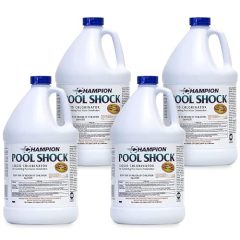 Liquid Chlorine / Sodium Hypochlorite (12.5%)
Everyday sanitizer — the B in BBB View on Amazon →
Liquid Chlorine / Sodium Hypochlorite (12.5%)
Everyday sanitizer — the B in BBB View on Amazon →
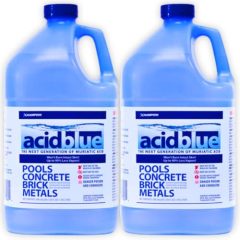 Acid Blue - Low Fume Muriatic Acid for Swimming Pools & Spas - Lower's pH, Reduces Alkalinity - 2 Gallon
View on Amazon →
Acid Blue - Low Fume Muriatic Acid for Swimming Pools & Spas - Lower's pH, Reduces Alkalinity - 2 Gallon
View on Amazon →
Still need help? Ask a Pool & Spa Expert AD
Get a personalized answer from PoolGuy810 — 30 years owning a pool and spa repair company. Describe your issue and get step-by-step help.
Related Pool Guides
Need More Help?
Try our free pool calculators and tools to help diagnose and fix your pool problems.
Browse Pool ToolsSLAM calculator, pH calculator, salt dosing & more