
Can I Swim After Adding Pool Stabilizer? Safe Wait Times

How long should I wait to swim after adding pool stabilizer?
Read full question
Turned my pool stabilizer into a mystery this morning - added it to my 20,000 gallon inground pool but my cyanuric acid test reads zero when everything says it should show immediately. I used the granular form and dissolved it in a bucket first before pouring it around the perimeter while the pump was running. My kids are asking when they can get back in the water, but I want to make sure it's completely safe.
I've heard different things about wait times - some people say you need to wait hours, others say it depends on the type of stabilizer you use. The granules seemed to dissolve pretty well, and I've had the circulation system running for about an hour now. What's the actual safe waiting period before we can swim again? Does it matter whether you use granular versus liquid stabilizer?
Quick Answer
Cyanuric acid (stabilizer) is mild and safe for swimmers at normal levels (30-80 ppm), so the swim wait is really about how you added it: swim within minutes after liquid or pre-dissolved granular (~15-30 min circulation), and you can keep swimming while sock-in-skimmer granular slowly dissolves over several days. Just avoid swimming over loose, undissolved granules. As a rule of thumb, about 1 pound per 10,000 gallons raises CYA by ~13 ppm.
First, Let's Diagnose Your Stabilizer Addition Method
The wait time before swimming depends entirely on which type of stabilizer you added and how you added it. Pool stabilizer (cyanuric acid or CYACyanuric Acid (stabilizer) — Sunscreen for your chlorine — it keeps sunlight from burning it off. The catch: the more you have, the more chlorine you need to keep. learn more →) comes in two main forms, each with different dissolution characteristics that affect swimming safety.
Granular Stabilizer (Most Common)
Granular cyanuric acid is cheap and the most common form, but it dissolves slowly — days, not minutes. The one thing to avoid is dumping it straight onto the pool floor: the granules can sit there for a long time, mildly irritate bare skin, and even etch a plaster surface. The dissolved CYA itself isn’t the hazard (it’s safe for swimmers at normal levels) — the loose, undissolved granules are. So either pre-dissolve it or use the sock method below.
Liquid Stabilizer (Less Common)
Liquid stabilizer dissolves immediately upon contact with pool water, making it safe for swimming right after addition. However, liquid forms are more expensive and less commonly available.
Safe Swimming Timeline After Stabilizer Addition
Granular Stabilizer Wait Times
- Pre-dissolved and poured in: run the pump and swim after about 15–30 minutes, once it’s mixed in
- In a sock in the skimmer: it dissolves gradually over 2–5 days (sometimes up to a week) — you can swim normally the whole time
- If you dumped loose granules: brush them toward the main drain, keep the pump running, and just stay out of that spot until they’re gone — don’t swim directly over a pile of undissolved granules
- Either way, CYA at normal levels won’t hurt swimmers; the only real caution is direct contact with loose granules
Liquid Stabilizer Timeline
- Add liquid stabilizer while walking around the pool perimeter for even distribution
- Run pump for 15 minutes to ensure thorough mixing
- Swimming is safe immediately after this brief circulation period
Proper Stabilizer Addition Techniques
Pre-Dissolving Method
Pre-dissolving granular stabilizer in hot water before adding it lets your CYA register a little sooner — but cyanuric acid is only sparingly soluble, so it won’t fully dissolve in a bucket. For anything more than a small dose, the sock method below is cleaner:
- Use a sturdy 5-gallon bucket of hot tap water (the hottest available dissolves CYA far better than cold) — how much stabilizer to add depends on your pool size and current vs. target CYA levels, which our all-in-one pool calculator estimates for you.
- Add the stabilizer slowly while stirring continuously for 10-15 minutes (always add the chemical to the water, not the other way around).
- Expect a cloudy slurry, not a clear solution — a 5-gallon bucket of hot water saturates after only a few ounces, so a larger dose stays partly undissolved no matter how long you stir.
- Pour the whole bucket — including any granules sitting at the bottom — around the pool perimeter with the pump running, and brush up anything that settles so it finishes dissolving.
- Swimming is safe after about 15–30 minutes of circulation for a small pre-dissolved dose — just stay off any spot where granules settled until they’re gone.
Skimmer Addition Method
Adding granular stabilizer through the skimmer works, but put it in a sock (an old tube sock or a leg of pantyhose), never loose — loose granules wash into the filter and take forever to clear:
- Put the granular CYA in a sock and set it in the skimmer basket with the pump running
- Give it 2–5 days to fully dissolve (it can take up to a week); squeeze the sock a few times a day to speed things along
- Keep swimming as normal in the meantime — the CYA is contained and mild
- Wait 24–48 hours after it dissolves before testing CYA, since it takes a while to register on a test
Safety Considerations and Testing
Important Safety Warnings
- Don’t swim directly over loose, undissolved granules — brush them up first; they can mildly irritate skin (the dissolved CYA itself is safe for swimmers at normal levels)
- Always run your pump during and after stabilizer addition
- Give it time to dissolve fully, since CYA dissolves slowly (and dissolves faster in warmer water)
- Don't exceed 50 ppm CYA in traditional chlorine pools (70-80 ppm target for salt water generators)
Testing Your Stabilizer Levels
After adding stabilizer, wait several days — up to a week — before testing CYA levels with a proper test kit, since granular stabilizer dissolves slowly and reads low until it has fully dissolved. The Taylor K-2006C test kit provides accurate CYA readings using the turbidity method. Your target range should be:
- Traditional chlorine pools: 30-50 ppm CYA
- Salt water generator pools: 70-80 ppm CYA
- Indoor pools: 0-30 ppm CYA (less UV protection needed)
Troubleshooting Common Issues
Cloudy Water After Adding Stabilizer
If your pool water appears cloudy after adding stabilizer:
- Continue running the pump for extended periods (12-24 hours)
- Brush pool surfaces to help dissolve remaining particles
- Skip clarifiers for this - the cloudiness is just undissolved stabilizer and clears on its own with circulation and brushing
- Test and adjust other chemical levels once water clears
White Residue on Pool Bottom
Undissolved stabilizer settling on pool surfaces indicates:
- Insufficient circulation time - extend pump run time
- Water temperature too low - stabilizer dissolves better in warmer water
- Too much added at once - add smaller amounts over several days next time
Balancing Other Chemicals
After adding stabilizer and confirming safe swimming conditions, rebalance your pool chemistry:
- Test and adjust free chlorine to maintain proper levels based on your CYA (keep free chlorine at least about 7.5% of your CYA — that’s the minimum; see the all-in-one pool calculator for your full target range)
- Maintain pH between 7.4-7.6 for comfort and balanced water
- Check total alkalinity and adjust if necessary (80-120 ppm for most pools)
- Monitor calcium hardness especially in plaster pools (250-350 ppm)
Remember that stabilizer is a seasonal addition - you typically only need to add it at pool opening or when CYA levels drop below target ranges. Over-stabilization can actually reduce chlorine effectiveness, requiring partial water replacement to correct.
For the full breakdown of safe chlorine levels by CYA level, see our pool water chemistry guide.
 Taylor K-2006C Complete FAS-DPD Pool & Spa Test Kit
The FAS-DPD kit pool pros trust — reads chlorine accurately even at shock/SLAM levels, plus pH, alkalinity, calcium hardness and CYA. View on Amazon →
Taylor K-2006C Complete FAS-DPD Pool & Spa Test Kit
The FAS-DPD kit pool pros trust — reads chlorine accurately even at shock/SLAM levels, plus pH, alkalinity, calcium hardness and CYA. View on Amazon →
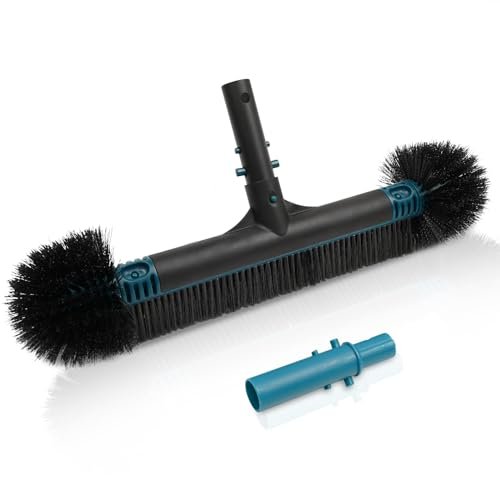 Poolvio 20" 2-in-1 Pool Brush Head (Walls & Floor)
Sturdy 20-inch brush head that clips onto any standard telescopic pole. View on Amazon →
Poolvio 20" 2-in-1 Pool Brush Head (Walls & Floor)
Sturdy 20-inch brush head that clips onto any standard telescopic pole. View on Amazon →
Still need help? Ask a Pool & Spa Expert AD
Get a personalized answer from PoolGuy810 — 30 years owning a pool and spa repair company. Describe your issue and get step-by-step help.
Related Pool Guides
Need More Help?
Try our free pool calculators and tools to help diagnose and fix your pool problems.
Browse Pool ToolsSLAM calculator, pH calculator, salt dosing & more