
Can I Swim After Adding Calcium to Pool? Safe Wait Times

How long should I wait before letting kids swim after adding calcium?
Read full question
Just dumped calcium hardness increaser in the pool and my kids are already begging to swim. The bag says wait but doesn't specify how long, and every website gives a different answer. Water looks crystal clear but I don't want anyone getting skin irritation from undissolved chemicals floating around.
Quick Answer
You can typically swim 2-4 hours after adding calcium hardness increaser, once it's fully dissolved and circulated. Always test calcium hardness levels and ensure proper water balance before swimming.
Understanding Calcium Hardness and Swimming Safety
Calcium hardness increaser (calcium chloride) is generally one of the safer pool chemicals to work with, but proper dissolution and circulation are essential before swimming. Unlike chlorine or muriatic acid, calcium doesn't create immediate skin or eye irritation concerns when properly diluted. However, undissolved calcium particles can cause temporary cloudiness and may irritate swimmers if concentrations are too high in localized areas.
The primary safety concern isn't toxicity but rather ensuring the chemical is evenly distributed throughout your pool water. Calcium chloride generates heat when dissolving, so allowing adequate time for temperature equalization and complete mixing is crucial for swimmer comfort and safety.
Factors Affecting Safe Swimming Times
Amount of Calcium Added
The quantity of calcium hardness increaser directly impacts wait time. For standard adjustments (adding 10-20 ppm calcium hardness), 2-3 hours is typically sufficient. However, if you're making major corrections - such as raising calcium hardness from 150 ppm to 300 ppm - you may need 4-6 hours for complete dissolution and circulation.
Larger additions require proportionally longer wait times.
Circulation System Efficiency
Your pool's turnover rate significantly affects how quickly calcium disperses evenly. Most residential pools complete one full turnover every 8-12 hours. For faster distribution, run your pump on high speed during the initial 2-4 hours after adding calcium. Ensure all return jets are properly positioned to maximize water movement.
Application Method
How you add calcium hardness increaser affects dissolution time. Broadcasting dry calcium chloride across the pool surface while the pump runs allows faster dissolution than dumping it in one area. Never add calcium directly to the skimmer, as concentrated calcium can damage pool equipment and create uneven distribution.
Step-by-Step Process for Safe Swimming
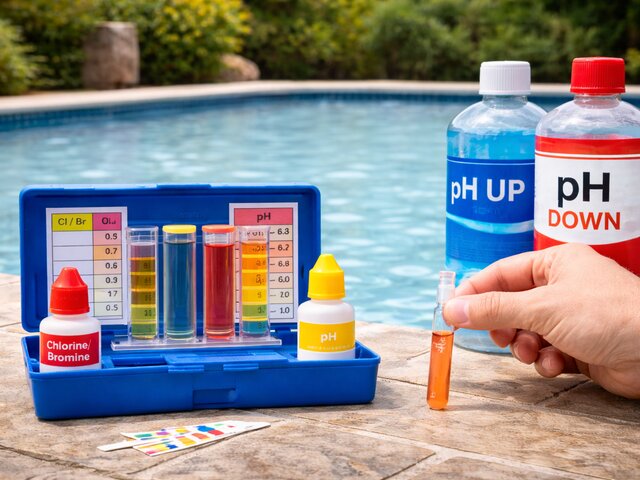
- Test current calcium hardness levels using a reliable test kit like the Taylor K-2006C. Ideal calcium hardness ranges from 250-350 ppm for plaster pools, 150-250 ppm for vinyl or fiberglass pools.
- Calculate required calcium amount based on your pool size and target increase. Our all-in-one pool calculator works out how much to add from your pool size and current vs. target levels — and accounts for variations in product concentration.
- Pre-dissolve calcium in a bucket if adding large amounts (over 5 pounds). Mix with pool water until fully dissolved to prevent cloudiness and ensure even distribution.
- Add calcium while pump runs by broadcasting across the pool surface, focusing on deeper areas where circulation is strongest.
- Run circulation system continuously for at least 4 hours after addition. Use high speed for the first 2 hours if your system allows.
- Test water balance after 4-6 hours to confirm calcium hardness reached target levels and pH remains between 7.4-7.6.
- Verify complete dissolution by checking for any remaining particles or cloudiness before allowing swimming.
Testing and Rebalancing Requirements
After adding calcium hardness increaser, retest your complete water chemistry profile, not just calcium levels. Calcium chloride is close to pH-neutral and does not meaningfully raise pH on its own — but retest pH after any addition and adjust with soda ash if needed. Test and adjust in this order: total alkalinity (80-120 ppm for traditional chlorine pools, 60-80 ppm for salt water generators), pH (7.4-7.6 ideal), then calcium hardness.
If your calcium hardness test shows levels above your target range, wait 24 hours and retest. Sometimes initial readings appear elevated due to incomplete mixing, and levels stabilize after full circulation.
Common Mistakes and Prevention
Many pool owners make the mistake of swimming too soon after calcium addition, encountering temporary water cloudiness or feeling gritty particles. This occurs when calcium hasn't fully dissolved or circulated. Always err on the side of caution and wait the full recommended time.
Another common error is adding calcium during peak swimming hours. Plan calcium additions for evening or early morning when the pool won't be used for several hours. This ensures adequate circulation time without disappointing swimmers.
Never add calcium simultaneously with other chemicals, particularly sodium bicarbonate or soda ash, as this can cause precipitation and cloudiness. Space chemical additions at least 4 hours apart, with calcium typically added first due to chemical compatibility considerations.
Special Considerations for Different Pool Types
Vinyl and fiberglass pools require lower calcium hardness levels (150-250 ppm) compared to plaster pools (250-350 ppm). However, wait times remain the same regardless of pool surface type. Salt water generator systems may require slightly longer circulation times due to different water chemistry interactions.
For pools with cartridge filters, consider cleaning filters 24-48 hours after calcium addition, as increased mineral content may reduce filter efficiency temporarily.
For the full breakdown of safe chlorine levels by CYACyanuric Acid (stabilizer) — Sunscreen for your chlorine — it keeps sunlight from burning it off. The catch: the more you have, the more chlorine you need to keep. learn more → level, see our pool water chemistry guide.
 Taylor K-2006C Complete FAS-DPD Pool & Spa Test Kit
The FAS-DPD kit pool pros trust — reads chlorine accurately even at shock/SLAM levels, plus pH, alkalinity, calcium hardness and CYA. View on Amazon →
Taylor K-2006C Complete FAS-DPD Pool & Spa Test Kit
The FAS-DPD kit pool pros trust — reads chlorine accurately even at shock/SLAM levels, plus pH, alkalinity, calcium hardness and CYA. View on Amazon →
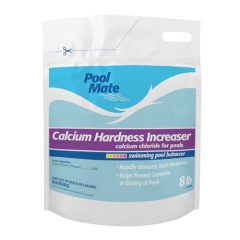 Calcium Chloride — Calcium Hardness Up
Raises calcium hardness (plaster pools) View on Amazon →
Calcium Chloride — Calcium Hardness Up
Raises calcium hardness (plaster pools) View on Amazon →
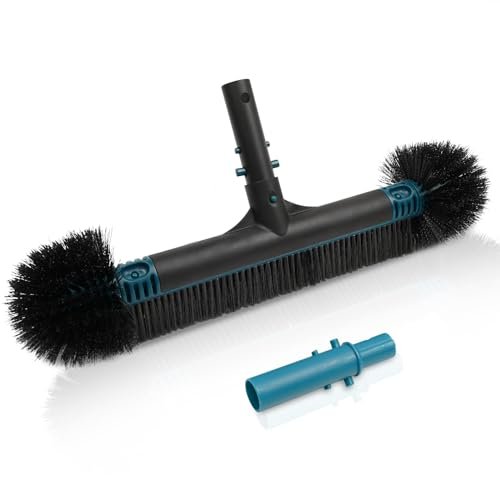 Poolvio 20" 2-in-1 Pool Brush Head (Walls & Floor)
Sturdy 20-inch brush head that clips onto any standard telescopic pole. View on Amazon →
Poolvio 20" 2-in-1 Pool Brush Head (Walls & Floor)
Sturdy 20-inch brush head that clips onto any standard telescopic pole. View on Amazon →
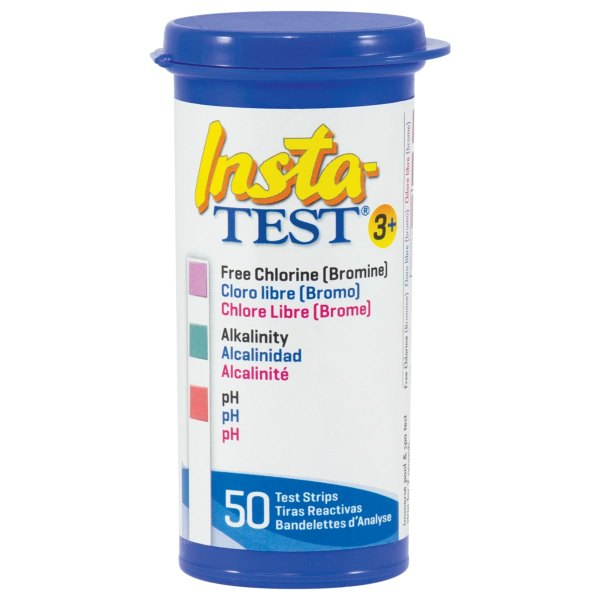 LaMotte Insta-Test 3 Pool Strips (50 ct)
Pro-grade 3-way strips from LaMotte — chlorine, pH & alkalinity, fast and accurate. Top-rated at 4.8★. View on Amazon →
LaMotte Insta-Test 3 Pool Strips (50 ct)
Pro-grade 3-way strips from LaMotte — chlorine, pH & alkalinity, fast and accurate. Top-rated at 4.8★. View on Amazon →
Still need help? Ask a Pool & Spa Expert AD
Get a personalized answer from PoolGuy810 — 30 years owning a pool and spa repair company. Describe your issue and get step-by-step help.
Related Pool Guides
Need More Help?
Try our free pool calculators and tools to help diagnose and fix your pool problems.
Browse Pool ToolsSLAM calculator, pH calculator, salt dosing & more