
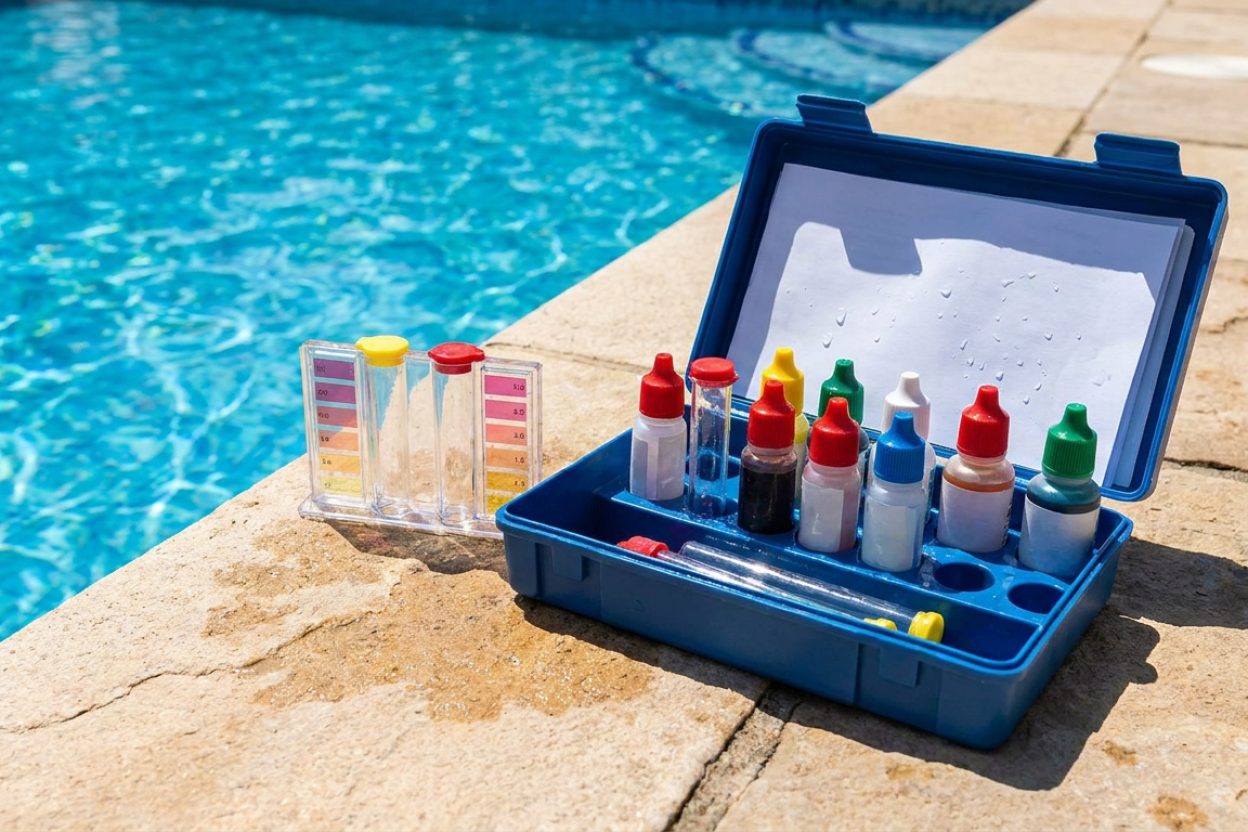
Can I Store Pool Chemicals Outside? Safe Storage Guide

Safe to store pool chemicals in garage vs outside shed?
Read full question
Halfway through my morning coffee, I spotted my pool chemicals sitting in direct sunlight by my detached shed that definitely weren't there yesterday. Shed gets hot/cold with seasons and sometimes damp. Garage stays more consistent but still gets chilly in winter.
Which is better for storing chlorine, muriatic acid, and shock? Or do I need to bring everything indoors? Just want to avoid any safety issues or chemicals going bad.
Quick Answer
Most pool chemicals are best kept out of the elements, but the reasons differ. Liquid chlorine is the temperature-sensitive one (heat makes it lose potency fast); muriatic acid tolerates temperature fine but needs ventilation, since its fumes corrode nearby metal, and it must stay well away from chlorine. Powdered chemicals need dry, cool conditions. Whatever the spot, keep oxidizers and acids separated and in sealed, original containers.
If you're choosing between a temperature-stable garage and a detached shed that runs hot, cold, and damp, the garage wins for every product here — liquid chlorine, muriatic acid, and shock all keep better in stable, dry conditions than in a shed that swings with the weather. Just keep the chlorine and muriatic acid well separated, store everything off a floor that can freeze, and keep it out of direct sun.
Step-by-Step Guide to Outdoor Pool Chemical Storage
- Evaluate your climate conditions
Check your area's temperature ranges throughout the year. Liquid chlorine loses potency rapidly above 80°F and can freeze in hard cold (around 27°F for 12% pool chlorine, ~19°F for 6% bleach). If your region experiences temperatures above 85°F or below freezing, outdoor storage becomes problematic for most chemicals. - Assess each chemical type individually
Not all pool chemicals have the same storage requirements:- Liquid chlorine (sodium hypochlorite): Can be stored outside if temperatures stay between 32-80°F
- Granular chlorine (calcium hypochlorite): Requires dry storage below 80°F
- Muriatic acid: Can handle outdoor storage between 32-90°F but needs secure ventilation
- Shock treatments: Most powdered shocks need cool, dry conditions under 75°F
- Algaecides: Temperature sensitive, generally require indoor storage
- pH adjusters: Sodium carbonate can handle outdoor storage; sodium bisulfate needs dry conditions
- Create a proper outdoor storage structure
If outdoor storage is necessary, build or purchase a dedicated chemical shed with these features:- Solid roof to prevent water infiltration
- Raised floor to avoid ground moisture
- Ventilation vents near the roof line
- Lockable doors for safety
- Non-metal shelving (chemicals can corrode metal)
- Temperature monitoring capability
- Implement separation protocols
Never store incompatible chemicals together, especially outdoors where temperature fluctuations increase reaction risks:- Keep oxidizers (chlorine products) away from acids
- Store liquid chemicals on lower shelves
- Maintain at least 3 feet between different chemical types
- Use separate containers for different chemical categories
- Monitor temperature and humidity
Install a min/max thermometer and humidity gauge in your storage area. Check readings weekly during extreme weather. If temperatures exceed safe ranges for your chemicals, temporarily move them indoors. - Protect from direct sunlight
UV rays degrade many pool chemicals, particularly liquid chlorine which can lose significant potency when exposed to direct sunlight. Ensure your storage area provides complete shade throughout the day. - Secure against moisture infiltration
Even small amounts of moisture can cause powdered chemicals to cake, degrade, or react unexpectedly. Use waterproof containers with tight-fitting lids, and consider adding desiccant packets to storage containers in humid climates. - Plan for seasonal storage needs
During winter months, many chemicals should be moved indoors regardless of your storage setup. Freezing temperatures can damage containers and alter chemical composition. Create a plan for transitioning chemicals to indoor storage when needed. - Regular inspection and rotation
Check stored chemicals monthly for signs of degradation:- Container integrity and labeling
- Color changes in liquids
- Clumping or caking in powders
- Unusual odors
- Expiration dates
- Maintain safety equipment
Keep appropriate safety equipment near your outdoor chemical storage and ensure all containers remain properly labeled with current SDS stored on-site:- A ready water supply (hose or buckets) to flood and cool an oxidizer fire — dry-chemical and CO2 extinguishers do not work on oxidizer fires, which supply their own oxygen
- Eye wash station or portable eye wash
- Spill cleanup materials
- Emergency contact information posted
Chemicals That Can Handle Outdoor Storage
Liquid Chlorine
Liquid chlorine can be stored outside if temperatures remain between 32-80°F. However, it loses potency faster outdoors than in cool, dark indoor storage. At room temperature, liquid chlorine loses roughly 20% of its potency per month (about half-strength in three months), and much faster in heat. At 90°F, it can lose 50-60% potency monthly.
Muriatic Acid
Muriatic acid handles temperature variations better than chlorine products and can be safely stored outdoors in most climates. The key concern is ventilation – acid fumes can corrode nearby metal objects and create health hazards in enclosed spaces.
Chemicals That Should Stay Indoors
Calcium Hypochlorite (Cal-Hypo)
This granular chlorine is highly temperature-sensitive and can become unstable above 80°F. It also absorbs moisture readily, which can lead to dangerous reactions. WARNING: Calcium hypochlorite can cause fires or explosions when exposed to organic materials or excessive heat. Always store cal-hypo in cool, dry indoor conditions.
Sodium Dichlor and Trichlor
Kept dry, trichlor and dichlor are actually the most stable chlorine you can buy — trichlor tablets can hold roughly 98% potency for 3 years and remain usable for 5+ years. Heat degrades them only slowly; moisture is the real danger. If tablets get damp in a sealed container they can release toxic chlorine gas, so store them dry, sealed, and away from any acid or liquid chlorine.
Safety Considerations for Outdoor Storage
Never store pool chemicals in:
- Direct sunlight or hot areas like garages in summer
- Areas where children or pets have access
- Locations near heat sources or ignition sources
- Damp basements or areas prone to flooding
- Near fertilizers, gasoline, or other reactive materials
Remember that outdoor storage increases the risk of accidental exposure to weather extremes. Even if your chemicals can technically handle outdoor storage, indoor storage in a utility room, basement, or dedicated storage area generally provides better chemical stability and longevity. When in doubt, err on the side of caution and store chemicals indoors with proper ventilation.
Still need help? Ask a Pool & Spa Expert AD
Get a personalized answer from PoolGuy810 — 30 years owning a pool and spa repair company. Describe your issue and get step-by-step help.
Related Pool Guides
Need More Help?
Try our free pool calculators and tools to help diagnose and fix your pool problems.
Browse Pool ToolsSLAM calculator, pH calculator, salt dosing & more