
How Pool Chlorine Works: Complete Chemistry Guide 2026

What's the actual science behind how chlorine kills stuff in pools?
Read full question
Tried avoiding pool chemistry for years but finally planning to tackle understanding how chlorine actually works this Saturday — what basics should I have down first? I know chlorine kills bacteria and algae, but what's actually happening at the molecular level? Does pH really matter that much for it to work properly?
Also keep hearing about cyanuric acid affecting chlorine effectiveness. How does all this chemistry actually fit together?
Quick Answer
Pool chlorine works by releasing hypochlorous acid (HOCl) when dissolved in water, which penetrates and destroys bacteria, viruses, and algae cell walls. The effectiveness depends on proper pH levels and cyanuric acid balance.
The Science Behind Pool Chlorine
Most people don't realize that the chlorine smell at public pools actually means there's not enough chlorine—not too much. When you add chlorine to your pool water, it undergoes immediate chemical reactions that create the actual sanitizing agents responsible for killing harmful microorganisms.
The moment chlorine dissolves in water, it forms two primary compounds: hypochlorous acid (HOCl) and hypochlorite ions (OCl-). These together make up what we call "free available chlorine" or "free chlorine" (FCFree Chlorine — The chlorine actively sanitizing your water right now. This is the number you keep an eye on. how much you need →). However, hypochlorous acid is the real workhorse - it's 80-100 times more effective at killing pathogens than hypochlorite ions.
The Killing Mechanism
Hypochlorous acid works by penetrating the cell walls of bacteria, viruses, and algae. Once inside, it disrupts vital cellular processes by oxidizing enzymes and proteins essential for the organism's survival. This oxidation process literally tears apart the molecular structure of harmful microorganisms, rendering them harmless.
The beauty of this process is its speed and thoroughness. Hypochlorous acid can kill most bacteria in seconds and viruses within minutes, making it one of the most effective sanitizers available for pool water treatment.
pH's Critical Role in Chlorine Effectiveness
The ratio between hypochlorous acid and hypochlorite ions is entirely dependent on your pool's pH level. This relationship is crucial for understanding chlorine efficiency:
- pH 7.0: ~75% hypochlorous acid, ~25% hypochlorite ions
- pH 7.5: ~50% hypochlorous acid, ~50% hypochlorite ions
- pH 8.0: 25% hypochlorous acid, 75% hypochlorite ions
- pH 8.5: 10% hypochlorous acid, 90% hypochlorite ions
This is why maintaining pH between 7.4-7.6 is critical. At pH 8.5, your chlorine is only 10% as effective as it could be, meaning you'd need 10 times more chlorine to achieve the same sanitizing power.
Cyanuric Acid: Chlorine's Double-Edged Protector
Cyanuric acid (CYACyanuric Acid (stabilizer) — Sunscreen for your chlorine — it keeps sunlight from burning it off. The catch: the more you have, the more chlorine you need to keep. learn more →), also called stabilizer or conditioner, forms a reversible bond with hypochlorous acid, creating a chlorine reservoir that protects against UV degradation. Without CYA, sunlight would destroy your chlorine within hours.
However, CYA also reduces chlorine's sanitizing power. The higher your CYA level, the more total chlorine you need to maintain effective sanitization. This relationship is quantified in the FC/CYAFC/CYA chart — The chart that sets your chlorine target from your stabilizer (CYA) level — the two go together. see the chart → ratio:
- CYA 30 ppm: Minimum FC ~2.2 ppm (7.5% ratio for chlorine pools)
- CYA 40 ppm: Minimum FC ~3.0 ppm
- CYA 50 ppm: Minimum FC ~3.75 ppm
- CYA 80 ppm: Minimum FC 4.0 ppm (for salt water pools)
Target CYA levels of 30-50 ppm for traditional chlorine pools and 70-80 ppm for salt water generator systems provide optimal protection while maintaining sanitizing effectiveness.
Chlorine Demand and Combined Chlorines
When chlorine encounters contaminants, it becomes "combined chlorine" - chlorine molecules bound to organic matter like sweat, oils, and dead skin cells. Combined chlorines (chloramines) have little sanitizing power and create that strong "chlorine smell" people associate with over-chlorinated pools.
Ironically, a strong chlorine smell actually indicates insufficient free chlorine, not too much. When combined chlorine levels exceed 0.5 ppm, you need to perform a SLAMShock Level And Maintain — raise free chlorine to a target based on your CYA and hold it there until the algae is gone. It's a process, not a one-time dose. the SLAM walkthrough → (Shock Level And Maintain) process to break down these chloramines and restore effective sanitization.
Different Types of Pool Chlorine
Understanding how different chlorine types work helps optimize your pool maintenance:
Liquid Chlorine (Sodium Hypochlorite)
Contains 10-12.5% available chlorine and raises pH slightly. It's the purest form with no byproducts, making it ideal for SLAM treatments and regular maintenance.
Calcium Hypochlorite (Cal-Hypo)
Granular chlorine with 65-70% available chlorine. Adds calcium and raises pH significantly. Excellent for shock treatments but requires pH adjustment.
Trichlor Tablets
Slow-dissolving tablets with 90% available chlorine that lower pH and add CYA. Convenient for daily chlorination but can over-stabilize pools over time.
Dichlor Granules
Fast-dissolving with 56% available chlorine, pH-neutral, and adds CYA. Perfect for spas and initial pool startup.
Optimizing Chlorine Effectiveness
To maximize chlorine's sanitizing power:
- Maintain proper pH: Test and adjust to 7.4-7.6 using muriatic acid or sodium carbonate
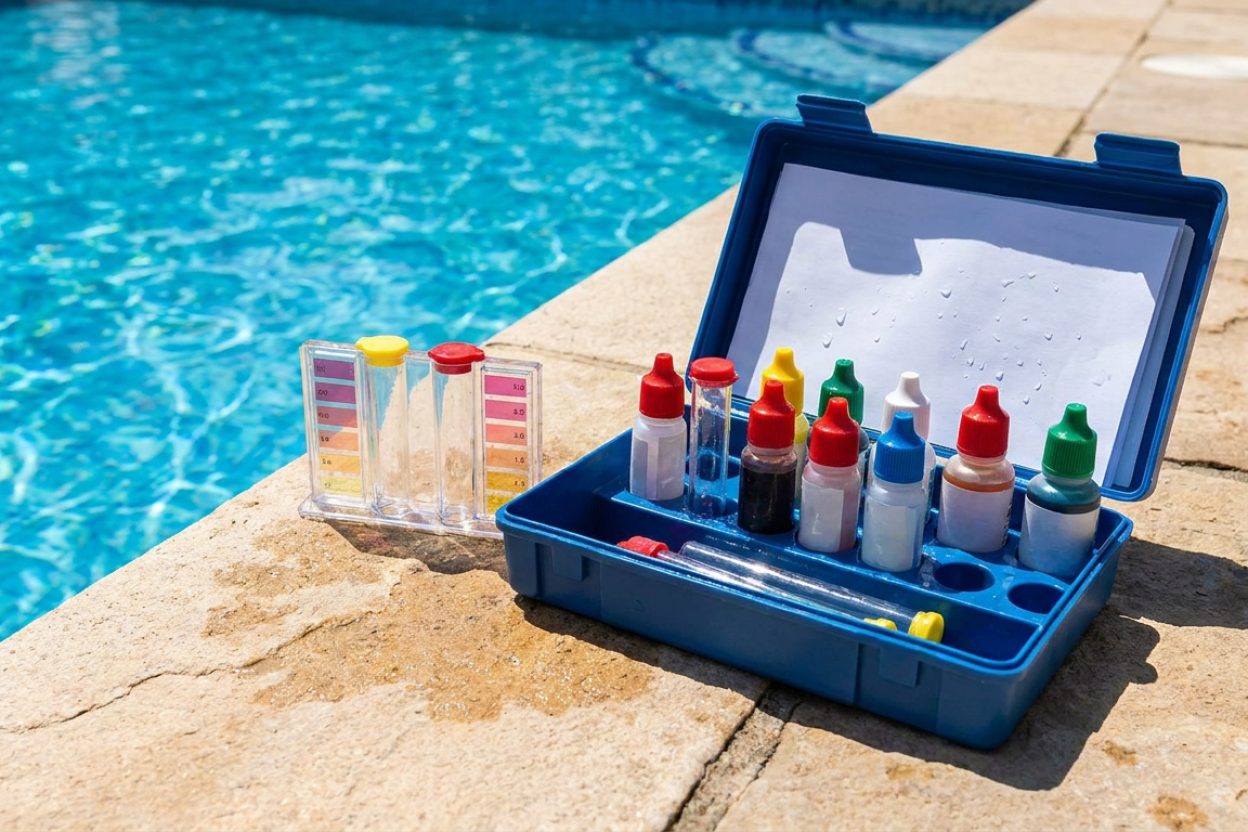
- Balance CYA levels: Use a Taylor K-2006 test kit for accurate readings
- Test FC daily: Maintain minimum levels based on your CYA reading
- Address combined chlorines: SLAM when CCCombined Chlorine — "Used-up" chlorine left over from doing its job. Above about 0.5 ppm is the classic sign water needs a shock. learn more → exceeds 0.5 ppm or FC drops below minimum
- Ensure proper circulation: Run pumps long enough to turn over pool volume 2-3 times daily
Safety reminder: Never mix different chlorine types, and always add chemicals to water, never water to chemicals. Store chlorine products in cool, dry areas away from other pool chemicals. In particular, keep chlorine away from acids and fuels — those combinations can release toxic gas or cause a fire.
Common Chlorine Misconceptions
Many pool owners believe more chlorine always means better sanitization. However, without proper pH and CYA balance, even high chlorine levels may be ineffective. Similarly, the absence of chlorine smell doesn't mean chlorine isn't working - it actually indicates properly balanced water with adequate free chlorine and minimal combined chlorines.
Understanding these chemical relationships allows you to maintain crystal clear, safe pool water while using chlorine efficiently and cost-effectively.
For the full breakdown of safe chlorine levels by CYA level, see our pool water chemistry guide.
 Taylor K-2006C Complete FAS-DPD Pool & Spa Test Kit
The FAS-DPD kit pool pros trust — reads chlorine accurately even at shock/SLAM levels, plus pH, alkalinity, calcium hardness and CYA. View on Amazon →
Taylor K-2006C Complete FAS-DPD Pool & Spa Test Kit
The FAS-DPD kit pool pros trust — reads chlorine accurately even at shock/SLAM levels, plus pH, alkalinity, calcium hardness and CYA. View on Amazon →
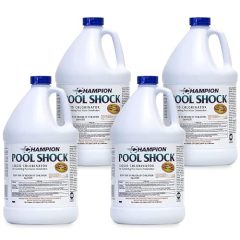 Liquid Chlorine / Sodium Hypochlorite (12.5%)
Everyday sanitizer — the B in BBB View on Amazon →
Liquid Chlorine / Sodium Hypochlorite (12.5%)
Everyday sanitizer — the B in BBB View on Amazon →
Still need help? Ask a Pool & Spa Expert AD
Get a personalized answer from PoolGuy810 — 30 years owning a pool and spa repair company. Describe your issue and get step-by-step help.
Related Pool Guides
Need More Help?
Try our free pool calculators and tools to help diagnose and fix your pool problems.
Browse Pool ToolsSLAM calculator, pH calculator, salt dosing & more