
How Long After Adding Calcium Hardness Can You Swim?

Safe to swim after adding calcium hardness increaser?
Read full question
Wondering why my neighbor was swimming hours after adding calcium hardness yesterday while I'm still waiting after adding mine this morning. How long do I need to wait before it's safe to swim? Pool's been circulating for about an hour now. Do I need to test anything else before getting back in?
Quick Answer
You can typically swim 2-4 hours after adding calcium hardness increaser, provided the pool has circulated properly and the chemical has fully dissolved. Always test and balance other chemistry levels first.
Understanding Calcium Hardness and Swimming Safety
Calcium hardness increaser, typically calcium chloride dihydrate, is one of the safer pool chemicals to work with compared to chlorine or muriatic acid. Unlike aggressive sanitizers that can cause immediate skin and eye irritation, calcium hardness increaser poses minimal direct health risks once properly dissolved and circulated.
The primary concern isn't toxicity but rather ensuring complete dissolution and even distribution throughout your pool water. Undissolved calcium chloride granules can cause localized high concentrations that may irritate skin or damage pool surfaces.
Factors Affecting Safe Swimming Time
Water Circulation and Pump Runtime
Proper circulation is the most critical factor determining when you can safely swim. Your pool pump should run continuously for at least 2-4 hours after adding calcium hardness increaser. Pools with better circulation systems (higher turnover rates) will achieve safe swimming conditions faster.
For most residential pools with adequate circulation, 2 complete water turnovers ensure proper mixing. Calculate your pool's turnover rate by dividing total gallons by your pump's gallons-per-hour rating.
Water Temperature Impact
Warmer water dissolves calcium chloride more quickly than cold water. In summer conditions (80°F+), calcium hardness increaser typically dissolves within 1-2 hours with proper circulation. In cooler spring or fall temperatures (60-70°F), allow 3-4 hours for complete dissolution.
Amount Added
The quantity of calcium hardness increaser affects dissolution time. Small adjustments (1-2 pounds for a 20,000-gallon pool) dissolve faster than large corrections. When raising calcium hardness from very low levels (under 100 ppm) to the ideal range of 250-350 ppm for plaster pools, you might need substantial amounts requiring longer circulation time.
Step-by-Step Safety Protocol
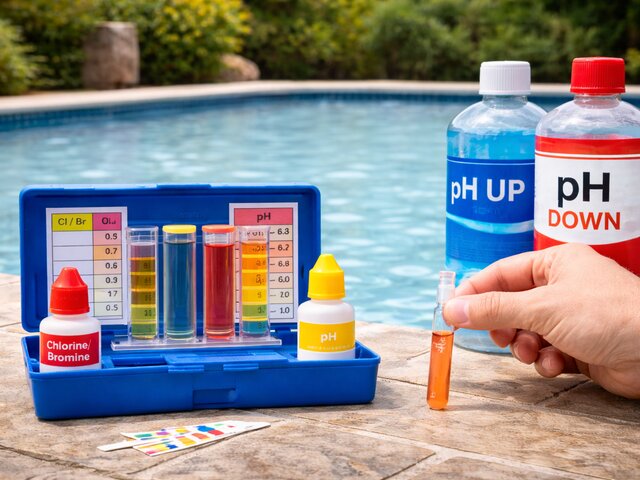
- Test current calcium hardness levels using a reliable test kit like the Taylor K-2006C. Ideal ranges are 250-350 ppm for plaster pools, 175-225 ppm for vinyl or fiberglass pools.
- Calculate required calcium chloride amount. For a handy reference, use our all-in-one pool calculator. Alternatively, you can do it by hand: typically, 1.25 pounds of calcium chloride dihydrate raises calcium hardness by 10 ppm in 10,000 gallons of water.
- Add calcium hardness increaser slowly while walking around the pool perimeter, broadcasting evenly across the water surface. Never dump in one location.
- Start circulation immediately and run continuously for minimum 2-4 hours. Brush pool walls and floor after 30 minutes to help dissolution.
- Verify complete dissolution by visually inspecting for any remaining granules on pool surfaces or floating in water.
- Test and balance other chemistry parameters before swimming (test pH and sanitizer especially).
- Wait minimum 2 hours with good circulation or 4 hours with marginal circulation before swimming.
Testing and Balancing After Addition
Calcium hardness increaser (calcium chloride) is essentially pH-neutral and does not raise total alkalinity—it only raises calcium hardness. Before swimming, test and adjust these parameters as needed:
- pH: Should be 7.4-7.6 for optimal comfort and chemical effectiveness
- Total Alkalinity: Maintain 80-120 ppm for regular pools, 60-80 ppm for salt water generators
- Free Chlorine: Ensure adequate sanitizer levels (3-5 ppm for CYACyanuric Acid (stabilizer) — Sunscreen for your chlorine — it keeps sunlight from burning it off. The catch: the more you have, the more chlorine you need to keep. learn more → 30-50, 4-6 ppm for CYA 60-80)
Use muriatic acid or sodium bisulfate to lower pH if needed. Always add acid slowly and allow circulation before retesting.
Common Mistakes to Avoid
Don't add calcium hardness increaser directly to skimmer: This can damage equipment and create dangerous conditions. Always broadcast across water surface.
Don't swim immediately after addition: Even though calcium chloride isn't highly toxic, undissolved granules can cause skin irritation and indicate uneven chemical distribution.
Don't add during peak sun hours: Adding chemicals during midday heat can cause uneven dissolution (calcium chloride releases heat as it dissolves rather than off-gassing). Early morning or evening additions work best.
Don't ignore other chemistry parameters: Calcium hardness is just one component of balanced water. Swimming in water with improper pH or inadequate sanitizer levels poses greater health risks than slightly elevated calcium levels.
When to Wait Longer
Extend your waiting time beyond 4 hours if:
- Pool circulation is poor or pump capacity is undersized
- Water temperature is below 60°F
- You added large quantities (over 10 pounds for typical residential pool)
- Visible granules remain on pool surfaces
Professional Recommendations
Most pool professionals recommend the conservative approach of waiting 4 hours after any chemical addition before swimming. This ensures complete mixing and gives you time to test and balance other parameters properly.
For routine calcium hardness maintenance (small adjustments of 1-2 pounds), 2 hours with good circulation is typically sufficient. For major corrections or when bringing new pool water into proper balance, plan on 4-6 hours before swimming.
Remember that properly balanced water with adequate calcium hardness (250-350 ppm for plaster) protects your pool surface from etching and extends equipment life, making the short waiting period worthwhile for long-term pool health.
For the full breakdown of safe chlorine levels by CYA level, see our pool water chemistry guide.
 Taylor K-2006C Complete FAS-DPD Pool & Spa Test Kit
The FAS-DPD kit pool pros trust — reads chlorine accurately even at shock/SLAM levels, plus pH, alkalinity, calcium hardness and CYA. View on Amazon →
Taylor K-2006C Complete FAS-DPD Pool & Spa Test Kit
The FAS-DPD kit pool pros trust — reads chlorine accurately even at shock/SLAM levels, plus pH, alkalinity, calcium hardness and CYA. View on Amazon →
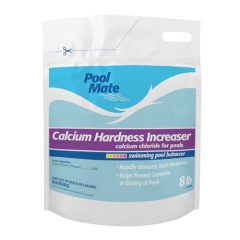 Calcium Chloride — Calcium Hardness Up
Raises calcium hardness (plaster pools) View on Amazon →
Calcium Chloride — Calcium Hardness Up
Raises calcium hardness (plaster pools) View on Amazon →
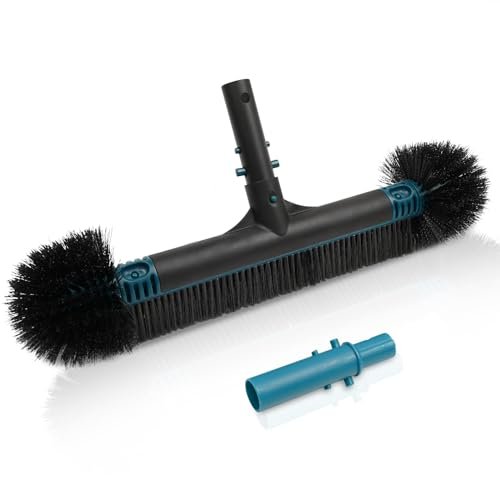 Poolvio 20" 2-in-1 Pool Brush Head (Walls & Floor)
Sturdy 20-inch brush head that clips onto any standard telescopic pole. View on Amazon →
Poolvio 20" 2-in-1 Pool Brush Head (Walls & Floor)
Sturdy 20-inch brush head that clips onto any standard telescopic pole. View on Amazon →
Still need help? Ask a Pool & Spa Expert AD
Get a personalized answer from PoolGuy810 — 30 years owning a pool and spa repair company. Describe your issue and get step-by-step help.
Related Pool Guides
Need More Help?
Try our free pool calculators and tools to help diagnose and fix your pool problems.
Browse Pool ToolsSLAM calculator, pH calculator, salt dosing & more