
How Does a Pool Heater Work? Complete Guide 2026

What are the different types of pool heaters and how do they work?
Read full question
Since this is my third pool heater confusion this season and I keep getting different explanations from everyone, I'm done pretending I understand how these systems actually work. I want to make an informed decision based on how each system actually operates to heat the water.
Specifically, I'm looking for detailed explanations of gas heaters, electric heaters, heat pumps, and solar heating systems. What are the fundamental differences in how each type transfers heat to the pool water? I need to understand the operational principles, not just basic pros and cons.
Quick Answer
Pool heaters work by transferring heat to pool water through different methods: gas heaters burn fuel to heat water directly, electric heaters use resistance coils, heat pumps extract ambient heat from air, and solar heaters use sun energy to warm water as it circulates through collectors.
Gas Pool Heaters: Direct Combustion Heating
Gas heaters are the most common type and work through direct combustion. When you activate the heater, a gas valve opens allowing propane or natural gas to flow to the burner assembly. An electronic ignition system lights the gas, creating flames that heat a heat exchanger - typically made of copper or stainless steel tubes.
Pool water is pumped from your pool through these heated tubes where it absorbs thermal energy. A combustion blower forces air into the combustion chamber to ensure complete burning, while exhaust gases vent safely outside through a flue. The heated water then returns to your pool through the return lines.
Gas Heater Components and Operation
- Heat exchanger: Metal tubes that transfer heat from flames to water
- Burner tray: Contains multiple burners for even heat distribution
- Gas valve: Controls fuel flow based on thermostat demands
- Pressure switch: Ensures adequate water flow before ignition
- Temperature sensors: Monitor water temperature and safety limits
Gas heaters can raise water temperature quickly, typically 1-2.5°F per hour depending on pool size and heater BTU rating. A 400,000 BTU heater will raise a 20,000-gallon pool from 60°F to 80°F in roughly 10-12 hours, depending on weather, wind, and whether a cover is used.
Electric Resistance Pool Heaters
Electric heaters use resistance heating elements, similar to a giant electric water heater. When electricity flows through these metal coils, electrical resistance creates heat. Pool water circulates around these heating elements, absorbing thermal energy before returning to the pool.
Electric heaters require significant electrical capacity - often 220V or 440V connections. A typical residential electric heater draws 11-57 kilowatts depending on size. While installation costs are lower than gas heaters, operating costs are typically much higher due to electricity prices.
Electric Heater Advantages and Limitations
- Advantages: No gas lines needed, quiet operation, precise temperature control
- Limitations: High operating costs, slower heating, requires substantial electrical service
- Best applications: Spas, small pools, areas without gas availability
Heat Pump Pool Heaters: Ambient Air Energy
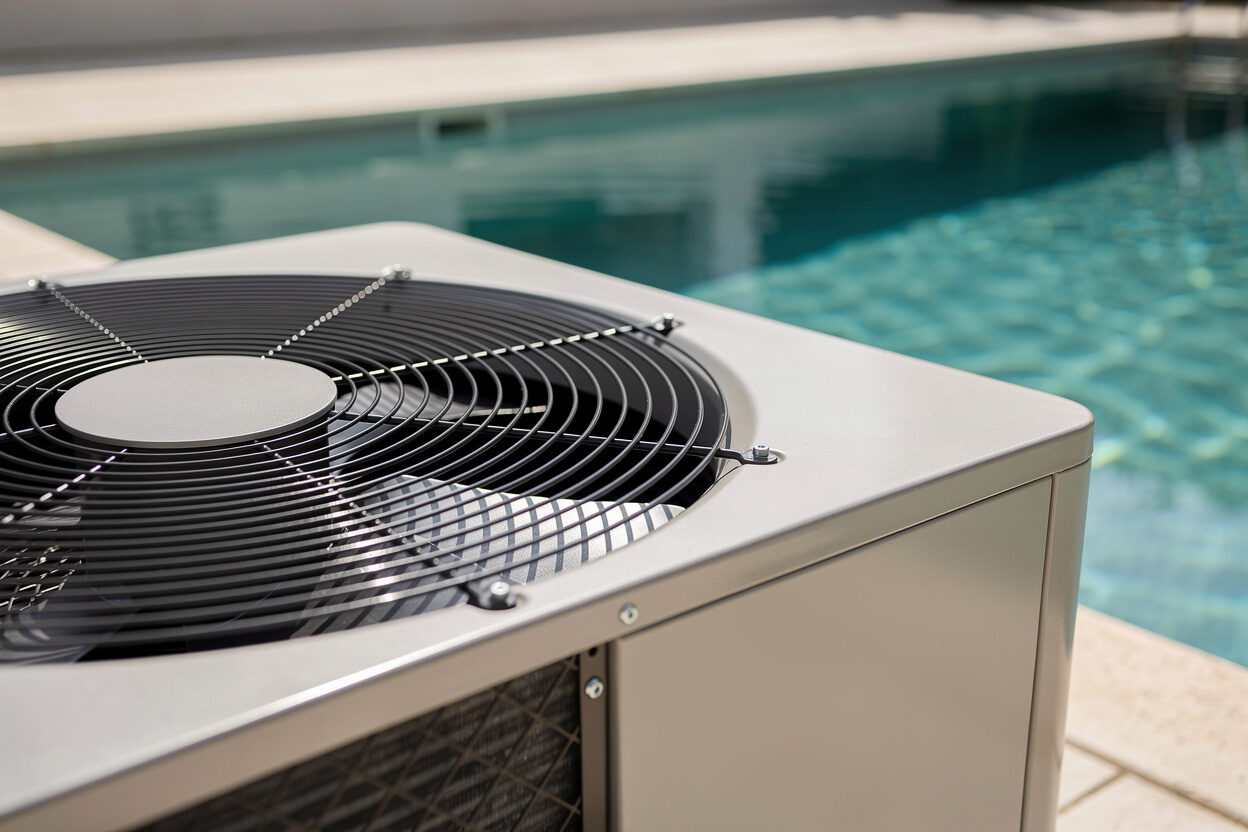
Heat pumps work like reverse air conditioners, extracting heat from ambient air rather than generating it directly. The process involves four main components: evaporator, compressor, condenser, and expansion valve, connected by refrigerant lines.
Ambient air passes over the evaporator coil containing liquid refrigerant. Even in cool air (down to about 35-40°F), there's enough heat energy to vaporize the refrigerant. The compressor then pressurizes this refrigerant vapor, dramatically increasing its temperature - often to 120-140°F.
This superheated refrigerant flows through a condenser coil where pool water circulates. The water absorbs heat from the refrigerant, causing it to condense back to liquid form. An expansion valve then reduces refrigerant pressure, completing the cycle.
Heat Pump Efficiency and Performance
Heat pumps are rated by their Coefficient of Performance (COP), typically ranging from 3.0-6.5. A COP of 5.0 means the heat pump produces 5 units of heat for every 1 unit of electricity consumed, making them highly efficient in moderate climates.
Performance factors:
- Air temperature: Efficiency decreases as ambient temperature drops
- Humidity: Higher humidity improves heat extraction
- Airflow: Clean coils and adequate clearance are essential
- Water temperature: Higher target temperatures reduce efficiency
Solar Pool Heaters: Harnessing Sun Energy
Solar heaters circulate pool water through collectors - typically black plastic or rubber panels installed on roofs or ground mounts. Dark collector surfaces absorb solar radiation, heating the water as it flows through internal channels.
A solar controller monitors pool and collector temperatures, automatically activating a booster pump when collectors are warmer than pool water. Water flows up to collectors, gains 5-15°F temperature rise depending on sun intensity, then returns to the pool.
Solar System Components
- Solar collectors: Absorb and transfer solar energy to water
- Solar controller: Automates system operation based on temperatures
- Temperature sensors: Monitor pool and collector temperatures
- Automatic valves: Direct water flow to collectors or bypass
- Check valve: Prevents reverse flow when system is off
Common Pool Heater Maintenance Requirements
Regardless of type, all pool heaters require regular maintenance for optimal performance:
- Water chemistry: Maintain proper pH (7.4-7.6) and total alkalinity (80-120 ppm) to prevent scale buildup and corrosion
- Filter maintenance: Clean filters regularly to ensure adequate water flow
- Annual service: Professional cleaning, combustion analysis for gas units
- Seasonal preparation: Winterization in freezing climates
Choosing the Right Heater Type
Gas heaters work best for: Quick heating, occasional use, any climate, pools used year-round
Heat pumps work best for: Extended seasons, moderate climates (above 45°F), cost-conscious operation
Electric heaters work best for: Spas, small pools, areas without gas service
Solar heaters work best for: Sunny climates, environmentally conscious owners, extending swimming season
Understanding how your pool heater works helps you operate it efficiently, recognize problems early, and make informed decisions about maintenance and repairs. Each type has distinct advantages depending on your climate, usage patterns, and energy costs.
Still need help? Ask a Pool & Spa Expert AD
Get a personalized answer from PoolGuy810 — 30 years owning a pool and spa repair company. Describe your issue and get step-by-step help.
Related Pool Guides
Need More Help?
Try our free pool calculators and tools to help diagnose and fix your pool problems.
Browse Pool ToolsSLAM calculator, pH calculator, salt dosing & more