
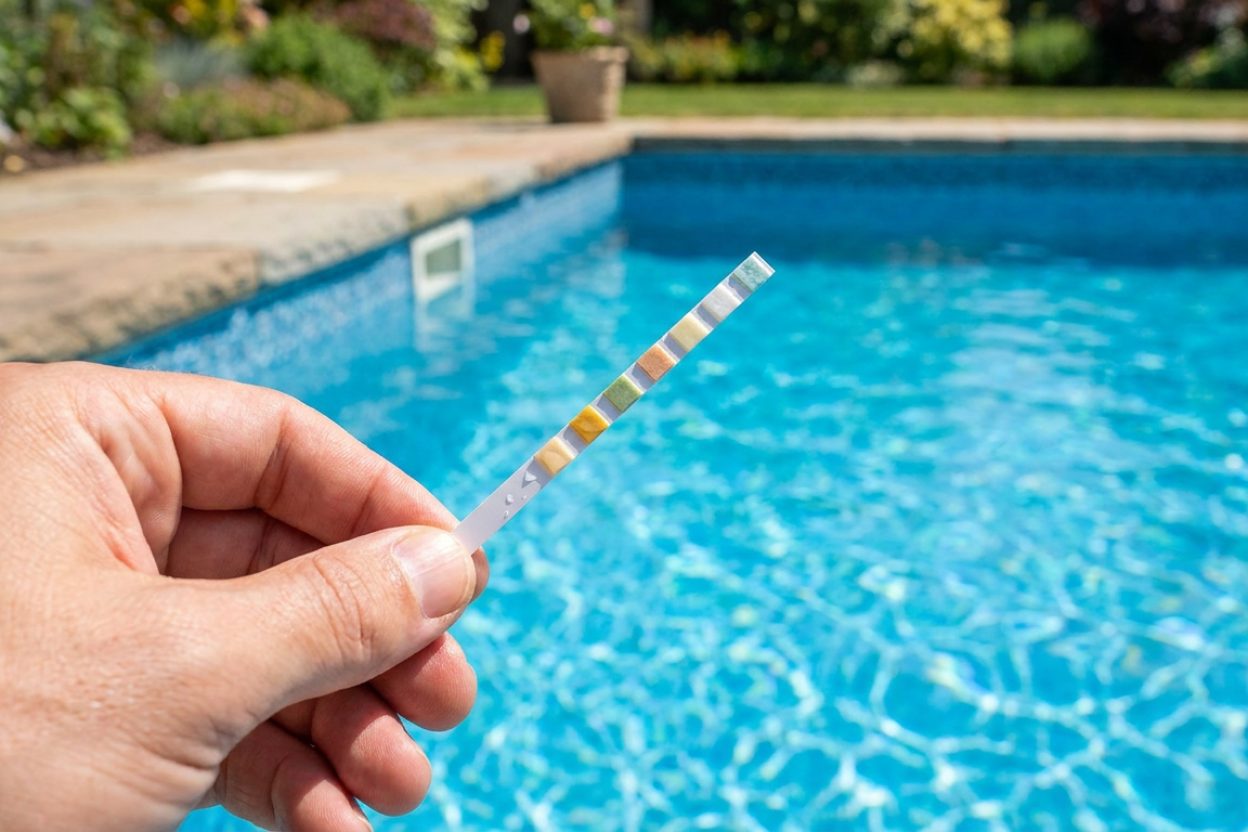
Does Pool Chlorine Lighten Hair? Chemistry & Protection Tips

Will swimming in my new pool make my hair lighter/blonde?
Read full question
Between being a total pool newbie and having no clue about proper chlorine levels, I'm wondering if I'm accidentally bleaching my hair every time I swim. My daughter has been swimming almost daily and I swear her brown hair is starting to look lighter, almost with blonde streaks. Is this actually happening or am I imagining things?
The pool store told me to keep my chlorine levels between 1-3 ppm, and I've been pretty good about testing and adding chemicals. But now I'm wondering if the chlorine is actually bleaching her hair? If this is really happening, is there anything I can do to prevent it while still keeping the pool safe to swim in?
Quick Answer
Yes, pool chlorine can make your hair lighter by breaking down melanin pigments, similar to hair bleach. Proper water chemistry maintenance and protective measures can minimize this bleaching effect. Maintaining proper free chlorine (FC) levels, pH, and total alkalinity (TA) is crucial. For CYA levels of 30-50 ppm, maintain FC at 4-6 ppm. Long exposure and high free-chlorine levels speed up bleaching. Pre-swimming protection, using swimming caps, and post-swimming care can help.
How Chlorine Lightens Hair
The science behind chlorine's hair-lightening effect is straightforward. Free chlorine (hypochlorous acid) in pool water acts as an oxidizer, breaking down organic compounds including the melanin pigments in your hair shaft. This process is accelerated when:
- Chlorine levels exceed recommended ranges for your CYACyanuric Acid (stabilizer) — Sunscreen for your chlorine — it keeps sunlight from burning it off. The catch: the more you have, the more chlorine you need to keep. learn more → level
- Hair cuticles are already damaged or porous
- Exposure time is extended (frequent swimming sessions)
- Hair is wet before entering the pool (wet hair absorbs more chlorinated water)
The bleaching effect is most noticeable on lighter hair colors like blonde, brown, or previously colored hair. Green tints, when they occur, are usually caused by copper in the water (not chlorine itself) and are most visible on light or blonde hair; dark hair carries the oxidized copper too, but the tint rarely shows.
Water Chemistry Factors That Increase Hair Bleaching
Chlorine Levels
Maintaining proper free chlorine (FCFree Chlorine — The chlorine actively sanitizing your water right now. This is the number you keep an eye on. how much you need →) levels is crucial. Using the FC/CYAFC/CYA chart — The chart that sets your chlorine target from your stabilizer (CYA) level — the two go together. see the chart → relationship from TFP guidelines, your target FC should correlate with your cyanuric acid (CYA) stabilizer levels. For CYA levels of 30-50 ppm, maintain FC at 4-6 ppm. Per the CDC pool code (Model Aquatic Health Code), free chlorine should not exceed 10 ppm while anyone is in the water, so wait until it is below 10 ppm to swim. The same code also calls for the water to be clear enough to see the bottom and pH held at 7.0-7.8. You can vacuum at any FC.
pH Imbalance
High pH (above 7.8) reduces chlorine effectiveness, often leading pool owners to add more chlorine. Maintain pH between 7.4-7.6 for swimmer comfort and to protect surfaces and equipment. Use muriatic acid to lower pH when needed - consult dosage charts or pool calculators for proper amounts based on your specific water chemistry.
Total Alkalinity
Keep total alkalinity (TATotal Alkalinity — The buffer that keeps your pH from bouncing around. Get this in range and pH gets a lot easier to manage. learn more →) between 80-120 ppm for regular chlorine pools (60-80 ppm for salt water generators). Proper TA helps stabilize pH, preventing the fluctuations that lead to chlorine overdosing.
Prevention Strategies
Pre-Swimming Protection
Wet your hair with fresh water before entering the pool. Hair can only absorb a limited amount of water, so saturating it with non-chlorinated water reduces chlorine uptake. Apply a leave-in conditioner or specialized swimmer's hair protection product containing ingredients like dimethicone or cyclomethicone that create a barrier.
Swimming Caps
Silicone swimming caps provide the best protection, though they're not 100% waterproof. Latex caps offer good protection but may cause allergic reactions. Even with a cap, some chlorinated water will contact your hair, so combine this with other protective measures.
Post-Swimming Care
Rinse immediately after swimming with fresh water to remove residual chlorine. Use a clarifying shampoo designed for swimmers, such as UltraSwim, which help neutralize chlorine. Follow with a deep conditioning treatment to restore moisture and repair cuticle damage.
Proper Pool Maintenance to Minimize Hair Damage
Regular Testing
Test your pool water 2-3 times per week using a reliable test kit like the Taylor K-2006C. Check FC, pH, and TA levels consistently. After heavy use or rain, test daily until levels stabilize.
Shock Treatment Timing
When performing SLAMShock Level And Maintain — raise free chlorine to a target based on your CYA and hold it there until the algae is gone. It's a process, not a one-time dose. the SLAM walkthrough → (Shock Level And Maintain) procedures for algae treatment, inform swimmers about elevated chlorine levels. During SLAM, FC levels reach the shock level for your CYA (about 40% of CYA) - swimming during this period significantly increases hair bleaching risk. Use our all-in-one pool calculator to determine the shock level for your CYA.
Stabilizer Management
Maintain CYA levels at 30-50 ppm for traditional chlorine systems. Higher CYA levels require higher FC levels for sanitization, potentially increasing hair exposure to chlorine. Add stabilizer gradually and test frequently.
Treating Chlorine-Damaged Hair
If your hair has already been lightened or damaged by chlorine, focus on protein and moisture restoration. Use treatments containing keratin or hydrolyzed proteins weekly. Deep conditioning masks with ingredients like argan oil, shea butter, or ceramides help repair the hair cuticle.
Warning: Avoid using metal-removing products (like those for green hair) unless specifically needed, as these can further strip hair color and moisture.
When to Seek Professional Help
Consult a professional colorist if chlorine has caused severe color changes or if you're planning to chemically treat chlorine-damaged hair. The combination of chlorine damage and chemical processing can cause severe breakage or unpredictable color results.
For the full breakdown of safe chlorine levels by CYA level, see our pool water chemistry guide.
 Taylor K-2006C Complete FAS-DPD Pool & Spa Test Kit
The FAS-DPD kit pool pros trust — reads chlorine accurately even at shock/SLAM levels, plus pH, alkalinity, calcium hardness and CYA. View on Amazon →
Taylor K-2006C Complete FAS-DPD Pool & Spa Test Kit
The FAS-DPD kit pool pros trust — reads chlorine accurately even at shock/SLAM levels, plus pH, alkalinity, calcium hardness and CYA. View on Amazon →
 Acid Blue - Low Fume Muriatic Acid for Swimming Pools & Spas - Lower's pH, Reduces Alkalinity - 2 Gallon
View on Amazon →
Acid Blue - Low Fume Muriatic Acid for Swimming Pools & Spas - Lower's pH, Reduces Alkalinity - 2 Gallon
View on Amazon →
 Liquid Chlorine / Sodium Hypochlorite (12.5%)
Everyday sanitizer — the B in BBB View on Amazon →
Liquid Chlorine / Sodium Hypochlorite (12.5%)
Everyday sanitizer — the B in BBB View on Amazon →
Still need help? Ask a Pool & Spa Expert AD
Get a personalized answer from PoolGuy810 — 30 years owning a pool and spa repair company. Describe your issue and get step-by-step help.
Related Pool Guides
Need More Help?
Try our free pool calculators and tools to help diagnose and fix your pool problems.
Browse Pool ToolsSLAM calculator, pH calculator, salt dosing & more