
Do People Have Salt Water Pools? Complete Guide & Benefits

Are saltwater pools actually a thing people have?
Read full question
Last time I walked into my pool area, that eye-watering chemical smell hit me like a wall and got me wondering if saltwater pools really eliminate all this harsh chlorine odor.
I'm getting tired of constantly adding chlorine to my pool and dealing with that harsh chemical smell. My neighbor mentioned something about saltwater systems but I honestly don't really understand how they work. Are they actually better than regular pools or just different?
Quick Answer
Yes, millions of people have salt water pools, which are actually traditional chlorine pools with a saltwater chlorine generator (SWG) that produces chlorine from salt rather than adding liquid chlorine manually.
What Exactly Is a Salt Water Pool?
Despite the name, salt water pools are still chlorinated pools. The key difference is how the chlorine is produced. Instead of manually adding liquid chlorine or chlorine tablets, a saltwater chlorine generator uses electrolysis to convert dissolved salt (sodium chloride) into hypochlorous acid and hypochlorite ion - the same sanitizing agent found in traditional chlorinated pools.
The salt level in these pools is typically maintained between 2,700-3,400 ppm, which is about one-tenth the salinity of ocean water. This level is barely detectable to most swimmers and creates a softer, silkier feel to the water.
Popularity and Market Adoption
Salt water pools have experienced tremendous growth since the early 2000s. Several factors have contributed to their popularity:
- Residential installations: Approximately 1.4 million homes in the US have saltwater pool systems
- New construction preference: Over 60% of new pool installations now include SWGSalt Water Generator — The "salt cell" that makes chlorine from the salt in a saltwater pool. Same chlorine — it just makes its own. pool terms → systems
- Retrofit conversions: Thousands of existing pools are converted to saltwater systems annually
- Commercial adoption: Many hotels, resorts, and community pools have switched to saltwater systems
Benefits That Drive Adoption
Swimmer Comfort
The primary reason people choose saltwater pools is the enhanced swimming experience. The lower chlorine byproducts (chloramines) mean less eye and skin irritation. Swimmers often report that saltwater pools feel softer and more natural, with less of the harsh "chlorine smell" associated with traditional pools.
Reduced Chemical Handling
With an SWG system, pool owners eliminate the need to regularly purchase, transport, and store liquid chlorine or chlorine tablets. The system produces chlorine automatically, reducing the risk of chemical burns or accidents during handling.
Consistent Chlorination
Saltwater chlorine generators provide steady, consistent chlorine production based on your settings and runtime. This helps maintain more stable free chlorine (FCFree Chlorine — The chlorine actively sanitizing your water right now. This is the number you keep an eye on. how much you need →) levels compared to manual dosing, which can create peaks and valleys in sanitizer levels.
Understanding the Chemistry
Saltwater pools require different chemical balance targets compared to traditional pools:
- Free Chlorine (FC): the right level for your CYACyanuric Acid (stabilizer) — Sunscreen for your chlorine — it keeps sunlight from burning it off. The catch: the more you have, the more chlorine you need to keep. learn more → (typically 4-8 ppm for a stabilized outdoor pool) (same as traditional pools)
- pH: 7.2-7.6 (SWGs naturally push pH higher)
- Total Alkalinity (TATotal Alkalinity — The buffer that keeps your pH from bouncing around. Get this in range and pH gets a lot easier to manage. learn more →): 80-120 ppm
- Cyanuric Acid (CYA): 30-50 ppm is the general minimum, but most SWG manufacturers and TFP recommend a higher 60-80 ppm for salt pools, since the cell produces chlorine continuously under UV
- Calcium Hardness (CH): 250-350 ppm for plaster pools
- Salt Level: 2,700-3,400 ppm (manufacturer specific)
Because SWG chlorine is unstabilized and produced continuously under UV exposure, salt pools generally hold a somewhat higher CYA (around 70-80 ppm per most manufacturers) to protect that chlorine from UV loss.
Maintenance Requirements
Regular Testing and Balancing
Saltwater pool owners must test water chemistry 2-3 times weekly using a reliable test kit like the Taylor K-2006C. Pay particular attention to pH levels, as the electrolytic process naturally drives pH upward, requiring regular addition of muriatic acid to lower pH back to the optimal range.
Cell Cleaning and Maintenance
The generator cell requires periodic cleaning to remove calcium scale buildup. Most manufacturers recommend inspection every 2-3 months and cleaning with a properly diluted acid solution—about 1 part muriatic acid to 4 parts water (always add acid to water, never the reverse)—only when scale becomes visible. Proper water balance helps minimize scaling.
Salt Level Management
Salt doesn't evaporate, so levels remain relatively stable unless water is removed from the pool. Test salt levels monthly — a reagent kit like the Taylor K-1766 is the most accurate, with salt strips or a digital meter as quicker options. Add salt as needed to reach your generator's target range; our all-in-one pool calculator works out how much for your pool.
Costs and Economic Considerations
Initial Investment
A quality saltwater chlorine generator system costs $1,200-$2,500 for residential installations, plus professional installation fees of $300-$800. Popular brands include Pentair IntelliChlor, Hayward AquaRite, and Jandy AquaPure systems.
Operating Costs
While electricity costs increase due to the generator's power consumption, most owners save $300-$600 annually on chlorine purchases. Generator cells typically last 3-7 years depending on usage and water balance, with replacement cells costing $200-$600.
Common Misconceptions
Many people believe saltwater pools are "chlorine-free," but this is incorrect. They produce the same sanitizing chlorine compounds as traditional pools. Another misconception is that saltwater pools require no maintenance - they actually require more attention to pH and alkalinity levels.
Who Should Consider Saltwater Pools
Saltwater systems work best for pool owners who:
- Swim frequently and value comfort
- Want to reduce chemical handling and storage
- Are comfortable with technology and regular testing
- Have adequate electrical service for the generator
- Understand the higher initial investment pays off over time
Safety Note: Always follow manufacturer instructions for cell cleaning. A salt generator makes chlorine continuously while the pump runs, so it is fine to swim while it operates — just test free chlorine before swimming if you have recently boosted the output.
For the full breakdown of safe chlorine levels by CYA level, see our pool water chemistry guide.
 Taylor K-2006C Complete FAS-DPD Pool & Spa Test Kit
The FAS-DPD kit pool pros trust — reads chlorine accurately even at shock/SLAM levels, plus pH, alkalinity, calcium hardness and CYA. View on Amazon →
Taylor K-2006C Complete FAS-DPD Pool & Spa Test Kit
The FAS-DPD kit pool pros trust — reads chlorine accurately even at shock/SLAM levels, plus pH, alkalinity, calcium hardness and CYA. View on Amazon →
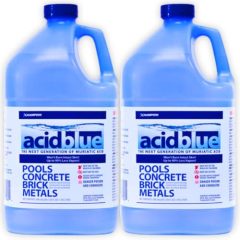 Acid Blue - Low Fume Muriatic Acid for Swimming Pools & Spas - Lower's pH, Reduces Alkalinity - 2 Gallon
View on Amazon →
Acid Blue - Low Fume Muriatic Acid for Swimming Pools & Spas - Lower's pH, Reduces Alkalinity - 2 Gallon
View on Amazon →
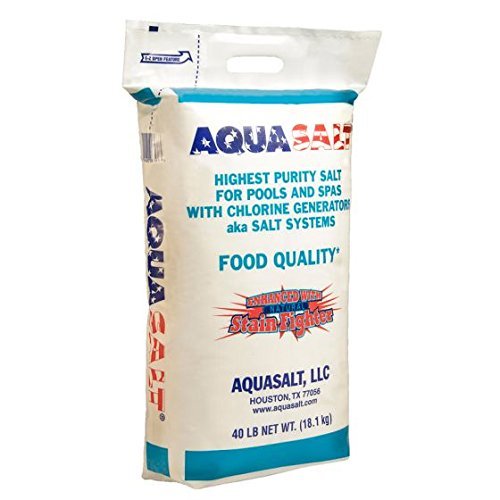 AquaSalt Pool & Spa Salt for Chlorine Generators (2 × 40 lb)
High-purity salt for saltwater chlorine generators. View on Amazon →
AquaSalt Pool & Spa Salt for Chlorine Generators (2 × 40 lb)
High-purity salt for saltwater chlorine generators. View on Amazon →
Still need help? Ask a Pool & Spa Expert AD
Get a personalized answer from PoolGuy810 — 30 years owning a pool and spa repair company. Describe your issue and get step-by-step help.
Related Pool Guides
Need More Help?
Try our free pool calculators and tools to help diagnose and fix your pool problems.
Browse Pool ToolsSLAM calculator, pH calculator, salt dosing & more