

Can Pool Algae Grow Without Sunlight? Indoor Pool Facts

Why is my covered pool still growing algae with no sun exposure?
Read full question
Starting to see algae in my 8-year-old indoor pool despite zero sunlight exposure — is this equipment failure or normal aging? My pool has been covered for months now with zero direct sunlight hitting it, but I'm still dealing with algae growth! I thought algae needed sunlight to survive, so this doesn't make any sense to me.
I've been throwing chemicals at this problem left and right, but the green keeps coming back. The pool is basically in complete darkness under the cover, yet somehow this stuff is thriving. Can algae actually grow without sunlight, or am I missing something obvious? I'm starting to think there's more to this than just blocking out the sun.
Quick Answer
Algae is photosynthetic and needs some light, so true total darkness won't sustain it - but covers and indoor spaces almost always let in enough light. Indoor and covered pools still go green mainly because free chlorine has dropped too low for the CYA level, not because algae thrives in the dark. Keep FC at the right level for your CYA and the water stays clear even in low light.
How Algae Survives Without Sunlight
Pool algae are remarkably adaptable organisms that don't rely solely on direct sunlight for survival. Understanding their resilience helps explain why even indoor pools can turn green overnight.
Alternative Energy Sources
Algae can utilize several energy sources beyond direct sunlight:
- Artificial lighting: Pool lights, room lighting, and even dim ambient light can support photosynthesis
- Stored energy: Algae cells store energy reserves that sustain them during dark periods
- Organic matter: Some algae species can feed on dissolved organic compounds in pool water
- Temperature: Warm water temperatures (above 80°F) accelerate algae metabolism regardless of light conditions
Spore Activation
Algae spores constantly enter your pool through wind, rain, swimmers, and equipment. These dormant spores can remain viable for months before activating when conditions become favorable. Poor sanitization creates the perfect environment for spore germination, even without bright sunlight.
Indoor Pool Algae Challenges
Indoor pools face unique algae-related challenges that outdoor pool owners might not consider.
Reduced Chlorine Demand
Without UV rays breaking down chlorine, indoor pools typically maintain free chlorine (FCFree Chlorine — The chlorine actively sanitizing your water right now. This is the number you keep an eye on. how much you need →) levels longer. However, this can create complacency in testing and maintenance. Many indoor pool owners test less frequently, allowing FC levels to drop below effective ranges.
Poor Air Circulation
Indoor environments often have limited air circulation, leading to higher humidity and stagnant conditions that promote algae growth. Poor ventilation can also concentrate chemical vapors, making regular maintenance less pleasant and potentially less frequent.
Lighting Systems
Pool lighting systems, particularly LED lights left on for extended periods, provide sufficient energy for algae photosynthesis. Even decorative lighting around the pool area can support algae growth in inadequately sanitized water.
Prevention Strategy for Low-Light Environments
Preventing algae in pools without direct sunlight requires consistent water chemistry management and proper sanitization protocols.
Maintain Proper Free Chlorine Levels
Use the FC/CYAFC/CYA chart — The chart that sets your chlorine target from your stabilizer (CYA) level — the two go together. see the chart → relationship to determine appropriate chlorine levels:
- CYACyanuric Acid (stabilizer) — Sunscreen for your chlorine — it keeps sunlight from burning it off. The catch: the more you have, the more chlorine you need to keep. learn more → 30-50 ppm: Maintain FC at 4-6 ppm minimum
- CYA 70-80 ppm (SWGSalt Water Generator — The "salt cell" that makes chlorine from the salt in a saltwater pool. Same chlorine — it just makes its own. pool terms → pools): Maintain FC at 6-8 ppm minimum
- Test FC levels 2-3 times weekly using a quality test kit like the Taylor K-2006C
Optimize Water Balance
Proper water balance creates an inhospitable environment for algae:
- pH: 7.4-7.6 for comfort and balanced water
- Total Alkalinity: 80-120 ppm (60-80 ppm for salt water pools)
- Calcium Hardness: 250-350 ppm for plaster pools, 175-225 ppm for vinyl/fiberglass
Enhanced Filtration
Run your filtration system longer in indoor environments:
- Operate pumps 12-16 hours daily to ensure complete water turnover
- Clean or backwash filters more frequently to maintain optimal flow
- Consider adding a supplemental UV or ozone system for additional sanitization
Treatment Protocol for Indoor Algae
When algae appears in your indoor pool, immediate action prevents the problem from escalating.
SLAM Method Implementation
The Shock Level And Maintain (SLAMShock Level And Maintain — raise free chlorine to a target based on your CYA and hold it there until the algae is gone. It's a process, not a one-time dose. the SLAM walkthrough →) process works effectively regardless of sunlight exposure:
- Test current water chemistry using a reliable test kit
- Calculate shock level FC based on your current CYA level using the all-in-one pool calculator
- Add liquid chlorine to reach shock level (typically 10-20 ppm FC)
- Brush all pool surfaces thoroughly to break up algae colonies
- Run filtration continuously during treatment
- Maintain shock level FC by testing and dosing every few hours
- Continue until overnight FC loss is 1 ppm or less and combined chlorine (CCCombined Chlorine — "Used-up" chlorine left over from doing its job. Above about 0.5 ppm is the classic sign water needs a shock. learn more →) is 0.5 ppm or less
Dosing Calculations
Use liquid chlorine (sodium hypochlorite) for most effective treatment:
- 1 gallon of liquid chlorine (typically 10.5%-12.5%) raises FC by approximately 11-13 ppm in 10,000 gallons - adjust calculations based on actual percentage on the container
- Know your shock - cal-hypo adds calcium (good when it's low) and dichlor adds CYA (good when that's low); liquid chlorine adds neither
- Add chlorine any time of day (no UV degradation indoors) ensuring proper circulation
Long-Term Management
Successful algae prevention in indoor pools requires consistent monitoring and proactive maintenance.
Weekly Testing Schedule
Establish a regular testing routine:
- Monday: Test FC, pH, and CYA
- Wednesday: Test FC and pH
- Friday: Complete water analysis including TATotal Alkalinity — The buffer that keeps your pH from bouncing around. Get this in range and pH gets a lot easier to manage. learn more → and CH
- Adjust chemicals immediately when readings fall outside target ranges
Equipment Maintenance
Regular equipment maintenance prevents conditions that promote algae growth:
- Clean skimmer baskets and pump strainer baskets weekly
- Inspect and clean salt cells monthly (SWG pools)
- Service heaters and heat pumps seasonally
- Replace filter cartridge elements every 2-5 years or DE grids every 5-10 years per manufacturer specifications (cleaning is far more frequent than replacement)
Common Misconceptions
Several myths persist about algae growth in low-light conditions:
- "Indoor pools don't get algae": False - poor chemistry creates algae regardless of location
- "Covered pools are protected": False - covers trap heat and create ideal growing conditions
- "Less chlorine needed without sun": Partially true but requires more consistent monitoring
Understanding that algae can thrive without direct sunlight emphasizes the critical importance of maintaining proper water chemistry year-round, regardless of your pool's location or exposure to natural light.
For the full breakdown of safe chlorine levels by CYA level, see our pool water chemistry guide.
 Taylor K-2006C Complete FAS-DPD Pool & Spa Test Kit
The FAS-DPD kit pool pros trust — reads chlorine accurately even at shock/SLAM levels, plus pH, alkalinity, calcium hardness and CYA. View on Amazon →
Taylor K-2006C Complete FAS-DPD Pool & Spa Test Kit
The FAS-DPD kit pool pros trust — reads chlorine accurately even at shock/SLAM levels, plus pH, alkalinity, calcium hardness and CYA. View on Amazon →
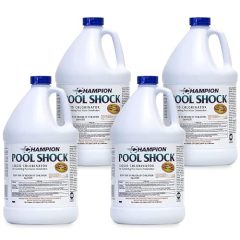 Liquid Chlorine / Sodium Hypochlorite (12.5%)
Everyday sanitizer — the B in BBB View on Amazon →
Liquid Chlorine / Sodium Hypochlorite (12.5%)
Everyday sanitizer — the B in BBB View on Amazon →
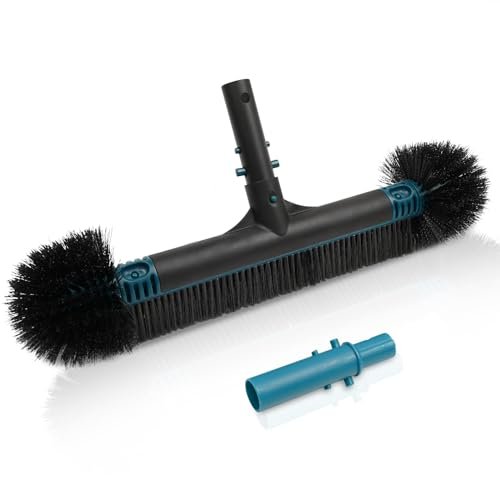 Poolvio 20" 2-in-1 Pool Brush Head (Walls & Floor)
Sturdy 20-inch brush head that clips onto any standard telescopic pole. View on Amazon →
Poolvio 20" 2-in-1 Pool Brush Head (Walls & Floor)
Sturdy 20-inch brush head that clips onto any standard telescopic pole. View on Amazon →
 Acid Blue - Low Fume Muriatic Acid for Swimming Pools & Spas - Lower's pH, Reduces Alkalinity - 2 Gallon
View on Amazon →
Acid Blue - Low Fume Muriatic Acid for Swimming Pools & Spas - Lower's pH, Reduces Alkalinity - 2 Gallon
View on Amazon →
Still need help? Ask a Pool & Spa Expert AD
Get a personalized answer from PoolGuy810 — 30 years owning a pool and spa repair company. Describe your issue and get step-by-step help.
Related Pool Guides
Need More Help?
Try our free pool calculators and tools to help diagnose and fix your pool problems.
Browse Pool ToolsSLAM calculator, pH calculator, salt dosing & more