
Can I Use Pool Filter Sand? Complete Installation Guide

Is pool filter sand safe and effective for my family pool?
Read full question
Replacing the sand in my pool filter for the first time and the bags at the hardware store look identical to the pool store sand but cost half as much. Is pool filter sand actually different from regular sand or is this just markup? Don't want to ruin my filter trying to save $30.
Quick Answer
Yes, pool filter sand is an excellent choice for most pools, providing effective filtration for particles down to 20-40 microns. It's cost-effective, long-lasting, and works well in sand filter systems with proper installation and maintenance.
Step-by-Step Guide to Using Pool Filter Sand
1. Determine if Sand Filtration is Right for You
- Check your current filter system type - sand filters work best for pools 15,000-50,000 gallons
- Consider your budget - sand is the most economical filter media long-term
- Consider your cleaning preferences - backwash when pressure rises 8-10 PSI above the clean baseline (often every 1-2 weeks in peak season), with minimal daily maintenance
- Review your water quality expectations - sand filters to 20-40 microns (adequate for most pools)
2. Choose the Right Pool Filter Sand
- Select #20 silica sand (0.45-0.55mm grain size) - this is the industry standard
- Calculate quantity needed: typically 200-300 lbs for residential filters
- Any bag labeled #20 silica pool filter sand works (e.g., Mystic White, AquaQuartz, or a store brand) — brand and store don't change the spec
- Avoid construction sand, play sand, or river sand - these contain impurities and wrong grain sizes
- Consider upgrading to glass media (FilterGlass) for better filtration and longer life
3. Prepare Your Filter for Sand Installation
- Turn off pool pump and close all valves
- Remove old sand by scooping out through the top opening
- Inspect laterals (plastic fingers at bottom) for cracks or damage
- Replace damaged laterals before adding new sand
- Clean the filter tank thoroughly with water
- Cover the center pipe/standpipe with duct tape to prevent sand entry
4. Install the Pool Filter Sand
- Fill tank 1/3 with water to cushion the laterals
- Pour sand slowly around the standpipe, keeping it centered
- Add sand in stages, filling to manufacturer specifications (typically 1/2 to 2/3 tank volume, ensuring sand covers laterals by 2-6 inches)
- Level sand surface and ensure standpipe remains straight and centered
- Remove tape from standpipe carefully
- Replace filter head and secure all connections
5. Initial System Startup
- Set filter valve to "Backwash" position
- Start pump and backwash for 1-2 minutes until water runs clear
- Turn off pump and switch to "Rinse" for 30 seconds
- Switch to "Filter" and resume normal operation
- Check pressure gauge reading - this is your new "clean" pressure baseline
- Test water chemistry and adjust as needed
Maintenance Requirements
Weekly Maintenance
Backwash when pressure gauge reads 8-10 PSI above clean pressure. This typically occurs weekly during peak season. Always follow backwash with a rinse cycle to settle the sand bed.
Monthly Checks
Monitor filter performance by testing water clarity and checking for proper flow rates. Clean skimmer and pump baskets to maintain optimal circulation.
Seasonal Maintenance
Before closing or opening your pool, perform a thorough backwash and inspect the filter system. Check multiport valve operation and lubricate O-rings as needed.
When to Replace Pool Filter Sand
Replace sand every 5-7 years or when:
- Backwashing frequency increases significantly
- Water clarity remains poor despite proper chemistry
- Sand appears clumped or cemented together
- Filter cycles become ineffective even after backwashing
Troubleshooting Common Issues
Poor Filtration Performance
If your sand filter isn't cleaning effectively, first verify proper water chemistry. Maintain FCFree Chlorine — The chlorine actively sanitizing your water right now. This is the number you keep an eye on. how much you need → levels according to your CYACyanuric Acid (stabilizer) — Sunscreen for your chlorine — it keeps sunlight from burning it off. The catch: the more you have, the more chlorine you need to keep. learn more → level using the all-in-one pool calculator. Target pH of 7.4-7.6 and TATotal Alkalinity — The buffer that keeps your pH from bouncing around. Get this in range and pH gets a lot easier to manage. learn more → of 80-120 ppm for optimal filtration.
Sand in Pool
Sand returning to the pool indicates damaged laterals or improper backwashing technique. Inspect and replace laterals only when cracked or damaged — they normally last well beyond a single sand change.
Cost Considerations
Pool filter sand costs $15-25 per 50-lb bag, making it the most economical filter media. A typical residential filter requires 200-300 lbs, costing $60-150 total. This investment lasts 5-7 years, making sand filtration extremely cost-effective compared to cartridge or DE filters.
Safety Warning: Always turn off electrical power to the pump before performing any filter maintenance. Never operate the pump with the filter tank open or without proper water flow.
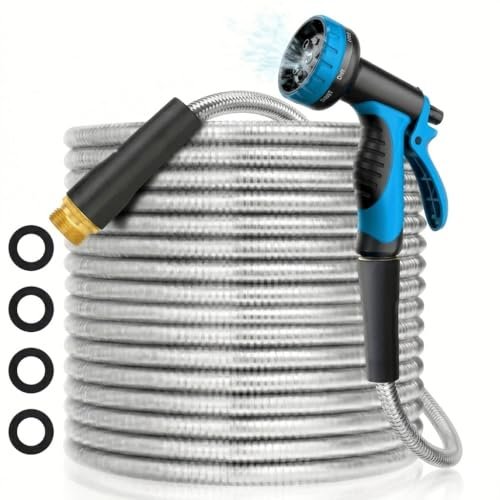 50 ft Flexible Metal Garden Hose (Kink-Free)
Durable hose for filling, priming, and rinsing equipment. View on Amazon →
50 ft Flexible Metal Garden Hose (Kink-Free)
Durable hose for filling, priming, and rinsing equipment. View on Amazon →
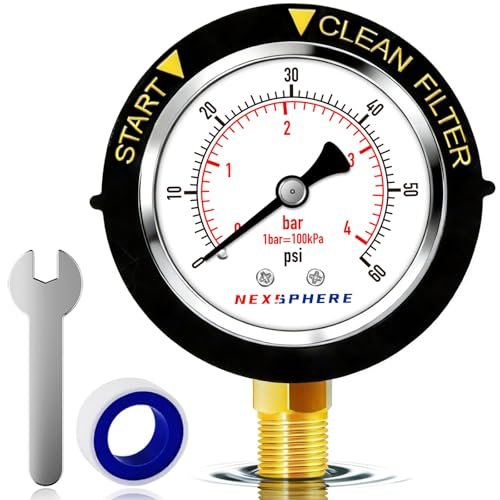 NexSphere Pool Filter Pressure Gauge, 0–60 PSI, 2 in Dial
Replacement back-mount gauge so you can read filter pressure and know when to backwash. View on Amazon →
NexSphere Pool Filter Pressure Gauge, 0–60 PSI, 2 in Dial
Replacement back-mount gauge so you can read filter pressure and know when to backwash. View on Amazon →
Still need help? Ask a Pool & Spa Expert AD
Get a personalized answer from PoolGuy810 — 30 years owning a pool and spa repair company. Describe your issue and get step-by-step help.
Related Pool Guides
Need More Help?
Try our free pool calculators and tools to help diagnose and fix your pool problems.
Browse Pool ToolsSLAM calculator, pH calculator, salt dosing & more