
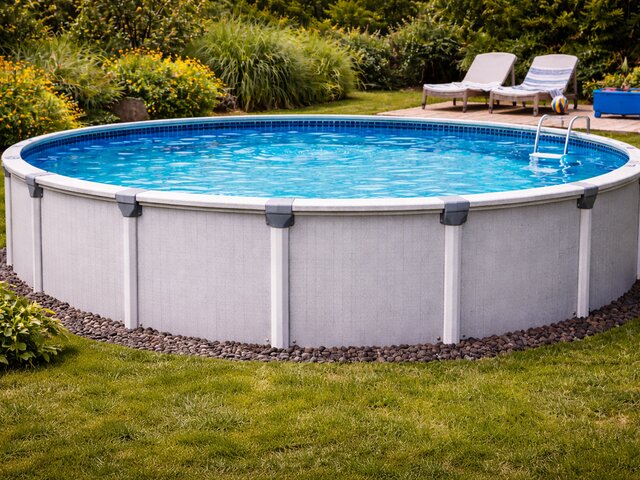
Can I Leave My Above Ground Pool Empty? Winter Storage Guide

Is it safe to drain my 24ft above ground pool completely for winter?
Read full question
The brutal freeze last winter that cracked my neighbor's liner has me questioning whether I should abandon my usual partial drain approach and go completely empty this year.
My pool has been up for three seasons now, and I've always done partial draining and winterization with chemicals, but this year I'm wondering if it would be easier to just empty it entirely.
I'm concerned about potential damage to the pool structure if I leave it empty for several months. The pool sits on leveled ground with a sand base, and we get pretty harsh winters here with freezing temperatures. I've heard conflicting advice - some people say it's fine to empty it completely, while others warn about structural issues. What are the real risks of leaving an above ground pool empty for an extended period, and would I be better off sticking with my usual winterization routine?
Quick Answer
You can leave an above ground pool empty temporarily, but extended emptying risks structural damage and permanent liner shrinkage, because the water's weight is what supports the walls and keeps the vinyl liner stretched. Proper winterization or partial draining is usually safer than complete emptying.
First, Let's Diagnose Your Situation
No — leaving your above ground pool completely empty can cause serious structural damage, but here's exactly how to winterize it properly without destroying your investment. The safety of leaving your pool empty depends on several critical factors: your climate, pool construction, ground conditions, and how long you plan to leave it empty.
Most above ground pools are designed to have water pressure supporting the walls and liner. When empty, these structures face different stresses that can lead to costly damage if not properly managed.
When You CAN Safely Leave Your Pool Empty
Short-term emptying (1-7 days) is generally safe when:
- You're replacing the liner or doing major repairs
- Weather conditions are mild (no extreme heat, cold, or high winds)
- Your pool has rigid walls (steel or aluminum frame) rather than soft-sided
- The ground around your pool is stable and well-draining
- You're actively working on the pool and monitoring it daily
Critical Risks of Leaving Your Pool Empty
Structural Damage
Above ground pools rely on water pressure to maintain their shape. Without this internal pressure, several problems can occur:
- Wall collapse: Pool walls can buckle inward, especially during high winds
- Frame distortion: Metal frames can warp or bend permanently
Liner Deterioration
Pool liners face accelerated damage when exposed without water protection:
- UV degradation: Direct sunlight breaks down vinyl materials rapidly
- Temperature extremes: Expansion and contraction can cause cracking
- Wrinkling and tearing: Without water weight, liners can shift and develop permanent creases
Proper Solutions Based on Your Needs
Solution 1: Winter Closing
Instead of completely emptying your pool, follow proper winterization procedures:
- Lower water level: Drain water to 4-6 inches below the skimmer opening
- Add winterizing chemicals: Use a winterizing kit or shock to 10+ ppm chlorine level
- Install winter cover: Use a properly fitted winter cover with cable and tightener system
- Protect equipment: Remove and store pump, filter, and hoses in a warm, dry location
- Clear the lines: For an above-ground pool the standard practice is simply to disconnect the hoses, drain the skimmer and return lines fully, and store them dry; running pool antifreeze through the lines is typically an in-ground step, not an above-ground one.
Solution 2: Temporary Emptying for Repairs
If you must empty your pool for repairs:
- Choose optimal weather: Plan for mild, calm conditions with moderate temperatures
- Work quickly: Complete repairs within 3-7 days maximum
- Protect the liner: Cover exposed liner with tarps to prevent UV damage
- Secure the structure: Install temporary wall bracing if winds are expected
- Monitor drainage: Ensure proper drainage around the pool to prevent ground saturation
Solution 3: Permanent Removal
If you're planning to permanently remove your pool:
- Disassemble systematically: Remove components in reverse order of installation
- Prepare the site: Fill and level the area with appropriate fill material
- Consider professional help: Large pools may require professional removal
Climate-Specific Considerations
Cold Climate Concerns
In freezing climates, empty pools face additional risks:
- Frost heave: Frozen ground can shift and damage pool foundations
- Ice formation: Any remaining water can freeze and crack pool components
- Metal contraction: Extreme cold can cause metal frames to contract and fail
Hot Climate Issues
In desert or very hot climates:
- Rapid liner degradation: UV exposure is intensified
- Ground movement: Dry soil can shift and create uneven support
- Equipment damage: Plastic components can become brittle
Emergency Situations
If you discover your pool has drained unexpectedly:
- Identify the cause: Look for leaks, pump malfunctions, or drainage issues
- Cover immediately: Protect the liner from UV exposure
- Refill quickly: If structurally safe, begin refilling within 24 hours
- Check for damage: Inspect walls, liner, and frame for any stress damage
Cost Analysis
Consider the financial implications:
- Liner replacement: $300-800 for most above ground pools
- Structural repairs: $200-1000 depending on damage extent
- Proper winterization: $50-150 annually
- Professional removal: $500-1500 for complete removal
Prevention is significantly less expensive than repairs. The cost of proper winterization or temporary protection during repairs is minimal compared to replacing damaged components.
Still need help? Ask a Pool & Spa Expert AD
Get a personalized answer from PoolGuy810 — 30 years owning a pool and spa repair company. Describe your issue and get step-by-step help.
Related Pool Guides
Need More Help?
Try our free pool calculators and tools to help diagnose and fix your pool problems.
Browse Pool ToolsSLAM calculator, pH calculator, salt dosing & more