
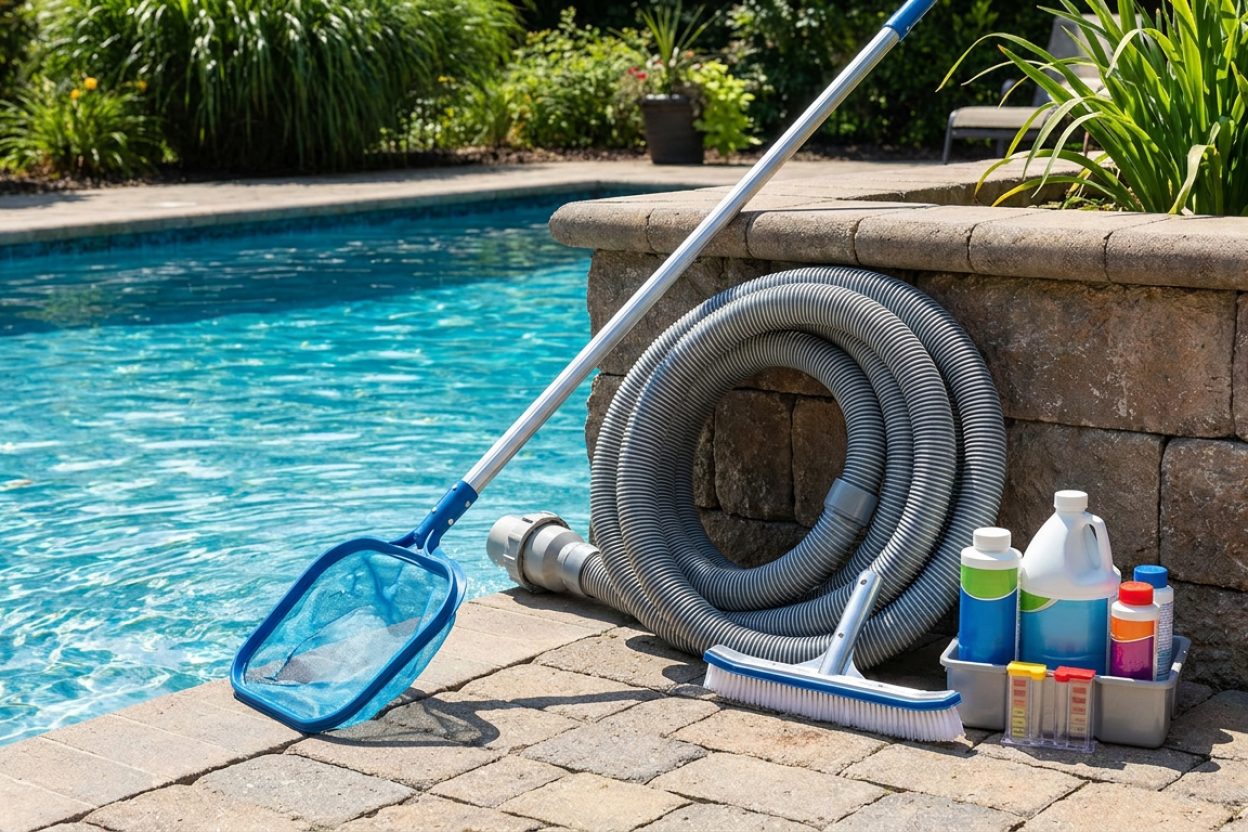
Should You Shock Your Pool After Rain? When & How Guide

Is it safe for kids to swim after heavy rain? Should I shock?
Read full question
Spent all summer dealing with perfectly clear pool water, but only when temps hit above 80 degrees does heavy rain turn it into a cloudy mess. The water looks a bit cloudy and I know rain can mess with the chemical balance. I've heard that rainwater can bring in all sorts of contaminants and bacteria that could make them sick.
Should I be shocking the pool before they swim again? I just want to make sure the water is safe and properly sanitized. How much rain is too much before I need to take action with chemicals?
Quick Answer
After heavy rain (over ~1 inch) or if the water is cloudy, test first - then shock only if free chlorine has dropped or the water won't clear. Light rain usually just needs a quick test and top-up.
Quick Answer: Yes, But It Depends on the Rain Amount
If you're staring at a murky, uninviting pool after last night's downpour wondering what went wrong, you're not alone. Light drizzle under 0.5 inches typically won't require shocking, but you should still test and adjust your water chemistry within 24 hours.
Rain dilutes your pool's chlorine levels, lowers pH, and introduces contaminants like dust, pollen, bird droppings, and atmospheric pollutants. Heavy rainfall can drop your free chlorine (FCFree Chlorine — The chlorine actively sanitizing your water right now. This is the number you keep an eye on. how much you need →) by 1-3 ppm and reduce pH by 0.2-0.4 points, creating conditions where algae and bacteria can flourish.
When Rain Might Call for Shocking
After most rain you only need to test and top up your free chlorine and rebalance — a full shock is mainly worth it after:
- Heavy rain (1+ inches): Significant dilution of sanitizer levels
- Storms with debris: Leaves, twigs, and organic matter consume chlorine
- Cloudy or dull water appearance: Sign of overwhelmed sanitizer system
- Combined with high bather load: Rain plus swimmers create double contamination
- If FC drops below minimum: Test shows inadequate sanitizer levels
Maybe Shock After:
- Moderate rain (0.5-1 inch): Test first, shock if FC is low
- Multiple light rain days: Cumulative effect may require attention
- First rain after drought: Atmospheric washout brings more contaminants
Usually No Shock Needed:
- Light rain (under 0.5 inches): Minimal impact on chemistry
- Brief showers: Little time for significant dilution
- If FC levels remain adequate: Your sanitizer system is handling the load
Step-by-Step Post-Rain Pool Treatment
- Remove debris immediately: Skim leaves, twigs, and visible contaminants before they sink and decompose
- Test water chemistry: Use a reliable test kit (Taylor K-2006 or equivalent) to check FC, pH, total alkalinity (TATotal Alkalinity — The buffer that keeps your pH from bouncing around. Get this in range and pH gets a lot easier to manage. learn more →), and cyanuric acid (CYACyanuric Acid (stabilizer) — Sunscreen for your chlorine — it keeps sunlight from burning it off. The catch: the more you have, the more chlorine you need to keep. learn more →) levels
- Calculate shock dosage: Use our all-in-one pool calculator to determine your shock level based on CYA. For 30-50 ppm CYA, maintain FC at 12-20 ppm during shocking
- Add liquid chlorine: Add the dose from the calculator, pouring it around the pool with the pump running
- Brush pool surfaces: Circulate the chlorine and prevent algae attachment while chemicals work
- Run filtration continuously: Keep pump running 24/7 during the shocking process
- Retest in 2-4 hours: Verify FC levels reached your target shock level
- Maintain shock level: Add more chlorine as needed to keep FC at shock level until water clears
- Test again in 24 hours: Ensure FC hasn't dropped significantly overnight
- Return to normal levels: Once water is crystal clear and FC holds steady, reduce to your normal target for your CYA (about 4-7 ppm at CYA 30-50)
Calculating Your Shock Dosage
The amount of shock needed depends on your pool size, current FC level, and CYA level. The generic "1 lb per 10,000 gallons" rule – it's a good rough estimate (about 13 ppm), though product strength varies. For a closer figure use our all-in-one pool calculator for dosing estimates.
Target shock levels based on CYA:
- CYA 30-40 ppm: Shock to 12-16 ppm FC
- CYA 40-50 ppm: Shock to 16-20 ppm FC
- CYA 50+ ppm: Consider reducing CYA first, then shock accordingly
pH Adjustment After Rain
Rain is naturally acidic (pH 5.0-6.5), so expect your pool pH to drop. Keep pH in the normal 7.2-7.8 range before shocking — you don't need to raise pH first, since lower pH actually makes chlorine slightly more active; the real aim is to avoid scaling and keep readings accurate.
If pH drops below 7.0, use our all-in-one pool calculator to determine how much sodium bicarbonate (baking soda) to add:
- Add gradually and retest after 2 hours of circulation
Common Mistakes to Avoid
- Adding undissolved cal-hypo granules to a vinyl pool: Can cause localized bleaching — always pre-dissolve cal-hypo first (it is fine to use, especially when calcium is low)
- Shocking without testing first: May waste chemicals or create imbalances
- Adding shock directly to skimmer: Can damage equipment and create dangerous gas
- Swimming too soon: Wait until FC is below 10 ppm (per CDC)
- Shocking during peak sun: with adequate CYA, daytime UV loss is moderated, but shocking in the evening still gives chlorine uninterrupted hours to work
Safety Considerations
Warning: Always add chemicals to water, never water to chemicals. Wear safety goggles and gloves when handling pool chemicals. Store chemicals in original containers away from heat and moisture. Keep chlorine and other oxidizers away from acids and fuels — combining them can release toxic chlorine gas or start a fire.
It's safe to swim once FC is below 10 ppm (the CDC/MAHC cap); you don't have to wait for it to fall all the way to your normal target. Per the CDC pool code (Model Aquatic Health Code), free chlorine should not exceed 10 ppm while anyone is in the water, so wait until it is below 10 ppm to swim. The same code also calls for the water to be clear enough to see the bottom and pH held at 7.0-7.8. You can vacuum at any FC. Damage/harm needs CONCENTRATED chlorine or a robot left soaking.
Prevention Tips
While you can't control rain, you can minimize its impact:
- Maintain proper FC levels for your CYA (about 4-7 ppm at CYA 30-50) before storms
- Keep pH in the ideal range (7.4-7.6) for chlorine efficiency
- Install a pool cover to reduce dilution and debris
- Trim overhanging vegetation to minimize organic contamination
- Have liquid chlorine on hand for quick treatment
For the full breakdown of safe chlorine levels by CYA level, see our pool water chemistry guide.
 Taylor K-2006C Complete FAS-DPD Pool & Spa Test Kit
The FAS-DPD kit pool pros trust — reads chlorine accurately even at shock/SLAM levels, plus pH, alkalinity, calcium hardness and CYA. View on Amazon →
Taylor K-2006C Complete FAS-DPD Pool & Spa Test Kit
The FAS-DPD kit pool pros trust — reads chlorine accurately even at shock/SLAM levels, plus pH, alkalinity, calcium hardness and CYA. View on Amazon →
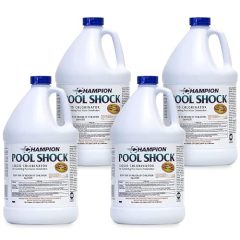 Liquid Chlorine / Sodium Hypochlorite (12.5%)
Everyday sanitizer — the B in BBB View on Amazon →
Liquid Chlorine / Sodium Hypochlorite (12.5%)
Everyday sanitizer — the B in BBB View on Amazon →
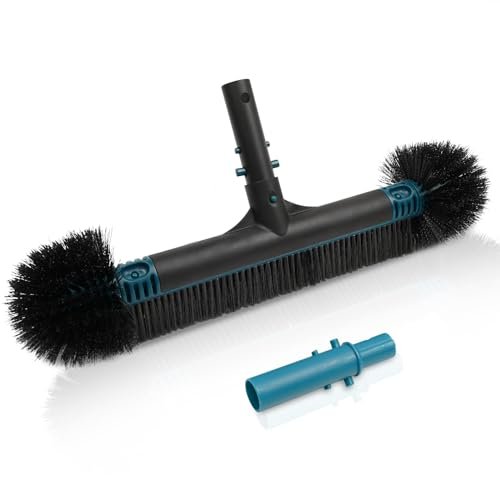 Poolvio 20" 2-in-1 Pool Brush Head (Walls & Floor)
Sturdy 20-inch brush head that clips onto any standard telescopic pole. View on Amazon →
Poolvio 20" 2-in-1 Pool Brush Head (Walls & Floor)
Sturdy 20-inch brush head that clips onto any standard telescopic pole. View on Amazon →
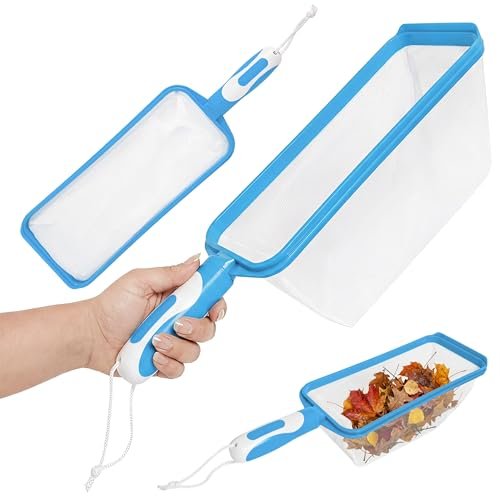 The Skimmie Handheld Pool Skimmer Net
Grab-and-go hand skimmer for leaves and debris off the surface. View on Amazon →
The Skimmie Handheld Pool Skimmer Net
Grab-and-go hand skimmer for leaves and debris off the surface. View on Amazon →
Still need help? Ask a Pool & Spa Expert AD
Get a personalized answer from PoolGuy810 — 30 years owning a pool and spa repair company. Describe your issue and get step-by-step help.
Need More Help?
Try our free pool calculators and tools to help diagnose and fix your pool problems.
Browse Pool ToolsSLAM calculator, pH calculator, salt dosing & more