
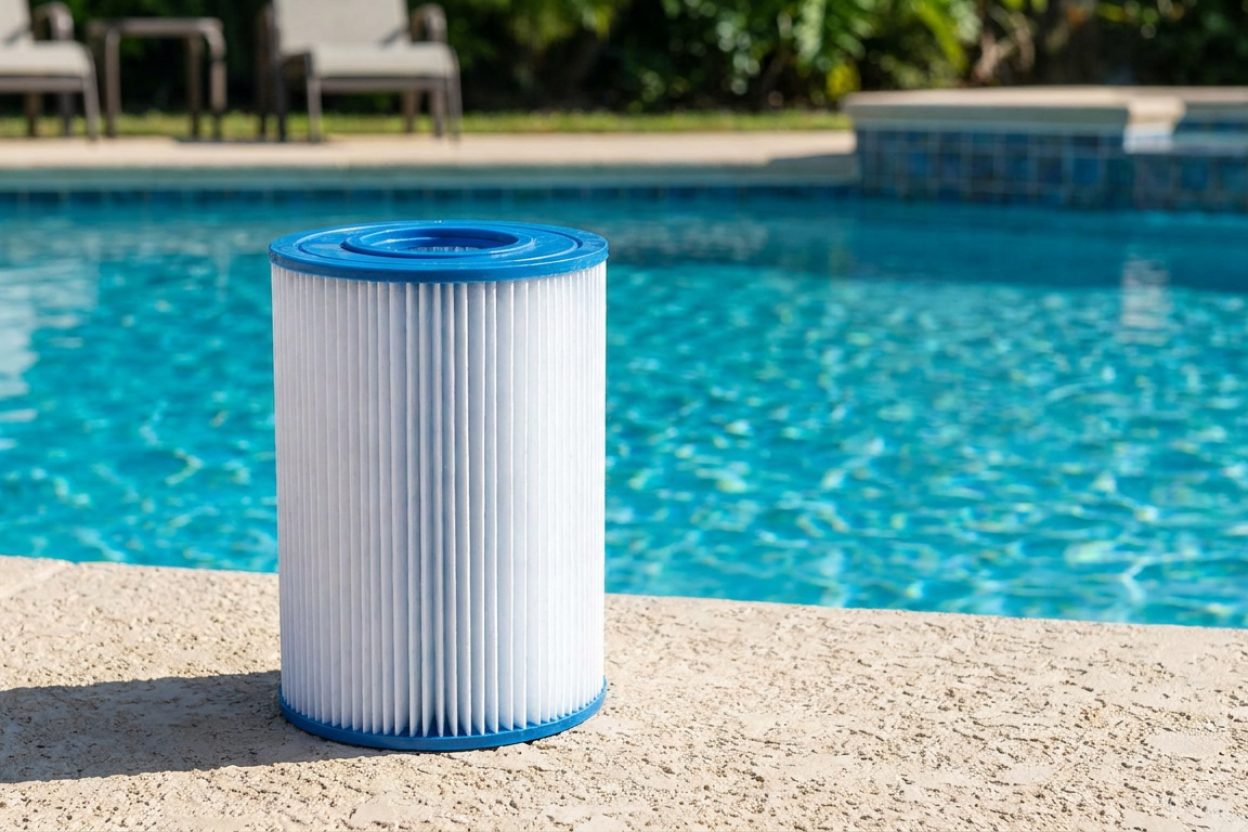
How Pool Cartridge Filters Work: Complete Troubleshooting

What exactly happens inside a cartridge filter to clean water?
Read full question
Spent another spring weekend dealing with my cartridge filter acting up again, and I'm done getting ripped off at the pool store instead of fixing it myself. The guys there always want to sell me expensive new cartridges or additives, but I feel like if I understood what's actually happening inside the filter, I could maintain it better.
What's the step-by-step process of how water gets cleaned as it passes through? I know there's some kind of fabric material involved, but I want to understand the nitty-gritty details of how particles get trapped and what size debris these things can actually handle.
Quick Answer
Pool cartridge filters work by forcing water through pleated fabric material that traps debris and contaminants. The pump pushes water from the pool through the cartridge's polyester or polypropylene fibers, which physically strain out particles as small as 10-15 microns before returning clean water to the pool.
First, Let's Diagnose How Your Cartridge Filter System Functions
To understand how your cartridge filter works and troubleshoot any issues, we need to examine the complete filtration cycle. Your system consists of several key components working together: the pump, filter housing, cartridge elements, and return lines.
The process begins when your pool pump creates suction, drawing water from your pool through the skimmer and main drain. This water travels through your pump's impeller, which pressurizes it and pushes it into the filter housing. Inside the housing, one or more cartridge filters are positioned to intercept all water flow.
The Filtration Process Step-by-Step
Water Flow Pattern
Water enters the filter housing and flows from the outside of the cartridge toward the center. The pleated design creates maximum surface area – typically 25-50 square feet per cartridge depending on size. As water passes through the fabric material, particles become trapped in the fibers while clean water continues through to the center core.
Particle Capture Mechanism
Cartridge filters use three methods to capture contaminants:
- Mechanical straining: Larger debris gets physically blocked by the fabric weave
- Impaction: Heavier particles with momentum collide with fibers and stick
- Interception: Microscopic contaminants get caught as water flows around fiber strands
Common Performance Issues and Solutions
Problem: Short Filter Cycles (Frequent Cleaning Required)
If you're cleaning cartridges weekly or more often, several factors could be causing rapid clogging:
- Undersized system: Your cartridge capacity may be too small for your pool volume
- High bather load: Body oils, lotions, and cosmetics quickly saturate cartridge fibers
- Algae issues: Green or cloudy water indicates you need to address water chemistry first
- Poor water balance: Test your water with a Taylor K-2006 test kit and maintain FCFree Chlorine — The chlorine actively sanitizing your water right now. This is the number you keep an eye on. how much you need → levels according to your CYACyanuric Acid (stabilizer) — Sunscreen for your chlorine — it keeps sunlight from burning it off. The catch: the more you have, the more chlorine you need to keep. learn more → level using the all-in-one pool calculator
Solution: For algae problems, perform a SLAMShock Level And Maintain — raise free chlorine to a target based on your CYA and hold it there until the algae is gone. It's a process, not a one-time dose. the SLAM walkthrough → (Shock Level And Maintain) process using liquid chlorine, keeping FC at shock level until your pool passes the OCLT (Overnight Chlorine Loss Test). Clean or replace cartridges every 2-3 days during SLAM to prevent re-contamination. Because cartridge filters have no waste port, you cannot vacuum dead algae out to waste — brush, let the filter clear the water, and clean the cartridge often.
Problem: Reduced Water Flow
When you notice decreased return jet pressure or longer heating times, your cartridges are likely becoming saturated with oils and fine particles that regular rinsing can't remove.
Diagnosis steps:
- Check pressure gauge – if 8-10 PSI above clean starting pressure, cartridges need attention
- Inspect cartridges for gray or brown discoloration between pleats
- Look for flattened or matted pleats indicating fabric breakdown
Solutions:
- Rotate between two sets of cartridges, allowing thorough drying between uses
- Use Cartridge System Cleaner or TSP (trisodium phosphate) solution monthly (note: TSP availability varies by region due to environmental regulations)
- If mineral scale remains after degreasing, soak briefly in a dilute muriatic acid solution (about 1 part acid to 20 parts water – add acid to water, never reverse); don't acid-soak greasy cartridges or leave them longer than needed. WARNING: Always wear safety goggles, acid-resistant gloves, and work in well-ventilated areas when handling muriatic acid
Optimizing Your Cartridge Filter Performance
Proper Maintenance Schedule
Establish a rotation system with multiple cartridge sets. While one set operates in your filter, clean the alternate set and allow complete air drying. This prevents premature fabric breakdown from constant moisture.
Weekly: Quick rinse with garden hose, spraying between pleats
Monthly: Deep clean with TSP solution or commercial cartridge cleaner
Seasonally: Acid wash to remove mineral deposits, especially important in hard water areas
Water Chemistry Impact
Maintaining proper water balance significantly extends cartridge life and improves filtration efficiency. Target these ranges:
- pH: 7.4-7.6 for optimal comfort and equipment protection
- Total Alkalinity: 80-120 ppm for regular pools, 60-80 for salt water generators
- Calcium Hardness: 250-350 ppm for plaster pools, 150-250 for vinyl/fiberglass
- CYA: 30-50 ppm for liquid chlorine, 70-80 ppm for salt water generators
High pH levels cause calcium precipitation that clogs cartridge fibers, while low pH can damage the fabric material. Regular testing and adjustment prevent these issues.
When to Replace vs. Clean Cartridges
Quality cartridge elements typically last 2-5 years with proper care under normal usage conditions, though heavy bather loads and poor water conditions may require more frequent replacement. Several signs indicate replacement time:
- Pleats won't return to original shape after cleaning
- Fabric appears gray or brown despite thorough cleaning
- End caps show cracks or separation
- Filter cycles become progressively shorter despite proper water chemistry
Consider upgrading to higher-quality cartridges with antimicrobial treatments or tighter weaves for better performance. Brands like Unicel, Pleatco, and Filbur offer various efficiency levels and longevity options.
For the full breakdown of safe chlorine levels by CYA level, see our pool water chemistry guide.
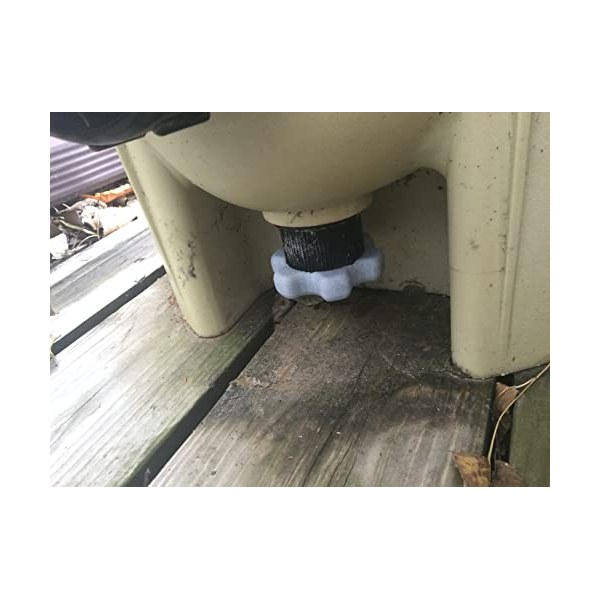 Filter Drain Plug Wrench (Pentair Clean & Clear/FNS)
Grips the drain plug on Pentair Clean & Clear and FNS filters. View on Amazon →
Filter Drain Plug Wrench (Pentair Clean & Clear/FNS)
Grips the drain plug on Pentair Clean & Clear and FNS filters. View on Amazon →
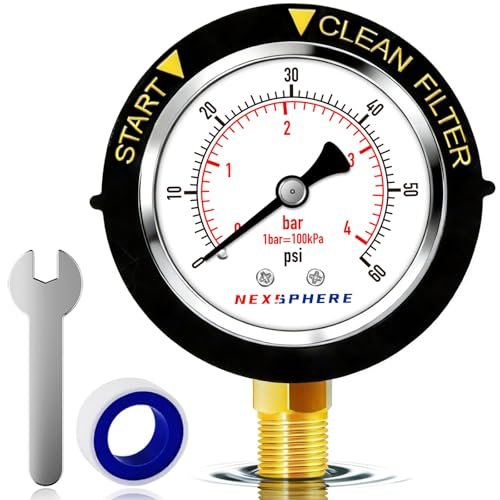 NexSphere Pool Filter Pressure Gauge, 0–60 PSI, 2 in Dial
Replacement back-mount gauge so you can read filter pressure and know when to backwash. View on Amazon →
NexSphere Pool Filter Pressure Gauge, 0–60 PSI, 2 in Dial
Replacement back-mount gauge so you can read filter pressure and know when to backwash. View on Amazon →
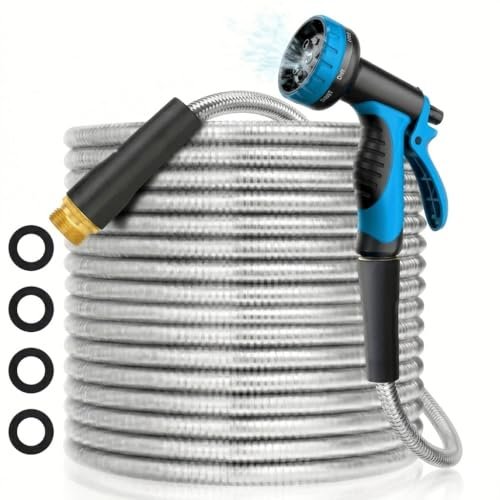 50 ft Flexible Metal Garden Hose (Kink-Free)
Durable hose for filling, priming, and rinsing equipment. View on Amazon →
50 ft Flexible Metal Garden Hose (Kink-Free)
Durable hose for filling, priming, and rinsing equipment. View on Amazon →
 Taylor K-2006C Complete FAS-DPD Pool & Spa Test Kit
The FAS-DPD kit pool pros trust — reads chlorine accurately even at shock/SLAM levels, plus pH, alkalinity, calcium hardness and CYA. View on Amazon →
Taylor K-2006C Complete FAS-DPD Pool & Spa Test Kit
The FAS-DPD kit pool pros trust — reads chlorine accurately even at shock/SLAM levels, plus pH, alkalinity, calcium hardness and CYA. View on Amazon →
Still need help? Ask a Pool & Spa Expert AD
Get a personalized answer from PoolGuy810 — 30 years owning a pool and spa repair company. Describe your issue and get step-by-step help.
Related Pool Guides
Need More Help?
Try our free pool calculators and tools to help diagnose and fix your pool problems.
Browse Pool ToolsSLAM calculator, pH calculator, salt dosing & more