
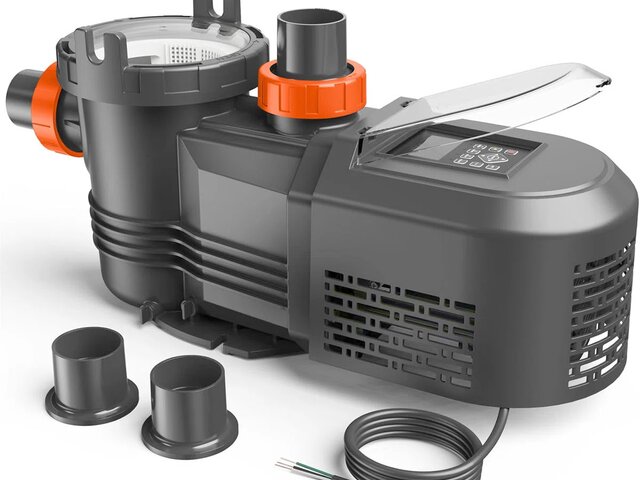
Can I Turn Pool Pump Off at Night? Complete Owner's Guide

New pool owner - is it okay to shut off pump overnight?
Read full question
This electric bill is destroying my budget and I can't afford to keep this pool pump running 24/7 — is it safe to shut it off nights?
The pool store told me the pump should run constantly, but my neighbor says he turns his off at night to save on electricity costs.
I'm worried about messing something up since this is all new to me. Is it actually safe to turn the pump off overnight, or will that cause problems with the water? If I can turn it off, how many hours should it still be running each day to keep everything clean and healthy?
Quick Answer
Yes, you can turn your pool pump off at night in most cases. Run it enough each day to keep the water clear and chlorinated - often around 6-8 hours, more in heat or heavy use - rather than chasing a fixed turnover target. Keep free chlorine matched to your CYA per TFP guidelines, and adjust the schedule for usage and weather.
Understanding Pump Runtime Requirements
Your pool pump serves two critical functions: circulation and filtration. To determine if nighttime shutdown works for your pool, you need to determine your required daily runtime based on what your pool actually needs - chlorination, skimming, and filtering - using turnover as a rough guide.
Calculating Your Pool's Turnover Rate
The turnover rate is how long it takes to circulate your entire pool volume once — roughly your pool volume divided by your pump's flow rate. our pump runtime & energy calculator works out the hours for your pool.
These turnover figures are a useful rule of thumb, not a hard requirement - what actually matters is running the pump enough to distribute chlorine, skim the surface, and filter debris. Many pools stay clear on roughly 4-8 hours a day (more in heat or heavy use). If you can meet your pool's needs during daylight hours, nighttime shutdown is perfectly acceptable.
When Nighttime Shutdown Works Best
Turning your pump off at night is most effective under these conditions:
- Proper daytime runtime: your pump runs long enough during the day to keep the water clear, chlorinated, and skimmed
- Balanced water chemistry: FCFree Chlorine — The chlorine actively sanitizing your water right now. This is the number you keep an eye on. how much you need → (free chlorine) levels are appropriate for your CYACyanuric Acid (stabilizer) — Sunscreen for your chlorine — it keeps sunlight from burning it off. The catch: the more you have, the more chlorine you need to keep. learn more → (cyanuric acid) levels using the all-in-one pool calculator
- Low bather load: Fewer swimmers means less contamination requiring continuous circulation
- No active water issues: Clear water with no algae growth or cloudy conditions
- Adequate sanitizer levels: Chlorine levels can maintain water quality overnight without circulation
Energy Cost Benefits
Running your pump during off-peak electricity hours (typically nighttime/early morning) can reduce operating costs. However, many utility companies have peak daytime rates and off-peak nighttime rates, so check your specific utility's time-of-use schedule to determine the most cost-effective pump runtime.
When You Should Keep Pumps Running at Night
Certain situations require 24/7 pump operation or extended nighttime running:
- Active algae treatment: During SLAMShock Level And Maintain — raise free chlorine to a target based on your CYA and hold it there until the algae is gone. It's a process, not a one-time dose. the SLAM walkthrough → (Shock Level And Maintain) treatment, continuous circulation helps distribute sanitizer and filter out dead algae
- High bather loads: Heavy pool usage requires extended circulation to process contaminants
- Hot weather conditions: High temperatures accelerate chemical consumption and bacterial growth
- Recent chemical additions: New chemicals need circulation for proper distribution
- Variable speed pumps: These can run at low speeds overnight for minimal energy cost while maintaining circulation
Optimal Pump Scheduling Strategies
Split Schedule Method
Run your pump in two sessions: 6-8 hours during daytime hours and 2-4 hours during early morning (6-10 AM). This ensures adequate circulation and chemical distribution while allowing nighttime shutdown.
Continuous Daytime Operation
Operate your pump for 10-12 continuous hours during daylight, typically 7 AM - 7 PM. This approach helps because daytime is when heat and bather load peak and when UV is actively consuming chlorine, so running the pump (and an SWGSalt Water Generator — The "salt cell" that makes chlorine from the salt in a saltwater pool. Same chlorine — it just makes its own. pool terms →, if equipped) keeps up with that loss and distributes chemicals evenly.
Variable Speed Considerations
If you have a variable speed pump, consider running at high speed during day hours and low speed (600-1000 RPM) overnight. This maintains some circulation while using minimal electricity - typically 100-250 watts (depending on pump size) compared to roughly 1,500-2,500 watts at high speed.
Water Chemistry Considerations
When shutting pumps off at night, maintain proper chemical balance:
- Free Chlorine: Ensure FC levels match your CYA level according to TFP guidelines. Higher CYA pools need proportionally higher FC levels
- pH Balance: Maintain pH in the 7.2-7.8 range during non-circulation periods for comfort and balance
- Total Alkalinity: Keep TATotal Alkalinity — The buffer that keeps your pH from bouncing around. Get this in range and pH gets a lot easier to manage. learn more → at 60-80 ppm for salt water pools, 80-120 ppm for traditional chlorine pools
- Calcium Hardness: Maintain 250-350 ppm for plaster pools, 150-250 ppm for vinyl/fiberglass surfaces
Testing Schedule
Test your water chemistry every 2-3 days when operating pumps on nighttime shutdown schedules. Pay special attention to FC levels, as inadequate circulation can create dead zones where chlorine doesn't reach effectively.
Common Mistakes to Avoid
Insufficient daily runtime: don't cut total daily pump operation so low that the water can't stay clear and chlorinated just to save energy. Poor water quality will cost more than electricity savings.
Ignoring seasonal adjustments: Summer conditions may require longer runtimes or continuous operation, even if nighttime shutdown worked during cooler months.
Overlooking chemical distribution: After adding chemicals, run pumps for at least 2-4 hours to ensure proper mixing before shutdown periods.
Equipment Protection
Most modern pool pumps handle regular on/off cycling without issues. However, older pumps or those with mechanical timers may experience more wear from frequent starting. Consider upgrading to digital timers or variable speed pumps if you're cycling an older single-speed pump multiple times daily.
Ensure your pump basket and skimmer baskets are clean before extended shutdown periods, as debris can settle and create circulation problems when restarting.
For the full breakdown of safe chlorine levels by CYA level, see our pool water chemistry guide.

Still need help? Ask a Pool & Spa Expert AD
Get a personalized answer from PoolGuy810 — 30 years owning a pool and spa repair company. Describe your issue and get step-by-step help.
Related Pool Guides
Need More Help?
Try our free pool calculators and tools to help diagnose and fix your pool problems.
Browse Pool ToolsSLAM calculator, pH calculator, salt dosing & more