
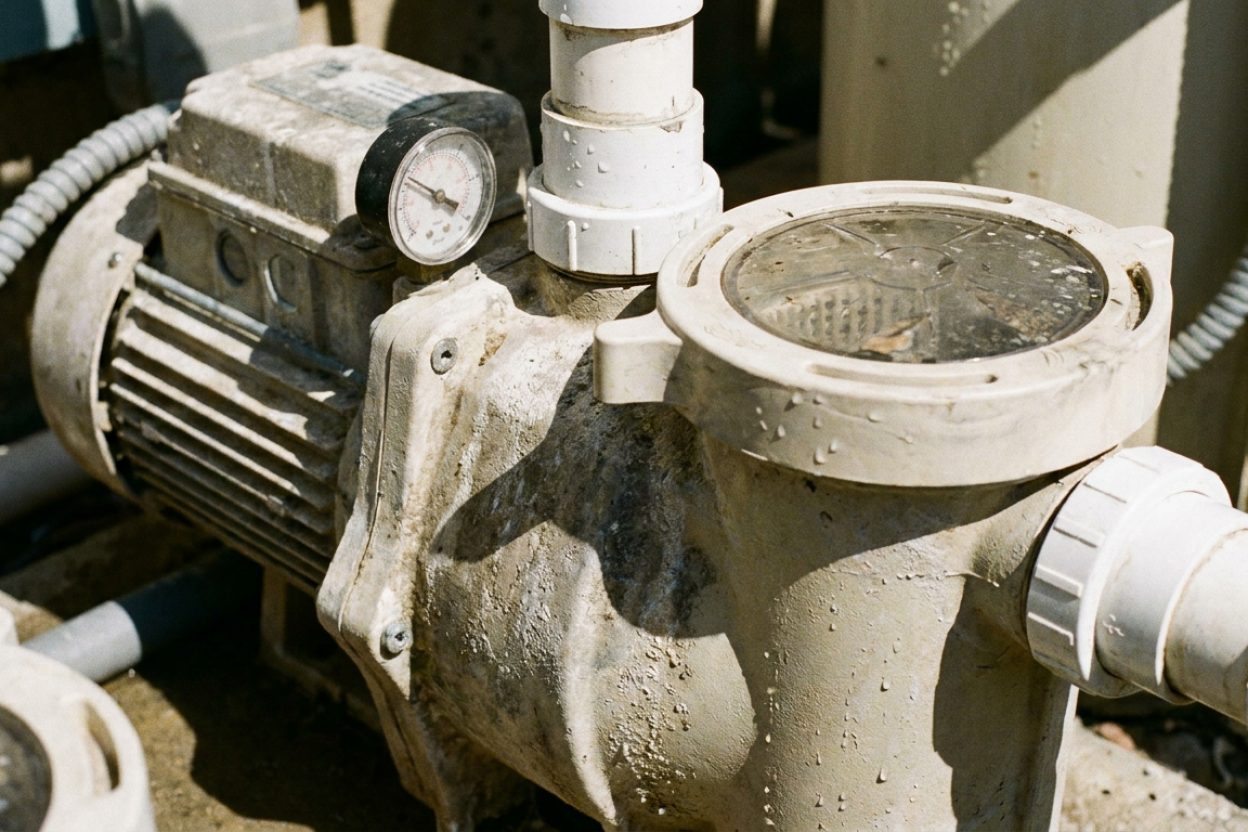
How to Tell if Your Pool Pump Isn't Working Properly

What are the signs that my pool pump is acting up?
Read full question
This 4-year-old pool pump is turning my once-crystal-clear water cloudy and stagnant — is it worth repairing or should I just replace the whole thing? I'm not super technical when it comes to pool equipment, so I'm not sure what warning signs I should be watching for.
What are the telltale signs that indicate my pump isn't doing its job properly? I want to catch any problems before they turn into expensive repairs or leave me with a swamp instead of a swimming pool!
Quick Answer
Your pool pump isn't working properly if you notice weak water flow, unusual noises, air bubbles in return lines, high pressure readings, or the pump running but not circulating water.
Quick Signs Your Pool Pump Needs Attention
Nothing ruins a perfect pool day faster than discovering your pump has been silently failing, turning your crystal-clear oasis into a murky mess. If you notice weak water flow from your return jets, gurgling or grinding noises, air bubbles shooting into your pool, or pressure gauge readings above 25 PSI, your pump likely has problems that need immediate attention.
Visual and Performance Indicators
Water Flow Problems
The most obvious sign is reduced water flow from your return jets. Healthy circulation should create a noticeable current in your pool. Place your hand near the return jets - you should feel strong, steady water pressure. Weak flow often indicates a clogged impeller, dirty filter, or suction line blockage.
Check your skimmer baskets and pump strainer basket first. A full basket restricts flow and forces your pump to work harder. Empty baskets should restore normal flow immediately. If cleaning baskets doesn't help, the problem lies deeper in your system.
Pressure Gauge Readings
Your filter pressure gauge tells the whole story. Normal operating pressure ranges from 8-15 PSI when the filter is clean. High pressure (above 25 PSI) means your filter needs cleaning or backwashing. Extremely low pressure (below 5 PSI) suggests suction problems or a failing pump.
Record your clean filter pressure as a baseline. When pressure rises 8-10 PSI above this baseline, it's time to clean or backwash your filter. Pressure that won't drop after cleaning indicates worn filter media or internal pump damage.
Audio and Physical Warning Signs
Unusual Noises
A properly functioning pump runs with a steady hum. Grinding, squealing, or rattling sounds indicate serious problems. Grinding usually means worn bearings in the motor. Squealing often comes from a dry or failing motor seal. Rattling suggests loose bolts or debris in the impeller.
Cavitation creates a distinctive rumbling sound like marbles in the pump housing. This happens when the pump can't get enough water, causing air pockets that damage internal components. Address cavitation immediately by checking for suction line leaks or clogged baskets.
Air Bubbles and Leaks
Air bubbles streaming from return jets indicate suction-side air leaks. These leaks reduce pump efficiency and can cause the pump to lose prime. Common leak sources include loose pump lid, cracked suction lines, or failing skimmer gaskets.
Water leaks around the pump housing suggest seal failure. Small drips may worsen gradually, but steady leaks require immediate attention. Mark leak locations with chalk to monitor progression and help your technician diagnose the problem.
Electrical and Operational Issues
Starting Problems
If your pump struggles to start or makes humming sounds without running, you likely have electrical issues. Check the circuit breaker first - a tripped breaker often indicates motor overload from clogged components. Reset the breaker only after addressing the underlying cause.
Variable speed pumps display error codes when problems occur. Consult your manual for specific codes, but common issues include dirty filters (causing overwork) or inadequate water flow (triggering safety shutoffs).
Frequent Cycling
Pumps that turn on and off repeatedly may have thermal overload protection engaging. This safety feature prevents motor damage from overheating caused by restricted flow, dirty filters, or failing bearings. Never bypass thermal protection - fix the root cause instead.
Performance Testing Steps
Flow Rate Assessment
For an accurate flow measurement, consult your pump's performance curve or have a professional test it with a proper flow meter — a simple bucket test doesn't account for your system's total dynamic head and resistance, which is what actually determines real-world flow.
Prime Test
A healthy pump holds prime when shut off. After running normally, turn off the pump and remove the strainer lid. Water should remain visible in the pump housing. If water drains back into the pool, you have suction line leaks allowing air infiltration.
Repair or Replace?
At around four years old, a pump is usually worth repairing — motors, bearings, shaft seals, and impellers are all individually replaceable and cost a fraction of a new pump. Lean toward full replacement when the wet end or housing is cracked, when the motor has failed more than once, or when you're ready to swap an older single-speed pump for a more efficient variable-speed model (the energy savings often pay back the difference). For a one-off bearing or seal job on an otherwise sound 4-year-old pump, repair is almost always the better value.
When to Call a Professional
Safety Warning: Never attempt electrical repairs yourself. Pool pumps run on 115V or 230/240V circuits that can cause serious injury or death.
Call a pool technician immediately if you notice electrical burning smells, frequently tripping breakers, or any sparking around electrical connections. Motor bearing replacement, impeller repairs, and seal replacements also require professional expertise.
Early detection saves money and prevents pool water quality problems. Most pump issues start small but escalate quickly, especially during peak swimming season. Regular monitoring of pressure, flow, and sound helps catch problems before they become expensive repairs.
Document baseline measurements when your system runs properly. This information helps technicians diagnose problems faster and gives you confidence in recommended repairs.
Still need help? Ask a Pool & Spa Expert AD
Get a personalized answer from PoolGuy810 — 30 years owning a pool and spa repair company. Describe your issue and get step-by-step help.
Related Pool Guides
Need More Help?
Try our free pool calculators and tools to help diagnose and fix your pool problems.
Browse Pool ToolsSLAM calculator, pH calculator, salt dosing & more