
Do I Need Pool Shock? When and Why to Shock Your Pool

Is my pool safe for kids without shocking it?
Read full question
During last week's heavy storms and downpours, my pool water turned cloudy and now I'm worried it's not safe for my kids to swim. My free chlorine levels seem to be dropping, and we've had some heavy rain lately plus the kids and their friends have been using the pool constantly this summer.
I keep hearing about pool shock but I'm not sure when I actually need to use it or what type is best. I just want to make sure the water is properly sanitized and safe for swimming. What are the signs that tell me I need to shock the pool, and how do I do it correctly?
Quick Answer
Pool shock is needed when free chlorine drops below effective levels, after heavy use, storms, or when algae appears. Use liquid chlorine for best results and shock to proper levels based on your CYA. The shock level depends on your CYA level, and the all-in-one pool calculator helps estimate the free chlorine for your CYA. Shocking is critical for maintaining water clarity and should be done during evening hours to prevent UV degradation.
When You Need Pool Shock
First thing to check: your pool's free chlorine levels — nine times out of ten, if they're below your target range (which should be about 40% of your CYACyanuric Acid (stabilizer) — Sunscreen for your chlorine — it keeps sunlight from burning it off. The catch: the more you have, the more chlorine you need to keep. learn more → level), shocking is exactly what you need to get your water crystal clear again. Pool shocking is a critical maintenance practice that involves raising your free chlorine (FCFree Chlorine — The chlorine actively sanitizing your water right now. This is the number you keep an eye on. how much you need →) to levels high enough to oxidize contaminants and restore water clarity.
Understanding Pool Shock Levels
The shock level you need depends entirely on your cyanuric acid (CYA) level. Using the FC/CYAFC/CYA chart — The chart that sets your chlorine target from your stabilizer (CYA) level — the two go together. see the chart → relationship — our all-in-one pool calculator estimates the free chlorine target for your CYA:
- CYA 30ppm: Shock to 12ppm FC
- CYA 40ppm: Shock to 16ppm FC
- CYA 50ppm: Shock to 20ppm FC
- CYA 60ppm: Shock to 24ppm FC
- CYA 70ppm: Shock to 28ppm FC
Test your CYA first with a Taylor K-2006 test kit to determine your proper shock level. Never guess at these numbers.
Signs Your Pool Needs Shocking
Immediate Shocking Required
- Green, yellow, or cloudy water indicating algae growth
- Strong chemical smell (chloramines, not actual chlorine)
- Free chlorine reading at zero or very low
- Combined chlorine above 0.5ppm
- After heavy bather loads or pool parties
- Following rainstorms or debris contamination
Preventive Shocking Situations
- Weekly maintenance shocking in high-use periods
- Before closing the pool for winter
- After opening the pool for the season
Best Type of Pool Shock to Use
Liquid chlorine (sodium hypochlorite) is the superior choice for pool shocking. Here's why it outperforms granular shock products:
- No added chemicals or fillers
- Won't raise CYA levels like dichlor
- No calcium buildup like cal-hypo
- Dissolves instantly with no undissolved particles
- More cost-effective for large shock doses
Avoid store-bought granular "shock" products for serious algae problems. They often contain calcium hypochlorite with additives that can cause more problems than they solve.
How to Properly Shock Your Pool
Step-by-Step Shocking Process
- Test current FC, pH, and CYA levels with a reliable test kit
- Calculate required liquid chlorine: 1 gallon of 12.5% liquid chlorine raises 10,000 gallons by 12.5ppm FC. For a quick estimate, use our all-in-one pool calculator, but always re-test your water after dosing and follow the product label or verify dosing with the manufacturer's instructions.
- Adjust pH to about 7.2-7.5 before shocking (mainly so your pH test stays reliable at high chlorine levels)
- Wearing safety goggles and gloves, add liquid chlorine around pool perimeter with pump running in a well-ventilated area
- Brush pool surfaces thoroughly after adding chlorine
- Run pump continuously during shock treatment
- Retest FC levels after 1 hour, add more if needed
- Maintain shock level until water clears completely
SLAM Method for Algae Problems
For green pools or visible algae, follow the SLAMShock Level And Maintain — raise free chlorine to a target based on your CYA and hold it there until the algae is gone. It's a process, not a one-time dose. the SLAM walkthrough → (Shock Level And Maintain) process:
- Determine shock level based on CYA
- Add enough liquid chlorine to reach shock level
- Test FC every few hours, adding chlorine to maintain shock level
- Brush pool walls and floor multiple times daily
- Continue until overnight FC loss is 1ppm or less
- Perform OCLT (Overnight Chlorine Loss Test) to confirm completion
Shocking Frequency and Timing
Shock your pool during evening hours to prevent UV degradation of chlorine. Frequency depends on usage and conditions:
- Weekly shocking during peak season with heavy use
- Bi-weekly during moderate use periods
- As-needed basis during low-use times
- Always after storms, parties, or contamination events
Safety Considerations
Never mix different pool chemicals. Add liquid chlorine alone, ensuring pump circulation distributes it evenly. Wait until free chlorine is below 10 ppm (per CDC) - usually at least 8 hours after shocking - and verify you can clearly see the bottom and main drain before entering the pool.
Common Shocking Mistakes to Avoid
- Using dichlor shock regularly (raises CYA excessively)
- Shocking during daylight hours
- Not testing CYA before determining shock level
- Adding shock with pump off
- Not maintaining shock level long enough for algae treatment
- Mixing shock products together
- Swimming too soon after shocking
Remember that effective pool shocking requires understanding your specific water chemistry. Test regularly, calculate dosages precisely, and use quality liquid chlorine for best results. When in doubt, test more frequently rather than guessing at chemical levels.
For the full breakdown of safe chlorine levels by CYA level, see our pool water chemistry guide.
 Taylor K-2006C Complete FAS-DPD Pool & Spa Test Kit
The FAS-DPD kit pool pros trust — reads chlorine accurately even at shock/SLAM levels, plus pH, alkalinity, calcium hardness and CYA. View on Amazon →
Taylor K-2006C Complete FAS-DPD Pool & Spa Test Kit
The FAS-DPD kit pool pros trust — reads chlorine accurately even at shock/SLAM levels, plus pH, alkalinity, calcium hardness and CYA. View on Amazon →
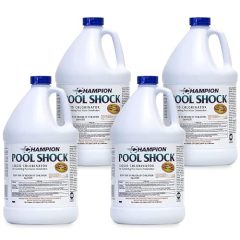 Liquid Chlorine / Sodium Hypochlorite (12.5%)
Everyday sanitizer — the B in BBB View on Amazon →
Liquid Chlorine / Sodium Hypochlorite (12.5%)
Everyday sanitizer — the B in BBB View on Amazon →
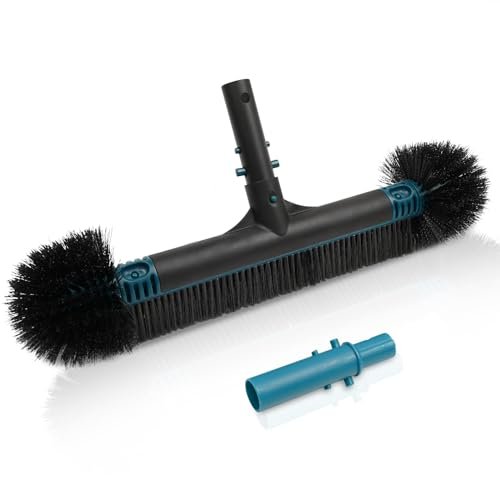 Poolvio 20" 2-in-1 Pool Brush Head (Walls & Floor)
Sturdy 20-inch brush head that clips onto any standard telescopic pole. View on Amazon →
Poolvio 20" 2-in-1 Pool Brush Head (Walls & Floor)
Sturdy 20-inch brush head that clips onto any standard telescopic pole. View on Amazon →
Still need help? Ask a Pool & Spa Expert AD
Get a personalized answer from PoolGuy810 — 30 years owning a pool and spa repair company. Describe your issue and get step-by-step help.
Need More Help?
Try our free pool calculators and tools to help diagnose and fix your pool problems.
Browse Pool ToolsSLAM calculator, pH calculator, salt dosing & more