
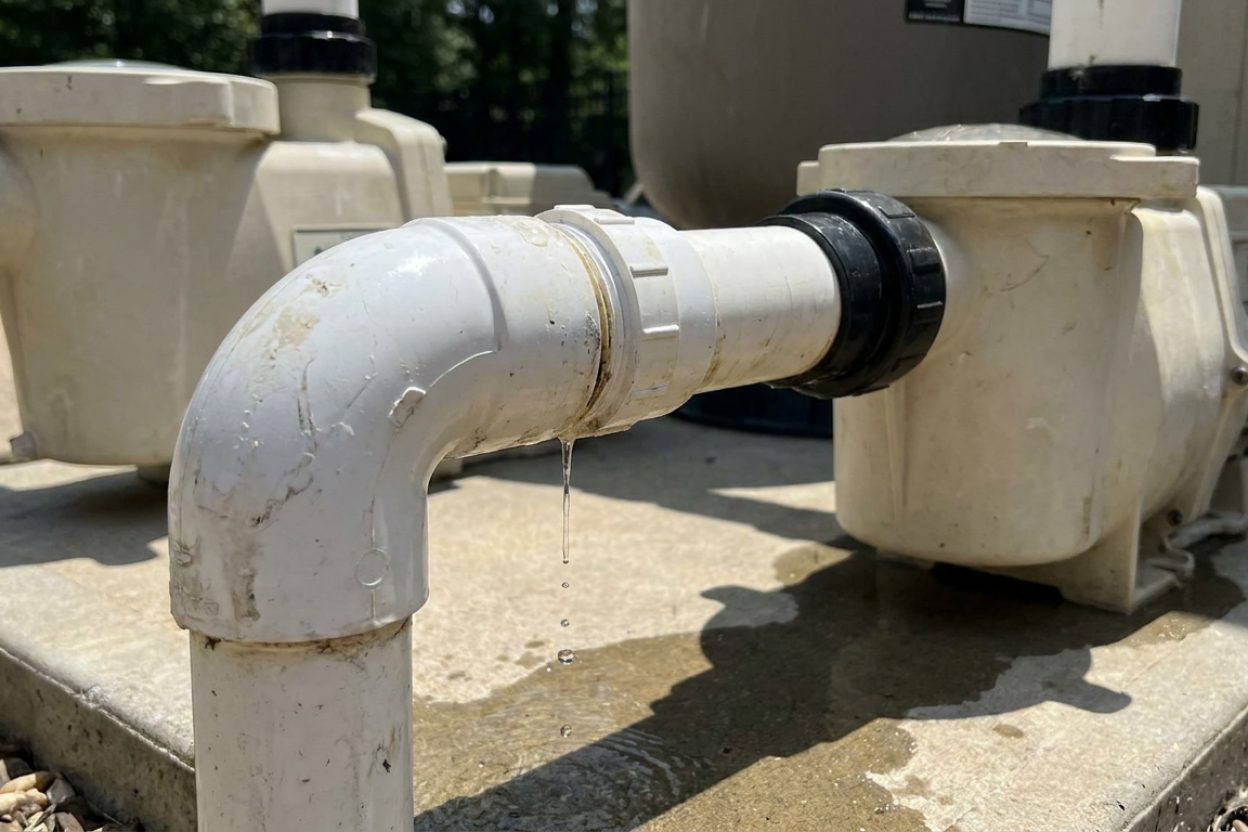
Can Pool Leaks Cause Sinkholes? Soil Erosion Prevention

Could my pool leak actually cause a sinkhole in my yard?
Read full question
Looked at my water level gauge showing 2 inches lost per week, but my pool guy insists that's impossible with just surface evaporation. I keep telling myself it's just a small amount of water loss, but now I'm wondering if I'm being naive about what could actually happen to my property.
The thing is, I've noticed some soft spots developing in the ground around my pool area, and it's got me thinking - could all that leaking water actually wash away enough soil to create a sinkhole? I know it sounds dramatic, but I'm genuinely concerned about whether continuous water leakage could undermine my pool's foundation or create dangerous voids in my yard. Is this something that actually happens, or am I overthinking a simple repair job?
Quick Answer
Yes, pool leaks can potentially cause sinkholes by washing away soil around your pool's foundation. While rare, continuous water leakage can erode the soil structure, creating voids that may eventually collapse into sinkholes.
Step-by-Step Assessment Process
- Identify if you have a leak: Perform the bucket test by placing a bucket filled with pool water on your pool step. Mark the water level inside the bucket and in the pool. After 24 hours, if the pool water level dropped more than the bucket water level, you have a leak.
- Check for early warning signs around your pool: Walk around your pool area looking for soft or spongy ground, areas where the deck has settled or cracked, unusual wet spots in your yard, or areas where grass grows exceptionally well (indicating constant moisture).
- Examine the pool structure: Look for cracks in the pool shell, loose tiles, gaps in the coping, or separation between the deck and pool wall. These can indicate structural movement caused by soil erosion.
- Document any changes: Take photos of any settling, cracks, or soft areas. Measure any gaps or separations you find. This documentation will be valuable for insurance claims or contractor consultations.
- Determine leak location: Use food coloring near suspected leak areas while the pool equipment is off. The dye will be drawn toward active leaks. Check skimmers, returns, main drains, and any plumbing penetrations.
- Assess soil conditions: Consider your local geology. Sandy soils are more prone to washout than clay soils. If you live in an area with natural sinkhole activity (like Florida or parts of Texas), take leak concerns more seriously.
Understanding the Sinkhole Formation Process
Pool leaks create sinkholes through a process called piping erosion. When pressurized pool water escapes through cracks or failed plumbing, it carries soil particles away from the leak point. Over time, this creates underground cavities that can extend well beyond the immediate pool area.
The process typically follows these stages: initial soil saturation around the leak, gradual particle removal creating small voids, void expansion as more soil is washed away, and eventual surface collapse when the remaining soil can no longer support the weight above.
Immediate Actions to Take
- Stop adding water: If you suspect a significant leak, stop automatically filling your pool. Continuous filling maintains the pressure that drives soil erosion.
- Lower the water level: Reduce the water level to below the suspected leak point. This reduces hydrostatic pressure and slows the erosion process.
- Mark affected areas: Use spray paint or flags to mark any soft spots or areas of concern around your pool. Keep people and pets away from these areas.
- Contact professionals immediately: Reach out to a qualified pool leak detection service and a structural engineer if you notice significant settling or soft ground areas.
- Document for insurance: Take comprehensive photos and videos of all damage. Many homeowner's policies cover sudden water damage but not gradual leaks, so timing documentation is crucial.
Professional Leak Detection and Repair
Professional leak detection services use specialized equipment including pressure testing systems, electronic listening devices, and thermal imaging cameras. They can pinpoint exact leak locations without destructive digging, which is especially important when soil stability is already compromised.
Common leak sources that pose sinkhole risks include underground plumbing failures, structural cracks in the pool shell, failed pipe joints, and damaged main drain assemblies. Each requires different repair approaches, but all should be addressed urgently if soil erosion is evident.
Prevention Strategies
- Regular leak monitoring: Perform monthly bucket tests and track your water bill for unusual increases. Normal evaporation runs about ¼–½ inch per day, so use the bucket test to compare: water loss noticeably faster than the bucket (roughly more than ½ inch per day beyond evaporation) points to a leak worth investigating.
- Annual professional inspections: Have your pool's plumbing and structure inspected annually by qualified technicians who can identify potential failure points before they become major leaks.
- Proper chemical balance: Maintain proper water chemistry to prevent corrosion of metal fittings and deterioration of seals. Keep pH between 7.4-7.6, total alkalinity between 80-120 ppm, and calcium hardness to 250-350 ppm for plaster (175-225 ppm for vinyl/fiberglass).
- Quality repairs: Never ignore small leaks hoping they'll resolve themselves. Address minor issues promptly with quality materials and professional installation to prevent escalation.
- Drainage improvements: Ensure proper drainage around your pool area to handle overflow and splash-out water, reducing soil saturation from normal pool use.
When to Evacuate the Area
Immediately evacuate and contact emergency services if you notice: Sudden appearance of holes or depressions near your pool, audible underground water movement, rapid settling of pool decking or surrounding structures, or visible underground cavities through cracks in the ground.
Sinkhole formation from pool leaks is uncommon and usually develops gradually, but a confirmed leak should still be repaired promptly to prevent erosion and structural damage. Taking immediate action at the first signs of a leak can prevent minor repairs from becoming major structural disasters.
Still need help? Ask a Pool & Spa Expert AD
Get a personalized answer from PoolGuy810 — 30 years owning a pool and spa repair company. Describe your issue and get step-by-step help.
Need More Help?
Try our free pool calculators and tools to help diagnose and fix your pool problems.
Browse Pool ToolsSLAM calculator, pH calculator, salt dosing & more